Choosing between a private ayahuasca retreat in Peru and a small-group program is not simply a choice between “better attention” and “more people.” The labels are used inconsistently. A private room is not necessarily a private retreat, and a private retreat does not automatically mean one-to-one supervision during every ceremony.
The better decision comes from looking behind the marketing language: who screens participants, how many trained and sober staff are present, what happens in an emergency, whether individual support is available and how the center protects consent and confidentiality. This guide compares the two formats so you can ask precise questions before booking.
Quick answer: private or small-group?
A private retreat may suit someone who needs more privacy, has scheduling constraints or becomes overwhelmed in shared spaces. A well-run small group may suit someone who values peer connection, shared orientation and a structured community experience.
Neither format is inherently safer or more therapeutic. Screening, staff competence, sober coverage, boundaries, communication and emergency procedures are more important than headcount alone. Ayaterra Iquitos offers small-group retreats; contact the team for the current group size, room arrangements and support structure before reserving.
First, define what “private” actually means
Before comparing prices, ask the operator to define every use of the word private. It may refer to one feature while the rest of the program remains shared.
- Private room: you sleep alone, but meals, preparation, ceremonies and integration may be shared.
- Private retreat: the booking is reserved for one person, couple or existing party. This still may not mean continuous one-to-one attention.
- Private ceremony: no other guests attend that ceremony, but several staff may be present for safety and facilitation.
- Individual check-in: a confidential conversation within a group program. It is not the same as an entirely private retreat.
- Small-group retreat: a limited number of guests share the program, usually with some individual screening and support.
Ask for the definition in writing. Also ask whether the quoted group count includes facilitators, translators and support staff or only paying guests.
Private vs small-group ayahuasca retreats at a glance
| Factor | Private retreat | Small-group retreat |
|---|---|---|
| Privacy | Usually greater, but confirm who can access personal information. | Less environmental privacy; individual conversations may still be confidential. |
| Schedule | May allow more flexibility, subject to safety and staffing. | Usually follows fixed arrival, orientation and ceremony times. |
| Social environment | Fewer peer interactions and less group stimulation. | Potential peer support, but group dynamics can also be tiring. |
| Staff attention | May be more available, but verify hours and roles. | Shared; adequacy depends on guest needs and sober staff coverage. |
| Cost | Often higher because staffing and facilities are not shared. | Usually distributes operational costs across participants. |
| Independent observation | May involve fewer witnesses; clear oversight and complaint routes matter. | Other guests and multiple staff may provide more visibility, but that is not a safeguard by itself. |
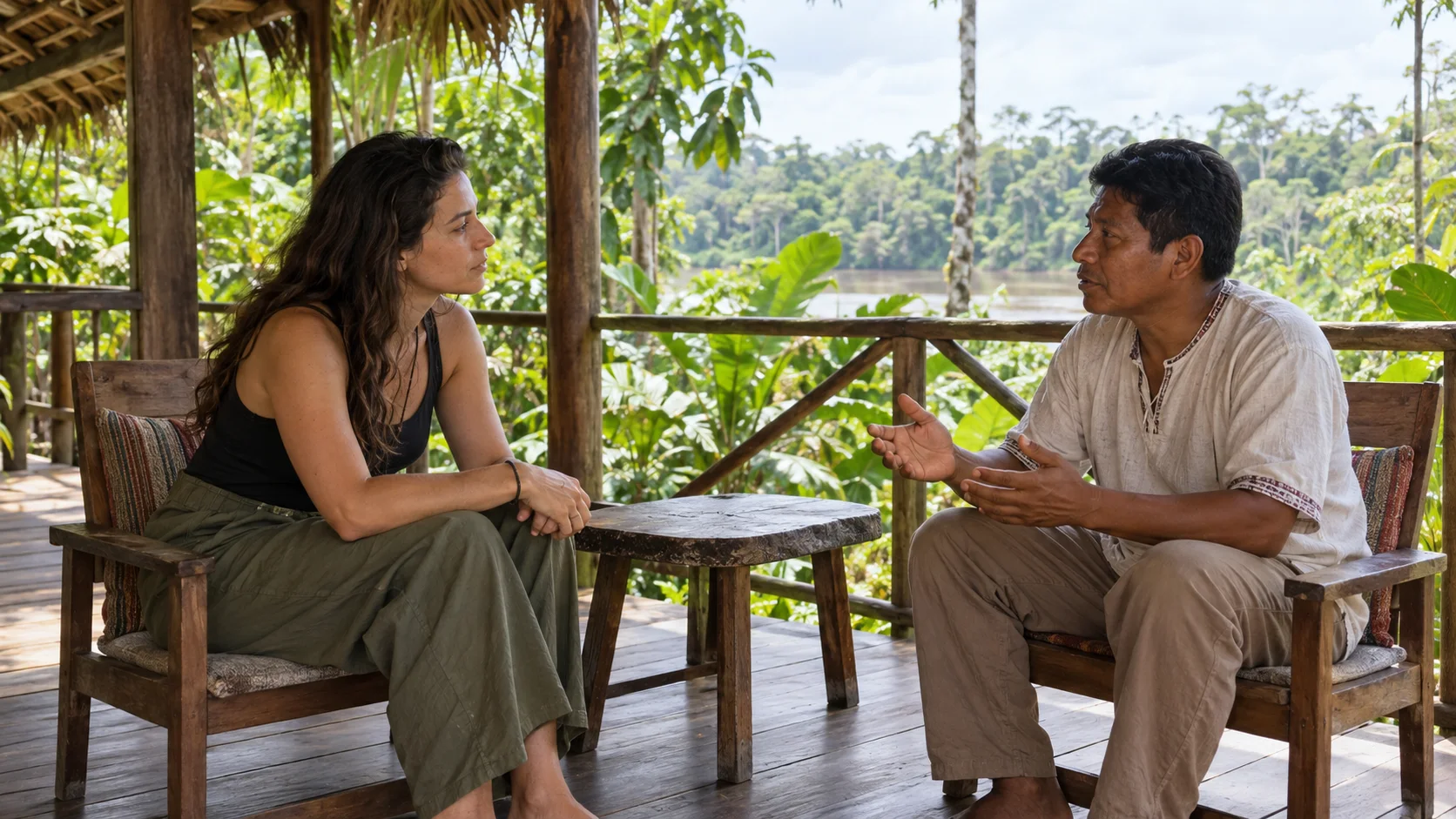
What a private format may offer
The main potential advantage is control over the social environment. A guest may have fewer introductions, less noise and more space to rest. This can be useful for someone who finds groups draining, needs a particular arrival date or wants confidential conversations away from peers.
A private program may also make it easier to adapt meal timing, translation, mobility support or non-ceremony activities. Those accommodations should be discussed during screening, not assumed from the price.
Privacy does not equal isolation from safety oversight. During an altered state, a participant should not be left without an agreed method of monitoring and obtaining help. Nor should one facilitator become the only person who controls information, transportation, communication and complaints. Ask who supervises the lead facilitator, who can be contacted independently and whether more than one sober staff member is available on site.
What a small group may offer
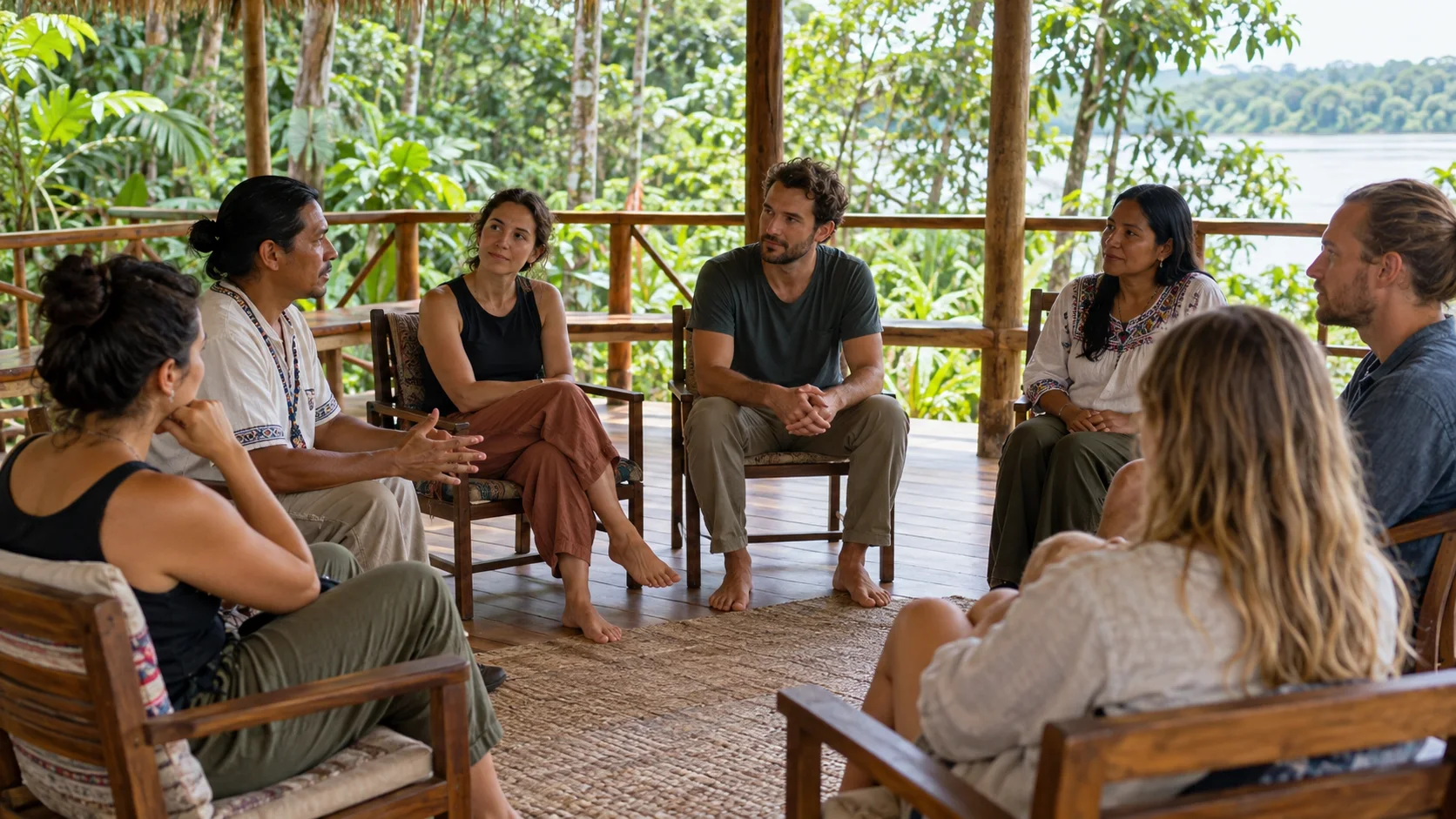
A small group can provide shared orientation, predictable routines and contact with people going through the same unfamiliar process. Hearing practical questions from other guests may reveal issues you had not considered. Afterward, respectful peer conversation can reduce the feeling that you must immediately understand everything alone.
Observational research in psychedelic settings has found associations between a sense of group connection—sometimes called communitas—and later wellbeing or social connectedness. These studies do not prove that group participation caused the outcomes, do not establish an ideal group size and should not be used to promise healing. The quality of facilitation, emotional support and the participant’s circumstances still matter.
Groups also have disadvantages. Another participant may be noisy, distressed or eager to share interpretations. Some guests feel pressure to disclose personal material or to match the group’s enthusiasm. A responsible program should allow quiet time, private check-ins and the choice not to speak. Group belonging should never override consent.
Staffing matters more than the advertised group size
There is no universal evidence-based staff-to-guest ratio that makes an ayahuasca retreat safe. Needs vary with the participants, setting, layout and experience of the team. A ratio can also be misleading if it counts cooks, drivers or off-duty workers as ceremony support.
Ask how many trained, sober and awake staff will be inside or immediately available during the entire ceremony. Clarify their roles, languages, first-aid training, experience recognizing medical or psychological distress and authority to call for outside help. Ask what happens if two participants need support simultaneously.
For a private booking, establish whether “dedicated facilitator” means continuous presence or scheduled check-ins. For a group, ask about the maximum number of guests—not only the typical number—and whether the staffing plan changes when the group grows.
Use the broader checklist in our guide to choosing a safer ayahuasca retreat in Peru.
Screening should not change with the format
Private access is not a reason to accept a participant who would otherwise be screened out. Every guest should disclose relevant medical conditions, mental-health history, medications, supplements and substance use through a confidential process before travel.
Ayahuasca contains pharmacologically active compounds and may interact with medications or health conditions. Never stop, taper or restart a prescription solely on instructions from a retreat or travel companion. Discuss medication changes with the qualified clinician responsible for your care.
Ask who reviews screening answers, what qualifications that person has and what conditions require postponement or medical clearance. Learn more in our evidence-informed overview of ayahuasca risks and contraindications.
Boundaries and confidentiality
Private settings can feel safer because fewer people are present, yet fewer witnesses may also increase dependence on one facilitator. Small groups provide more visibility, but they expose guests to other participants. Neither arrangement replaces written policies.
Before paying, ask for policies on touch, sexual conduct, photography, recording, room access and confidentiality. Consent to participate is not consent to touch, disclosure or publicity. A guest should be able to decline a suggested practice without punishment or pressure.
In a group, clarify whether staff ask everyone to keep stories private and acknowledge that they cannot guarantee another guest’s behavior. In a private retreat, ask how concerns can be reported to someone other than the primary facilitator. Confirm that you retain access to your passport, phone and independent transportation information.
Emergency planning in remote Peru
Retreats around Iquitos may be reached by road, river or both. The quiet location is part of the experience, but it affects response time. Ask where the nearest appropriate clinic or hospital is, how evacuation works at night or in severe weather, who makes the decision and whether transport costs are included.
A private retreat with one guest can still be unsafe if there is only one exhausted staff member and no backup. A group can still be poorly supported if the ceremony exceeds the team’s capacity. Request concrete answers rather than accepting phrases such as “we have never had a problem.”
Plan your route with our guide on how to get to an Iquitos ayahuasca retreat.
Which format may suit different travelers?
Solo travelers
A solo traveler may value meeting a small, consistent group rather than arriving without peer contact. Others prefer a quieter program. Either way, keep an independent contact at home, share the location and itinerary, and maintain access to money and travel documents. Our solo traveler retreat guide covers these safeguards in detail.
Couples and friends
A private booking for a couple is not automatically a couples-therapy program. Each person still needs independent screening, consent and the right to ask for space. A small group may reduce pressure to make the partner responsible for all support. Review our guide to an ayahuasca retreat for couples in Peru.
People with trauma histories or social anxiety
Do not assume fewer people will automatically make an intense experience clinically appropriate. Some people appreciate control over the environment; others feel safer with multiple accountable staff and less dependence on one person. Discuss your needs honestly during screening and, when appropriate, with your licensed healthcare professional. A retreat is not a substitute for individualized medical or psychological care.
Cost: what are you actually paying for?
Private retreats are often more expensive because accommodation, transport, staff time and facilities are allocated to fewer guests. But a higher price does not prove better screening, more qualified staff or stronger emergency preparation.
Request an itemized description of what is included: transfers, room type, meals, number of ceremonies, translation, individual check-ins, post-retreat contact, taxes and emergency transport. Ask whether the price changes if a ceremony is postponed for health or weather reasons. Compare the total trip cost—not only the advertised package. See our guide to ayahuasca retreat costs in Peru.
Questions to send before booking
- Does “private” refer to the room, ceremony, full retreat or all three?
- What is the maximum number of paying guests on my dates?
- How many trained, sober staff are assigned during ceremonies, and what are their roles?
- Who reviews health screening, and when can participation be declined?
- Can I request an individual check-in within the group program?
- What are the rules on touch, sexual conduct, confidentiality and photography?
- Who can I contact if my concern involves the lead facilitator?
- What is the emergency transport plan and realistic travel time?
- Can I opt out of a ceremony or group sharing without penalty?
- What support is available after departure, and what are its limits?
Vague answers are useful information. A trustworthy operator should be able to explain limits as clearly as benefits.
Ayaterra Iquitos: a small-group option
Ayaterra Iquitos offers small-group programs in the Peruvian Amazon. The practical choice is not between a generic private retreat and a generic group retreat; it is between specific programs with specific dates, staffing and inclusions.
Review the current Ayaterra retreat options, including the 3-day, 5-day, 7-day and 8-day programs. Program length affects preparation, rest and integration time, so also read how long an ayahuasca retreat should be.
For the latest maximum group size, room arrangements, availability and whether your needs can be accommodated, contact Ayaterra Iquitos before buying flights.
Frequently asked questions
Is a private ayahuasca retreat safer than a group retreat?
Not automatically. Safety depends more on screening, trained sober staff, boundaries, monitoring, emergency planning and the participant’s health. A private format may provide more attention, but fewer people can also mean less independent oversight.
Is a small-group ayahuasca retreat less personal?
Not necessarily. A well-designed group program can include private screening and individual check-ins. Ask how much personal contact is scheduled and what happens when several guests need support at once.
What is the ideal group size?
There is no universal evidence-based number. Evaluate the number and roles of sober staff, the room layout, participant needs and the center’s maximum capacity rather than relying on a label such as “intimate.”
Can I book a private room in a small-group retreat?
Some programs separate accommodation from group activities, but availability and pricing vary. Confirm whether “private room” includes a private bathroom and whether ceremonies, meals and transfers remain shared.
Will a private retreat guarantee confidentiality?
No setting can provide an absolute guarantee. Ask who sees your screening information, how records are stored, when information might be shared for immediate safety and how complaints are handled.
Can I skip group sharing?
A responsible program should explain which activities are required and respect reasonable limits on personal disclosure. Ask before booking whether you can listen without sharing and request private support instead.
Bottom line
Choose the program whose real operating practices match your needs—not the one with the most reassuring label. Private retreats may offer more environmental control and flexibility. Small groups may provide community, shared structure and additional visibility. Both can be poorly run, and both require careful screening and accountable support.
Get the definitions, staffing plan, boundaries, emergency procedures and total cost in writing. Then compare those facts with your health, privacy needs, travel style and support plan after returning home.
Research and further reading
- Psychedelic communitas, emotional support and wellbeing in retreat settings — prospective observational research; associations should not be interpreted as proof of causation.
- Transformative psychedelic experience and social connectedness — research examining social connection as a possible pathway, not a guarantee for any participant.
- Can psychedelics enhance group psychotherapy? — a review of opportunities, complexities and research gaps; retreat groups are not equivalent to clinical group psychotherapy.
This article provides general educational information and is not medical advice. Ayahuasca can involve serious physical and psychological risks and is not appropriate for everyone. Seek individualized guidance from qualified healthcare professionals.