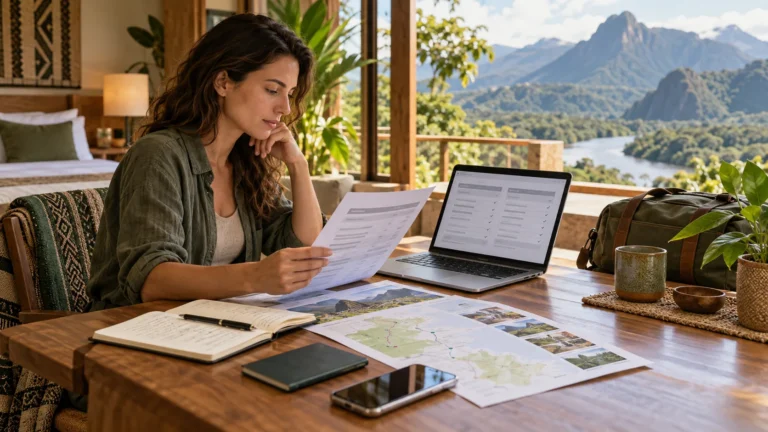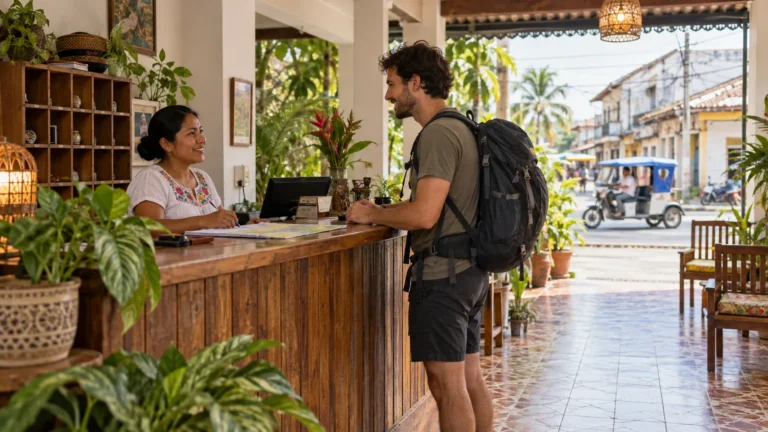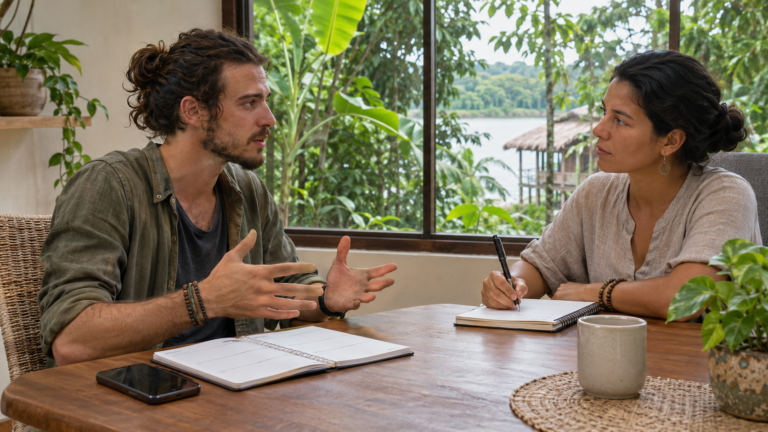
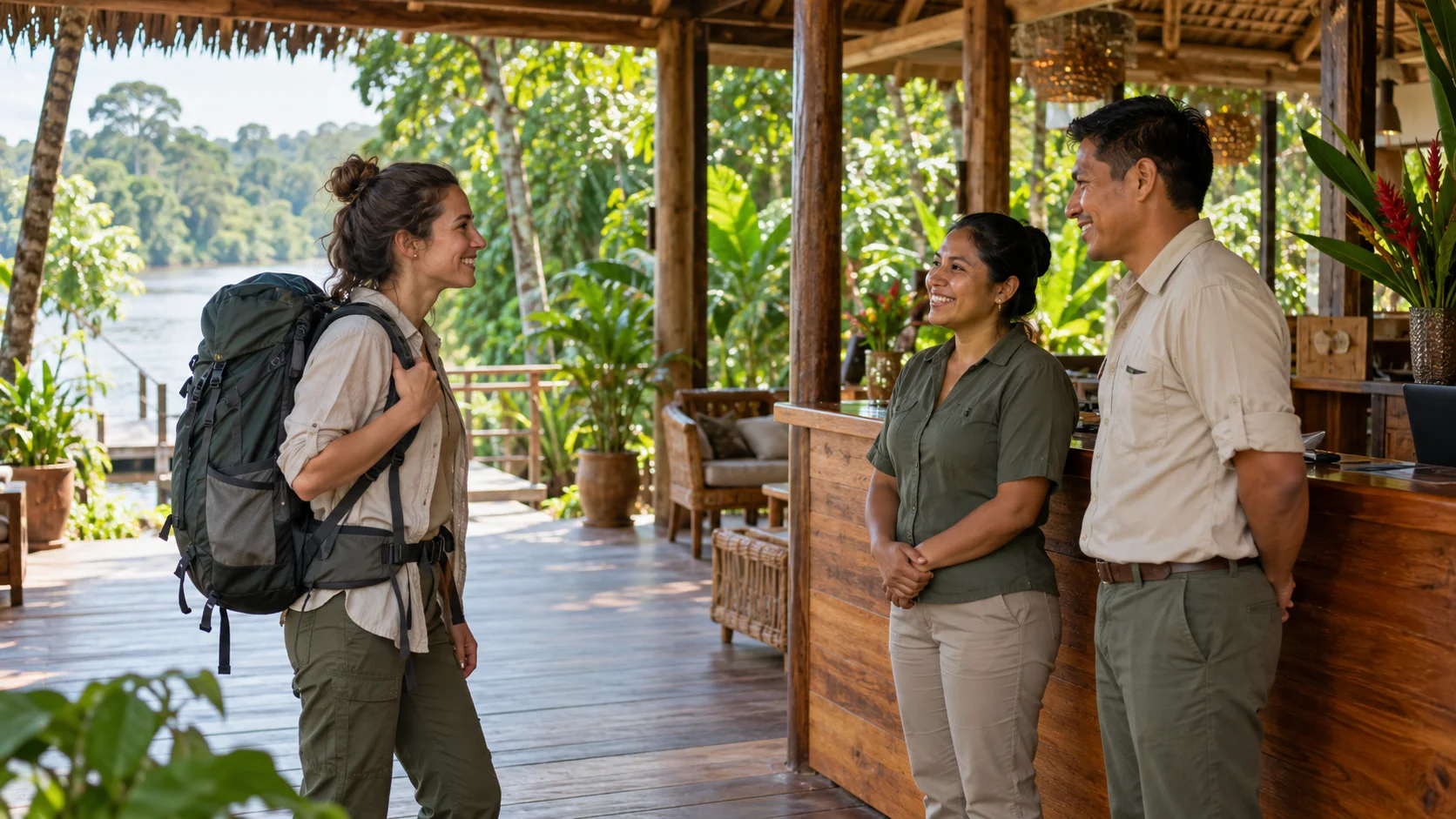
Traveling alone to an ayahuasca retreat in Peru can be practical and personally meaningful, but it requires more preparation than simply booking a flight and trusting the retreat to manage everything. A solo traveler has no companion automatically checking the route, noticing a boundary problem or helping after a difficult experience. That makes provider verification, reliable transport, communication and post-retreat support especially important.
This guide focuses on an Iquitos retreat journey: how to evaluate a center, plan your arrival, protect personal boundaries, prepare for emergencies and return home with support. It does not promise that ayahuasca is safe or suitable for every person. Medical and psychological screening must come before non-refundable travel.
Quick answer: can you attend an ayahuasca retreat alone?
Yes, many guests travel to Peru without a companion. The safer approach is to choose a retreat with meaningful screening, verified staff, written boundaries, scheduled transportation, sober support and a clear emergency plan. Share your itinerary with someone you trust, arrive in Iquitos before pickup day and schedule check-ins before and after the retreat.
Solo travel is not the same as a private retreat. You may arrive alone but participate in a small group. Confirm room arrangements, group size and staff coverage before paying.
Is a solo ayahuasca retreat right for you?
Start with the reason you want to go alone. Traveling independently can offer space away from familiar roles and distractions. It may also feel simpler than convincing a friend or partner to participate. But independence is not proof that you should face every part of the journey without support.
Consider postponing or bringing a trusted companion when you are experiencing a current crisis, severe instability, recent trauma without adequate support, suicidal thoughts, mania, psychosis, serious medical concerns or difficulty advocating for your boundaries. A retreat is not emergency mental-health care, and a remote setting can make urgent help harder to access.
Ask yourself:
- Can I communicate clearly when uncomfortable or frightened?
- Do I have someone at home who knows my full itinerary?
- Can I leave the program if I decide not to continue?
- Have my health history and medications been competently reviewed?
- Do I have flexible travel funds and insurance?
- Who will support me during the first week after I return?
A “no” does not always mean you can never attend. It identifies preparation that should happen first.
Choose the provider before you choose the flight
A beautiful website and enthusiastic reviews are not enough. Before sending money, speak directly with the retreat and request specific answers in writing. Our guide to choosing a safer ayahuasca retreat in Peru provides a full comparison checklist.
Questions every solo traveler should ask
- Who reviews health screening? Ask what information is collected and when uncertain cases involve an appropriately qualified clinician.
- Who is present overnight? Confirm which staff remain sober and available during and after ceremonies.
- What is the participant-to-staff ratio? The answer should include support staff, not only the ceremony leader.
- What are the touch and consent rules? Ask how boundaries are explained, how complaints are reported and who receives them.
- Can I decline a ceremony or serving? Participation must remain voluntary throughout the program.
- What happens if I want to leave? Understand transportation, costs and realistic timing from a remote location.
- How are emergencies handled? Request the communication method, transport, intended medical facility and staff roles.
- What room will I have? Confirm whether it is private or shared, who controls access and how valuables are stored.
Vague reassurance such as “the medicine protects everyone” is not an operational answer. Traditional practice and practical safeguards can coexist; one does not replace the other.
Solo female travelers: boundaries deserve extra attention
Women should not be told that concern about sexual safety is disrespectful to a tradition. Altered states can reduce mobility, awareness and the ability to give consent. The retreat should have explicit rules that apply to shamans, facilitators, volunteers, drivers and guests.
Ask in advance:
- Whether female staff are present during the entire retreat and overnight.
- How help is requested privately.
- Whether any individual healing practices involve touch or removing clothing.
- Whether your room locks and who has access.
- How you can report a concern about a senior staff member.
- Whether one-on-one sessions occur in observable, agreed settings.
Sexual or romantic contact between staff and an impaired participant is not healing. Unexplained intimate touch, pressure to undress, secrecy and isolation from other guests are reasons to leave and seek help.
Create a check-in plan with someone at home
Choose one trusted person who is willing to notice if a check-in is missed. Give them:
- Your flight numbers and accommodation details.
- The retreat name, address, website and phone numbers.
- Pickup and expected return dates and times.
- A copy of your passport identity page and insurance policy.
- The name of the person who confirmed your reservation.
- Instructions for what to do if you miss a scheduled contact.
Agree on a realistic schedule. Remote locations may have limited connectivity, so a missed message is not automatically an emergency. Decide in advance when your contact should message the center, call your insurer or contact official assistance. Do not invent the escalation plan after communication is lost.
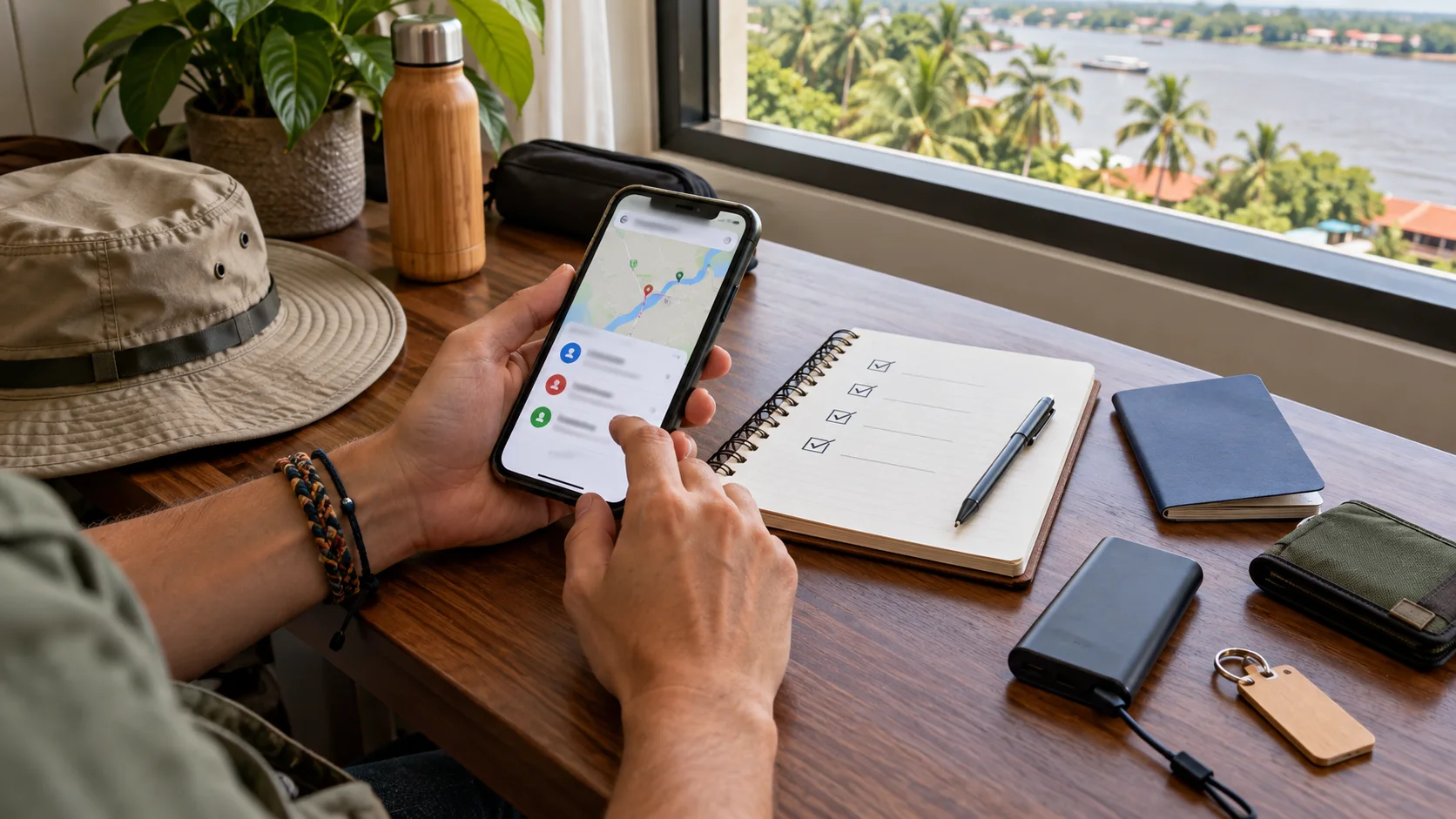
Plan Lima and Iquitos transportation carefully
Most international visitors fly into Lima and continue by domestic flight to Iquitos (IQT). If the tickets are separate, leave a generous connection or stay overnight in Lima. Arrive in Iquitos at least one night before the retreat pickup whenever possible.
Official travel guidance for Peru warns about crime and recommends increased caution. Current advisories also identify the Peru–Colombia border area in Loreto as a higher-risk zone; that warning should not be casually applied to every part of Iquitos, but your exact retreat location and route must be clear. Check the current advisory from your own government before departure because conditions and guidance change.
For taxis and transfers:
- Use the retreat’s confirmed transfer or an authorized service.
- Ask for the driver’s name, phone number and vehicle details before pickup.
- Do not enter a vehicle solely because someone says your name.
- Confirm the destination independently with your retreat contact.
- Keep luggage with you until the driver is verified.
- Avoid displaying cash, expensive jewelry or an unlocked phone in public.
Follow our step-by-step guide on how to get to Iquitos for an ayahuasca retreat and choose dates using the Iquitos weather-by-month guide.
Keep documents, money and communication resilient
Do not rely on one phone, one bank card or a live internet connection. Store the following in more than one safe place:
- Paper and encrypted digital copies of key travel documents.
- One primary card and a backup stored separately.
- A modest amount of Peruvian soles for immediate needs.
- Offline maps and screenshots of pickup instructions.
- International and local retreat contact numbers.
- A portable battery and charging cable.
Use ATMs inside banks or established commercial buildings during business hours when possible. Keep passport originals secured when they are not required, while carrying an appropriate copy in accordance with local rules and official advice.
Complete health screening honestly
Solo travelers may feel pressure to avoid rejection after committing emotionally to the journey. Do not hide a diagnosis, recent crisis, pregnancy, medication or substance use to protect the booking. The purpose of screening is to identify when participation should be adapted, postponed or declined.
Ayahuasca contains pharmacologically active compounds and can interact with medications and health conditions. Never stop prescribed medication on a retreat’s instruction alone. Abrupt withdrawal may create serious risks. Provide the exact product, dose, timing and reason for use, and consult the clinician responsible for your care.
Read ayahuasca safety, contraindications and warning signs and complete the retreat preparation guide before buying non-refundable flights.
Safety inside the ceremony space
A solo guest needs the same informed consent and physical safeguards as anyone else. Before the first ceremony, identify:
- The sober facilitator responsible for practical support.
- How to request help without leaving alone.
- The route to toilets and exits.
- Where personal items are stored.
- What touch, if any, may be offered and how to decline it.
- Who makes an emergency decision.
You may decline a serving, request support or stop participating. A scheduled number of ceremonies is not a debt. Staff should not shame fear, distress or a decision not to continue.
Common short-term effects can include nausea, vomiting, anxiety, confusion and changes in perception. Chest pain, seizure, breathing difficulty, fainting, very high fever, severe agitation, prolonged loss of reality testing or uncontrolled vomiting require urgent assessment—not only a spiritual interpretation.
Emergency resources in Peru
Save official assistance information before traveling. PROMPERÚ operates iPerú, a free tourist information and assistance service, and Peru’s Tourist Protection Network includes the Tourism Police and other public institutions. Contact details can change, so use the current official pages rather than copying an old number from a blog.
- PROMPERÚ: what to do in an emergency
- Peru Tourist Protection Network
- Your embassy or consulate’s current emergency contact.
- Your travel insurer’s 24-hour assistance number.
Know the difference between retreat support and independent help. If the concern involves the retreat itself, contacting only the retreat may be insufficient.
Plan the days after the retreat
Do not schedule a demanding international departure immediately after the final ceremony. Leave time in Iquitos or Lima to sleep, eat, reflect and notice whether you need additional support. Avoid driving and major irreversible decisions while still feeling unsettled.
Before traveling, arrange at least one post-retreat conversation with a trusted person or appropriately qualified professional. If you have an existing therapist, discuss what support they can and cannot provide. A facilitator’s informal messages are not a substitute for emergency mental-health care.

Our ayahuasca integration guide explains sleep, journaling, relationships and signs that professional help is needed. Seek urgent care for suicidal intent, dangerous behavior, severe confusion, inability to sleep for an extended period, mania, psychosis or inability to care for yourself.
Solo travel budget and insurance
Traveling alone can cost more because hotel rooms, taxis and schedule changes are not shared. Build a budget that includes:
- International and Lima–Iquitos flights.
- Buffer nights before and after the retreat.
- Baggage and authorized local transport.
- Travel insurance suitable for the destination and planned activities.
- A private emergency reserve you control.
- Flexible return travel if you need to leave early or recover longer.
Read our complete ayahuasca retreat cost guide for Peru. Confirm exactly what the package includes; flights and personal expenses are normally separate unless the booking states otherwise.
What to pack as a solo guest
Pack lightly enough to handle your own luggage. Keep passport, medication, phone, charger, insurance details, one change of clothes and pickup instructions in your cabin bag. Use discreet waterproof storage for documents and electronics.
Useful items include breathable clothing, a rain layer, closed shoes with grip, insect protection, a small flashlight, reusable water bottle and a simple notebook. Avoid bringing expensive jewelry or unnecessary electronics. See the full Iquitos ayahuasca retreat packing list.
Red flags for solo travelers
Pause or cancel when a provider:
- Accepts you without meaningful health screening.
- Cannot confirm who will collect you or where you are going.
- Refuses to provide the retreat location to your emergency contact.
- Advises stopping medication without qualified oversight.
- Has no written consent, touch or sexual-boundary policy.
- Pressures you to keep the retreat secret from family or clinicians.
- Guarantees healing or says serious symptoms are always cleansing.
- Cannot explain emergency communication and transport.
- Controls your passport, money or phone without a clear voluntary reason.
- Makes leaving financially or physically impossible.
The money already spent is not a reason to ignore new evidence. A retreat can be postponed; personal safety cannot be restored by completing a booking.
Choose a retreat length that leaves room to adjust
Ayaterra offers 3-day, 5-day, 7-day and 8-day ayahuasca retreats in Iquitos. A longer program may provide more observation and rest, but it also means more time away and potentially more ceremonies. Compare the actual schedule rather than assuming longer is automatically safer or deeper.
Use our guide to choosing the right ayahuasca retreat length and confirm that you can decline any scheduled session.
Frequently asked questions
Is it safe to travel alone to an ayahuasca retreat in Peru?
No trip or ayahuasca program is risk-free. Many people travel independently, but safety depends on current local conditions, provider practices, screening, transport, personal health and support. Review official travel advice for your nationality and verify the exact route.
Will I be alone during the retreat?
Not necessarily. “Solo traveler” usually means arriving without a companion. You may join a small group and may have a private or shared room. Ask before booking.
Is a private ayahuasca ceremony safer?
Privacy alone does not establish safety. A one-to-one setting may reduce independent observation and make boundaries more important. Evaluate sober support, consent, accountability and emergency procedures.
Should I tell family where I am going?
Share the itinerary with at least one trusted person. They should know the retreat identity, location, pickup schedule and what to do if an agreed check-in is missed.
Can I leave a retreat early?
You should be free to stop participating, but transport from a remote center may take time and cost money. Ask about the exit process before paying and maintain an emergency reserve.
Should I travel immediately after the final ceremony?
A buffer is preferable. It creates room for rest, travel disruptions and professional support if you are distressed. Avoid a tightly timed international connection.
Can a retreat guarantee my safety?
No. Responsible providers reduce avoidable risk but cannot eliminate every medical, psychological, environmental or travel risk. Guarantees are a warning sign.
The bottom line
A solo ayahuasca retreat in Peru should be independent travel with a strong support plan—not isolation. Verify the provider, complete honest screening, arrange the pickup, share your itinerary, protect your boundaries and plan integration before departure.
Explore Ayaterra’s ayahuasca retreats in Iquitos or contact the team to ask about screening, group size, accommodation and transportation before booking flights.