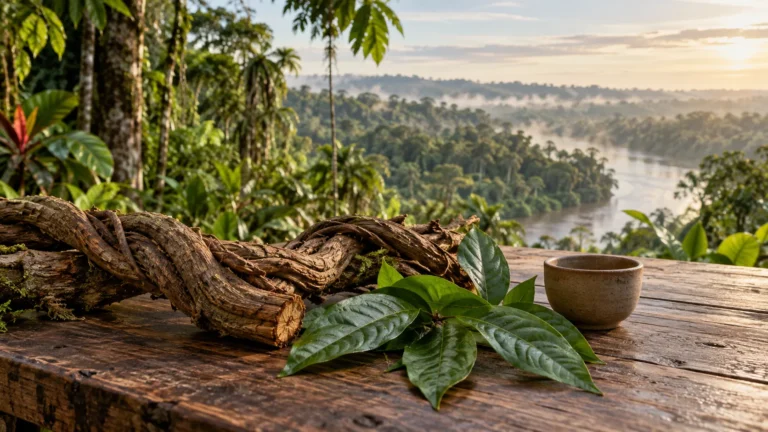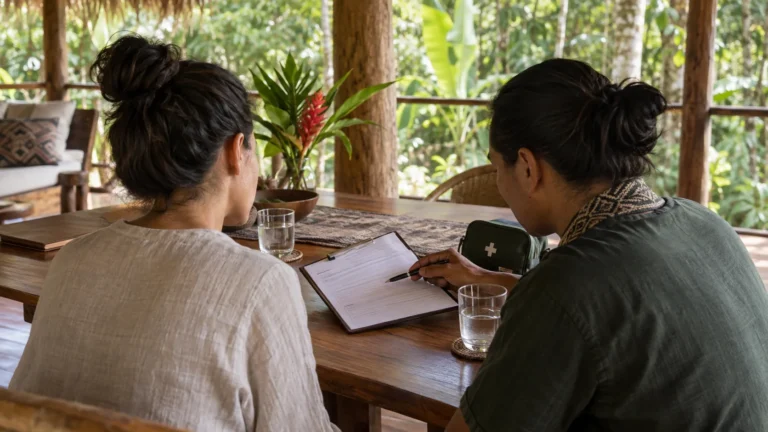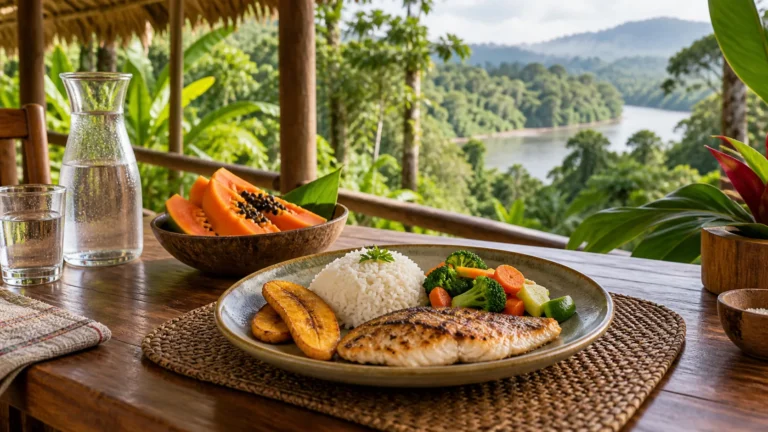

Choosing a safe ayahuasca retreat in Peru requires more than comparing prices, ceremony counts and jungle photographs. You are choosing the people, policies and physical environment that will support you while your judgment, balance and perception may be altered.
No retreat can remove every risk. However, clear screening, trained and sober support, realistic claims, informed consent, transparent costs and a workable emergency plan can help you distinguish a responsible program from one relying mainly on atmosphere and testimonials.
Use these 15 questions before sending a deposit or buying flights. Ask for specific answers in writing when possible. If a center treats reasonable safety questions as distrustful or disrespectful, consider that information part of your decision.
Ayahuasca is not appropriate for everyone and can interact dangerously with some medications and substances. This guide is educational and does not replace medical, legal or mental-health advice.
First, define what “safe†means
Safety is not a promise that a ceremony will feel comfortable. Challenging emotions, nausea, vomiting and temporary anxiety can occur even in a carefully managed setting. Safety means that foreseeable risks are identified, participants receive accurate information and trained people are prepared to respond when something goes wrong.
A responsible retreat should address at least five areas:
- medical and psychological screening;
- the competence and conduct of practitioners and facilitators;
- the ceremony environment and overnight supervision;
- emergency access in a remote location; and
- support before and after ceremonies.
Published research indicates that serious adverse events are uncommon in screened, controlled populations, but they do occur. Naturalistic and commercial settings vary considerably. A 2025 study of publicly advertised psychedelic retreats found wide variation in reported screening, medication management and integration practices. Do not assume that every retreat follows clinical research standards.
For a complete overview of planning, preparation and ceremony, read our ayahuasca retreat guide.
1. What medical and psychological screening happens before payment?
Screening should happen early enough to influence the booking decision. A form completed after flights are purchased creates pressure to minimize or hide important information.
Ask who reviews the form and what happens when an answer needs clarification. Screening should cover medications, supplements, cardiovascular and neurological conditions, mental-health history, personal or family history of psychosis or mania, pregnancy, substance use and previous adverse reactions.
A center does not need to collect irrelevant private details, but it should gather enough information to identify contraindications. Be cautious if approval is instant, every applicant is accepted or the team discourages you from consulting your clinician.
2. How are medications and supplements reviewed?
Ayahuasca commonly contains beta-carbolines that inhibit monoamine oxidase A. This creates possible interactions with serotonergic medicines, other monoamine oxidase inhibitors and additional drugs or substances.
Ask whether the center requires the exact medication name, dose and schedule. “I take an antidepressant†is not enough for a reliable review. The retreat should never instruct you to stop a prescription abruptly or present itself as a replacement for the clinician who prescribed it.
Our detailed guide explains how to prepare for an ayahuasca retreat, including medication disclosure, food guidance and travel planning.
3. Who leads the ceremonies and what is their experience?
Ask for the names or clearly described roles of the practitioners who will actually be present on your dates. A biography of the founder is not sufficient if someone else leads your ceremony.
Useful questions include:
- How long have they practiced within their tradition?
- Who trained or mentored them?
- How do they work with first-time participants?
- How do they respond to panic, confusion or physical illness?
- Are substitute practitioners used, and how are guests informed?
Traditional titles deserve cultural respect, but titles alone do not establish ethics, emergency competence or suitability for every participant.
4. How many sober facilitators are present?
Ceremony size should be evaluated together with staffing. A group of twelve with several trained, sober facilitators is different from a much larger group supported by one person.
Ask how many participants and staff are expected, which staff remain sober and whether someone is assigned to monitor practical safety throughout the night. Facilitators may need to accompany people to bathrooms, respond to distress and observe more than one participant at a time.
Do not accept “the shaman watches everyone†as the entire staffing plan. Traditional leadership and practical monitoring are complementary responsibilities.
5. What happens in a medical emergency?
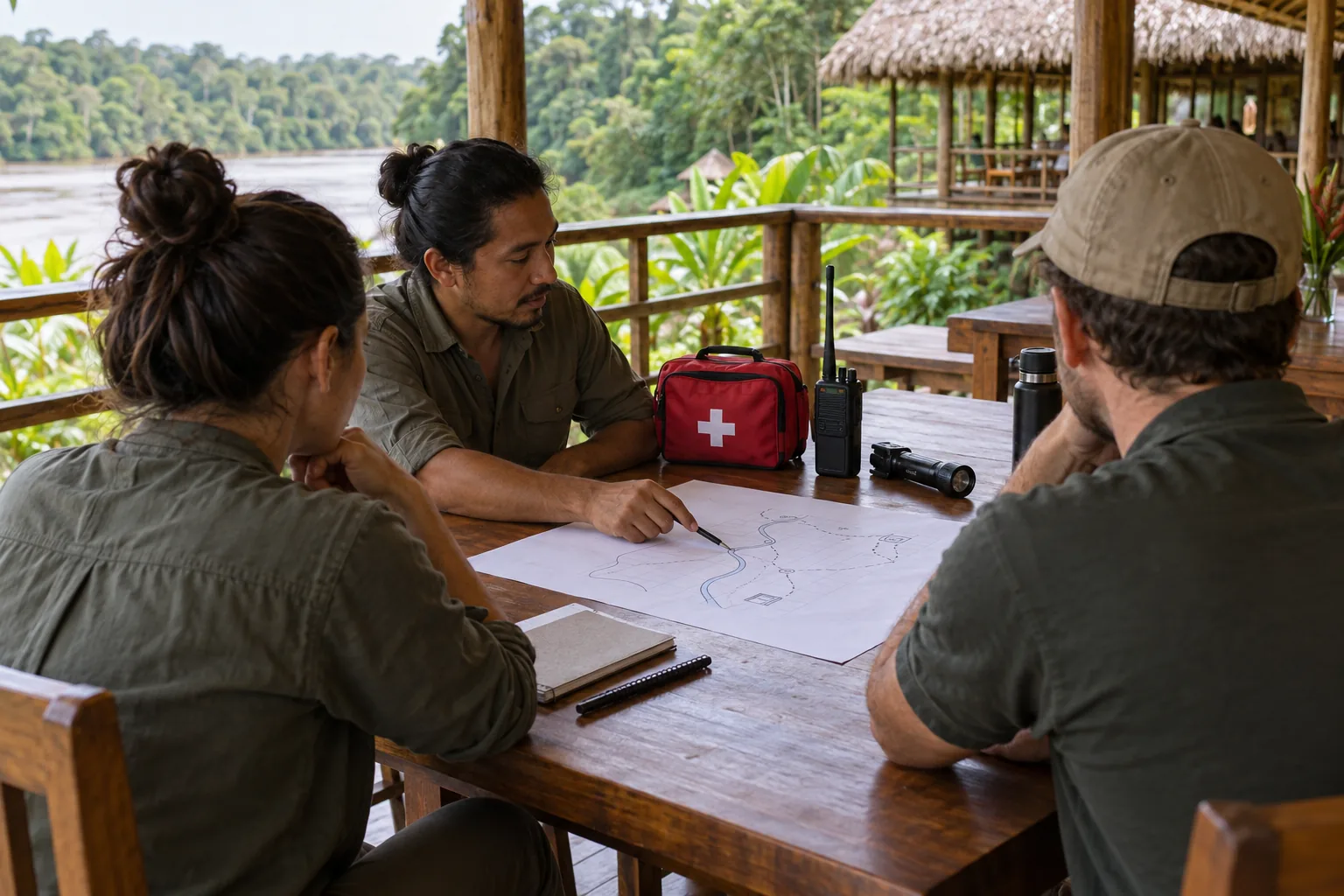
“We have never had a problem†is not an emergency plan. Remote jungle locations require more planning, not less.
Ask:
- What first-aid training and supplies are available?
- Is there reliable phone or radio communication?
- Which clinic or hospital would receive a participant?
- How long does transport take at night and in bad weather?
- Is a boat or vehicle immediately available?
- Who decides when outside medical help is required?
- Does the center document incidents?
Good-practice guidance from ICEERS recommends a known emergency plan, a physically safe environment, continuous supervision and access to appropriate help when needed.
6. What exactly is in the brew?
Ask which plants are used and who prepares the brew. Preparations are not chemically standardized, and adding undeclared plants or substances changes the risk profile.
The center should answer without implying that secrecy proves authenticity. You may not receive a laboratory analysis, but you should receive a clear statement about ingredients and whether anything else is added.
Do not consume a preparation when the responsible people cannot or will not identify its contents.
7. How are serving decisions made?
Ask who determines the initial amount and whether additional servings may be offered. More is not automatically better.
A responsible team should not encourage competition between participants or pressure someone to drink again because effects seem delayed. Individual responses vary, and the amount in another person’s cup is not a meaningful benchmark.
The center should also explain what happens if you decide not to drink or to sit out a later ceremony. Participation should not be compulsory merely because ceremonies are included in the package.
8. What are the rules for consent, touch and privacy?
Ask for a written code of conduct. It should explain what kinds of touch may be offered, how to decline, how urgent safety assistance differs from optional touch and who receives a complaint.
No healer, facilitator or participant should initiate sexual or romantic contact with someone in an altered or vulnerable state. Chacruna’s community guidelines describe sexual misconduct in ayahuasca settings as an abuse of power and warn against romanticizing practitioners as incapable of wrongdoing.
Also ask about photography, recording and personal stories. Participants should not appear in marketing or testimonials without explicit permission.
9. Can participants communicate in a language they understand?
Language support is a safety feature. You need to understand screening questions, ceremony rules, consent, emergency instructions and medication guidance.
Confirm which languages the on-site facilitators—not only the booking staff—speak. Ask whether someone fluent will be present throughout every ceremony and overnight.
Ayaterra’s current programs list an English- and Spanish-speaking facilitator. Confirm the staff assigned to your dates before travel.
10. What does the ceremony setting provide?
Ask to see current photographs of the actual maloca or ceremony room. The space should have clear walking routes, accessible exits, nearby bathrooms, individual places and a plan for lighting when someone needs assistance.
Learn what happens if a participant wants to leave the main room, becomes disruptive or needs one-to-one support. A separate space should not mean being left alone while impaired.
Our step-by-step article explains what happens during an ayahuasca ceremony, including orientation, icaros, possible effects and the morning afterward.
11. What overnight supervision is available?
The strongest effects may diminish before every participant is ready to sleep. Ask who stays available after the formal closing, how to call for help from accommodation and what happens if someone experiences persistent panic, confusion, insomnia or physical symptoms.
Participants should not be allowed to drive, wander into the rainforest or leave by boat while impaired. A responsible center checks stability before ending supervision.
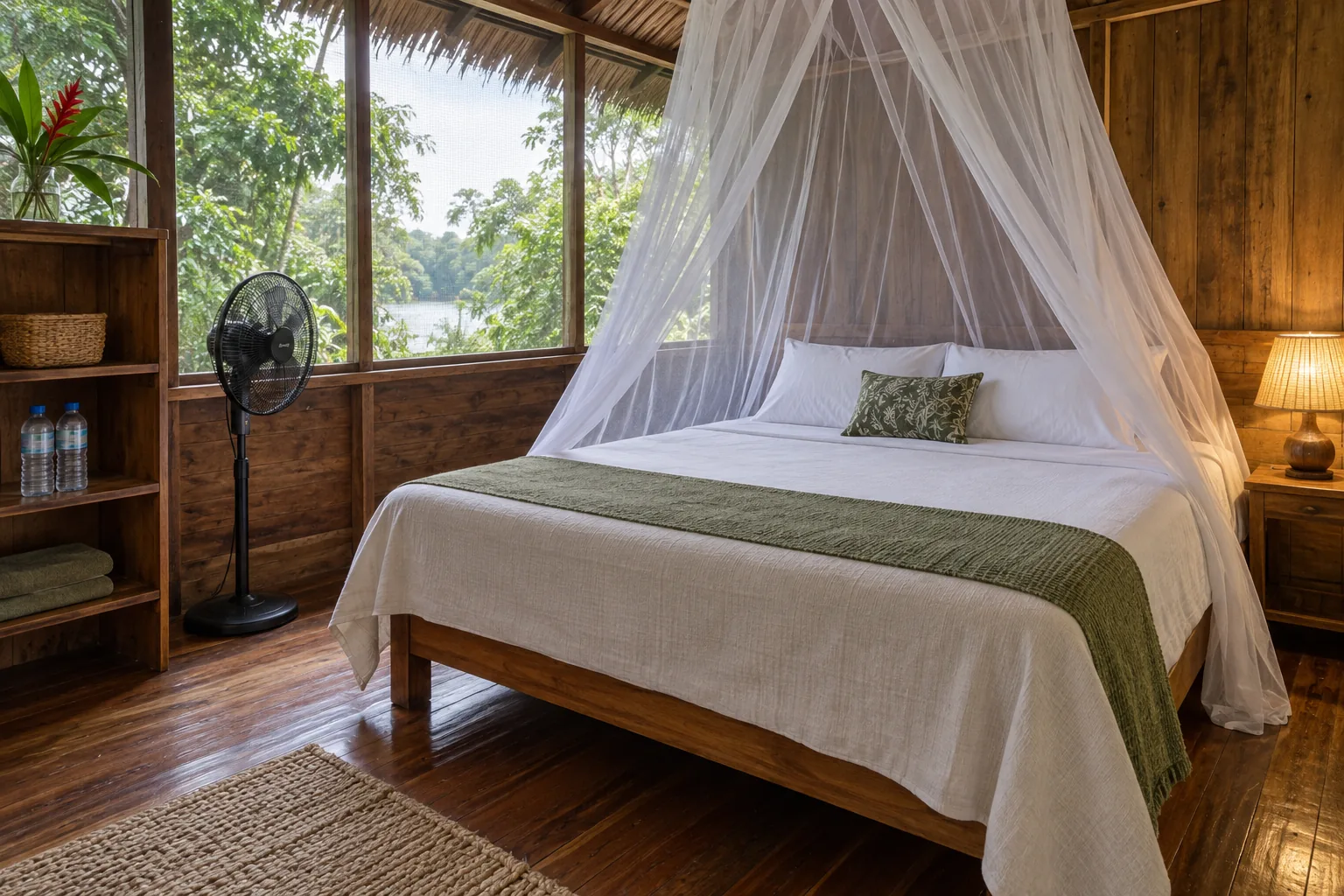
12. What are the accommodation, water and food conditions?
Comfort is not merely a luxury issue. Poor sleep, dehydration, unsafe water or food that does not meet a disclosed medical need can complicate a demanding retreat.
Confirm:
- private or shared room arrangements;
- mosquito nets, screens and ventilation;
- safe drinking water;
- bathroom access at night;
- food-allergy procedures;
- electricity and device-charging limits;
- cleaning and laundry arrangements; and
- what personal supplies guests must bring.
Current images should match the room category you are booking. Avoid assuming that a general gallery represents every accommodation.
13. What preparation and integration support is included?
A retreat is more than ceremony nights. Ask what information arrives before travel, whether you can clarify screening answers, how orientation works and what conversations occur after each ceremony.
Integration support should help participants reflect without imposing a single explanation or promising therapy. Ask whether group sharing is optional, whether private support is available and what referrals exist for persistent difficulties after returning home.
Claims about treating trauma, depression, addiction or another diagnosis require particular caution. A commercial retreat should not present ceremonies as guaranteed medical care.
14. Is the price and cancellation policy transparent?
Request the total price and list of inclusions before paying. Confirm accommodation nights, meals, transfers, ceremony count, optional activities, payment fees and any costs that may arise if you do not participate.
The cancellation policy should explain:
- deposit amount and whether it is refundable;
- deadlines and refund percentages;
- rescheduling rules;
- what happens if the center cancels;
- what happens if screening determines you are ineligible; and
- whether travel disruption or illness changes the policy.
Pay through the center’s verified channel. Do not send money to a different personal account based only on a messaging-app request.
15. Can the retreat answer practical questions without pressure?
Notice how the center communicates. Clear answers, reasonable response times and willingness to acknowledge uncertainty are positive signs. Pressure, countdown tactics and guaranteed transformation are not.
Ask for time to review the information. A center should not use spiritual language to discourage due diligence or imply that hesitation shows you are “not ready to heal.â€
Trust is built through verifiable details, not urgency.
Evaluating transport to a remote retreat
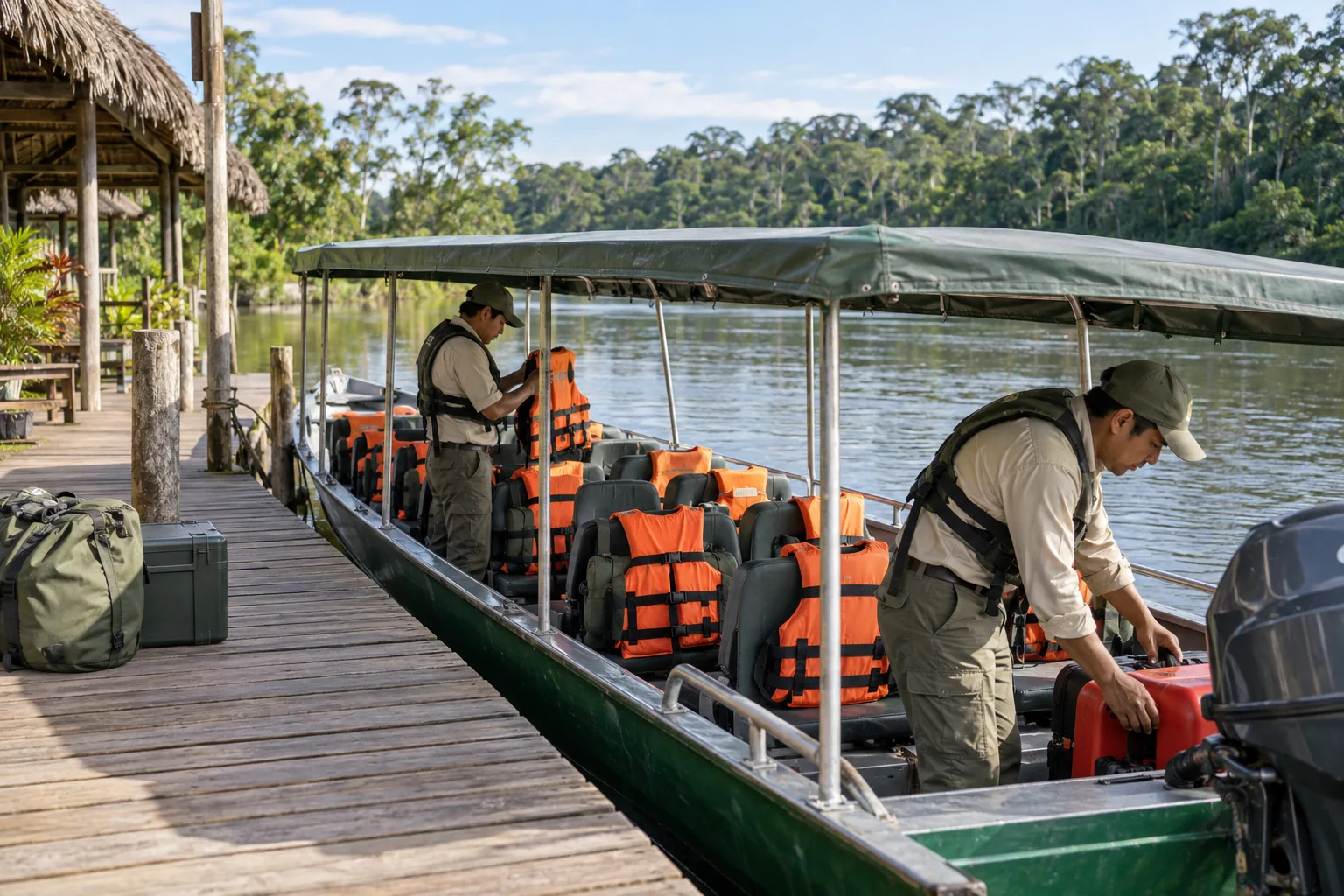
Many retreat centers near Iquitos require road, river or combined transport. Confirm the pickup location, expected duration, luggage limits and what happens during delays or severe weather.
For boat travel, ask whether life jackets are available for every passenger and whether departures occur after dark. The same transport plan may be relevant during a medical evacuation, so compare normal pickup information with the emergency answer.
Red flags when comparing retreats
Pause before booking if you encounter:
- acceptance without meaningful screening;
- instructions to hide or abruptly stop medication;
- guaranteed cures, visions or transformation;
- unclear ceremony leadership or staff numbers;
- no sober overnight support;
- unknown brew ingredients;
- secrecy around touch or one-to-one “healing†practices;
- dismissal of severe symptoms as always spiritual;
- no workable emergency transport;
- missing cancellation terms;
- pressure to pay immediately; or
- retaliation against people who ask safety questions.
One concern may require clarification. Several concerns forming a pattern should outweigh attractive photographs or enthusiastic testimonials.
Positive signs of a responsible retreat
Look for:
- screening completed before major travel commitments;
- specific contraindications and limitations;
- coordination with, rather than replacement of, licensed clinicians;
- named roles for practitioners and sober facilitators;
- a rehearsed emergency plan;
- explicit consent and misconduct policies;
- transparent itinerary, inclusions and payment terms;
- adequate rest between ceremonies;
- optional, non-coercive sharing; and
- honest statements that outcomes vary.
No single badge, review score or beautiful facility replaces this complete picture.
How to compare Ayaterra retreat lengths
Once safety questions are answered, choose a schedule that fits your available time and desired pacing:
- The 3-day ayahuasca retreat is a compact program with two scheduled ceremonies.
- The 5-day ayahuasca retreat includes three ceremonies and a rest day.
- The 7-day ayahuasca retreat provides four ceremonies with additional rest and reflection time.
- The 8-day ayahuasca diet and retreat begins with a longer preparation period and includes three scheduled ceremonies.
More ceremonies do not automatically mean a safer or more effective experience. Screening, staffing, pacing and your individual circumstances matter more than the largest number.
Frequently asked questions
Are ayahuasca retreats legal in Peru?
Peru recognized traditional knowledge and uses of ayahuasca practiced by Amazonian communities as Cultural Heritage of the Nation in 2008. That recognition should not be interpreted as government certification of every commercial retreat. Travelers remain responsible for current laws, entry requirements and the legality of transporting substances across borders.
Does a doctor need to be on-site?
There is no universal model across retreats. What matters is honest disclosure about available qualifications, first aid, communication, transport time and the threshold for seeking outside care. Do not assume “medical support†means a licensed doctor is continuously present; ask exactly what it means.
Are online reviews enough to judge safety?
No. Reviews can reveal patterns, but they rarely verify screening quality, emergency readiness or what happens behind the scenes. Combine recent independent reviews with direct written answers and current program details.
What group size is safe?
There is no universal number independent of staffing and participant needs. Ask for the maximum number of participants, the number of sober facilitators and how simultaneous emergencies would be handled.
Should I choose the cheapest retreat?
Price alone does not establish safety or quality. Compare what is included, staffing, accommodation, transfer, screening and cancellation terms. A low advertised price can become expensive if essential services are excluded.
What if the center refuses to answer a question?
Ask once for clarification in writing. If a safety-critical answer remains vague—especially around screening, ingredients, consent or emergencies—choose another option.
Make the decision before you feel committed
Evaluate a retreat before buying flights, requesting leave from work or emotionally committing to a specific date. Those investments can make it harder to walk away when new concerns appear.
Save the center’s answers, itinerary and policies. Share your plans with a trusted person. If your health or medication changes, contact the retreat again rather than relying on an earlier approval.
Review all Ayaterra retreat options or contact the Ayaterra team to ask about screening, current dates and the details of a specific program.
Sources and further reading
- Reported Safety Practices of Publicly Advertised Psychedelic Retreats.
- Ayahuasca and DMT Adverse Events and Toxicity: A Systematic Review.
- ICEERS Ayahuasca Good Practice Guide.
- Chacruna Ayahuasca Community Guide for the Awareness of Sexual Abuse.
- Peru, Resolution No. 836/INC recognizing traditional ayahuasca knowledge and uses.
Last reviewed: September 2026. This educational guide does not provide medical or legal advice.