Ayahuasca and heart conditions require individualized medical review. Controlled human studies show that ayahuasca can change blood pressure and heart rate, but those studies generally involved small groups of screened volunteers. They do not prove safety for someone with hypertension, arrhythmia, prior heart disease, fainting or cardiovascular medication use.
Do not stop heart or blood-pressure medicine to meet a retreat rule. Give the clinician and retreat the complete diagnosis and medication list, and be prepared for the safest answer to be postponement or non-participation. A remote Amazon setting makes early screening and emergency planning especially important.
Quick answer: ayahuasca, the heart and blood pressure
- Ayahuasca can acutely affect blood pressure, heart rate and autonomic activity.
- Small studies in screened volunteers cannot clear a person with a heart condition.
- Disclose hypertension, rhythm problems, fainting, chest symptoms, stroke, heart disease and relevant family history.
- List every prescription, over-the-counter medicine, supplement and stimulant.
- Never skip or change cardiovascular medicine without the prescriber’s guidance.
- Chest pressure, severe shortness of breath, fainting, seizure, new weakness or speech difficulty, or severe symptoms with very high blood pressure require emergency care.
How can ayahuasca affect the cardiovascular system?
Ayahuasca commonly combines DMT with beta-carboline alkaloids such as harmine and harmaline. These compounds affect serotonin and monoamine oxidase A, and the acute experience can also involve strong emotion, nausea, vomiting, changes in breathing and sympathetic nervous-system activation.
In a double-blind placebo-controlled study of 18 healthy volunteers with prior psychedelic experience, a higher measured dose produced a statistically significant average increase of 9 mm Hg in diastolic blood pressure at one time point. Systolic blood pressure and heart rate increased moderately but not significantly in that small sample.
That result is useful pharmacology, not a safety guarantee. An average change can hide individual variation, and the participants were screened, monitored and given a measured freeze-dried preparation. A retreat brew, a person with cardiovascular disease and a remote setting are different conditions.
Newer studies of measured DMT-harmine formulations add information about pharmacokinetics and short-term tolerability in selected healthy volunteers. They still do not establish safety for every heart condition, prescription combination or ceremonial preparation.
Why healthy-volunteer research cannot clear you
Early clinical studies commonly exclude people with significant cardiovascular illness, uncontrolled blood pressure or medications likely to create risk. That design protects participants and makes data easier to interpret, but it also means the findings cannot simply be extended to people who were not represented.
A review of reports concerning severe ayahuasca reactions noted important gaps in toxicology and case information, while identifying previous cardiac pathology and serotonergic medication use as areas of concern. The evidence base remains incomplete; uncertainty should lead to careful screening, not a claim that serious events are impossible.
Read our complete overview of ayahuasca safety, contraindications and warning signs before deciding that a normal test or stable condition answers every other risk question.
Heart and circulation history to disclose
Tell the retreat and reviewing clinician about any current or previous:
- high or unusually low blood pressure;
- irregular heartbeat, rapid rhythm or unexplained palpitations;
- fainting, near-fainting or dizziness with exercise;
- chest pain, pressure or diagnosed angina;
- heart attack, stroke or transient ischemic attack;
- heart failure, cardiomyopathy or valve disease;
- congenital heart condition or previous cardiac procedure;
- blood clot or pulmonary embolism;
- seizure or unexplained loss of consciousness; and
- close family history of sudden unexplained death or inherited heart disease.
Include symptoms even when they were never diagnosed. “My tests were normal years ago” is not a substitute for describing what happened and whether it continues.
Medication disclosure is part of heart screening
List the exact name, dose, formulation and schedule of every medicine. Include blood-pressure drugs, rhythm medication, blood thinners, diuretics, stimulants, migraine treatments, erectile-dysfunction medicines, inhalers, pain medicines and psychiatric prescriptions.
Over-the-counter products matter too. Some decongestants, energy products, pre-workout formulas and herbal supplements can affect blood pressure or heart rate. “Natural” does not mean cardiovascularly inactive.
Do not withhold medication to avoid being declined. Do not skip a dose on ceremony day or stop treatment during a dieta unless the prescriber has given an individualized plan. Rebound blood pressure, rhythm changes or return of the treated condition may be more dangerous than the traveler expects.
If you also take psychiatric medication, read our separate guide to ayahuasca and antidepressants. A single medicine can be relevant to more than one screening category.
Get a clinical review before booking non-refundable travel
Tell the clinician that the proposed ayahuasca preparation may contain DMT and reversible MAO-A-inhibiting beta-carbolines. Provide the retreat dates, number of planned ceremonies, location, transport time to medical care and written medication policy.
The clinician may review symptoms, diagnosis, blood pressure history, medication, examination and previous testing. Whether additional testing is appropriate depends on the person; a retreat blog cannot prescribe an electrocardiogram, stress test or laboratory panel for everyone.
Useful questions include:
- Does my diagnosis or symptom history make this exposure inappropriate?
- Could my prescriptions, supplements or over-the-counter products interact?
- Would travel, heat, dehydration, sleep loss or repeated vomiting change my risk?
- Which symptoms require immediate emergency care?
- What should I do with my usual medicine during travel delays or illness?
- Is a remote setting with delayed access to a hospital acceptable for me?
Complete this review alongside the broader steps in our ayahuasca retreat preparation guide.
Blood pressure readings: useful, but not a self-clearance test
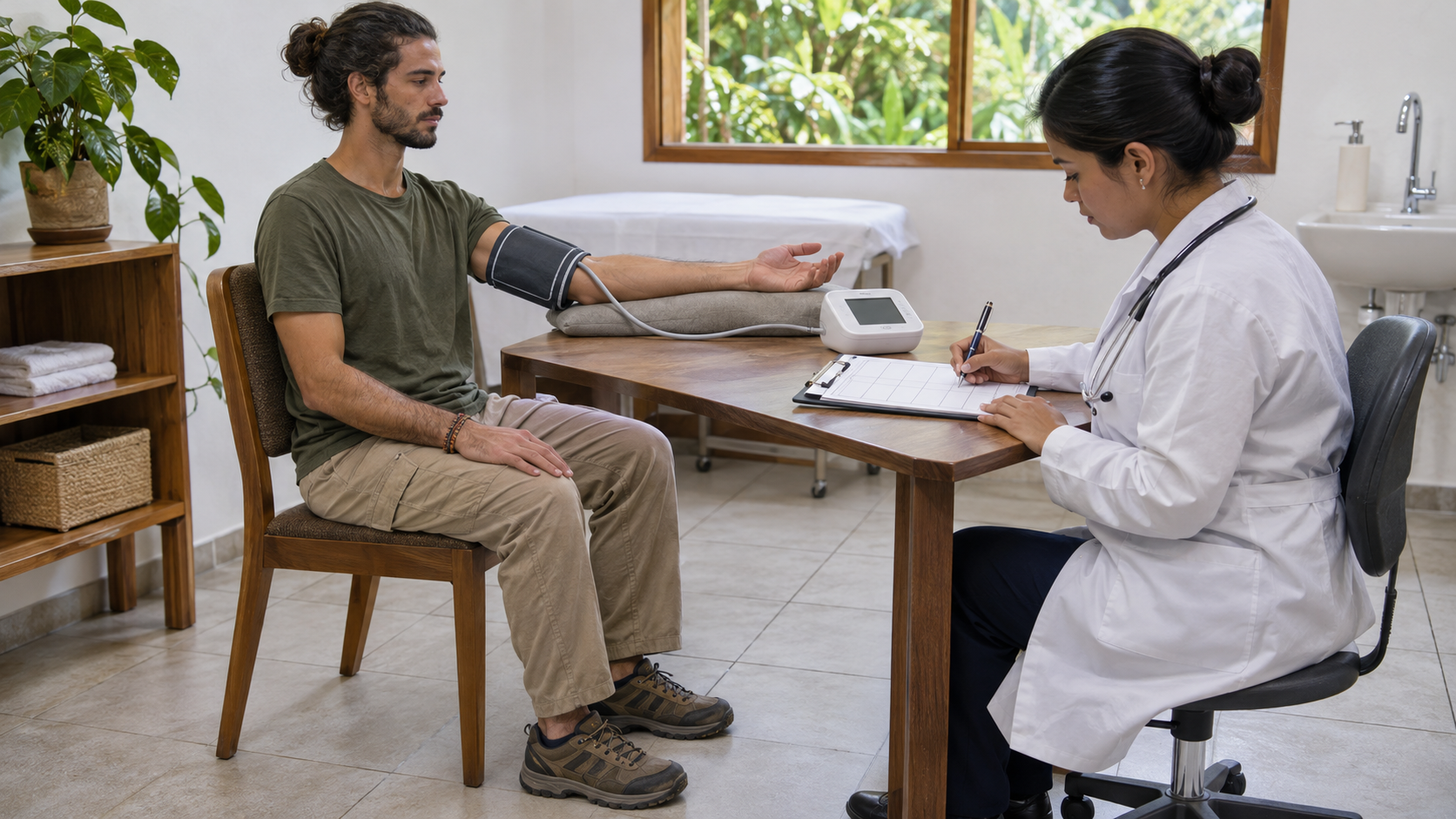
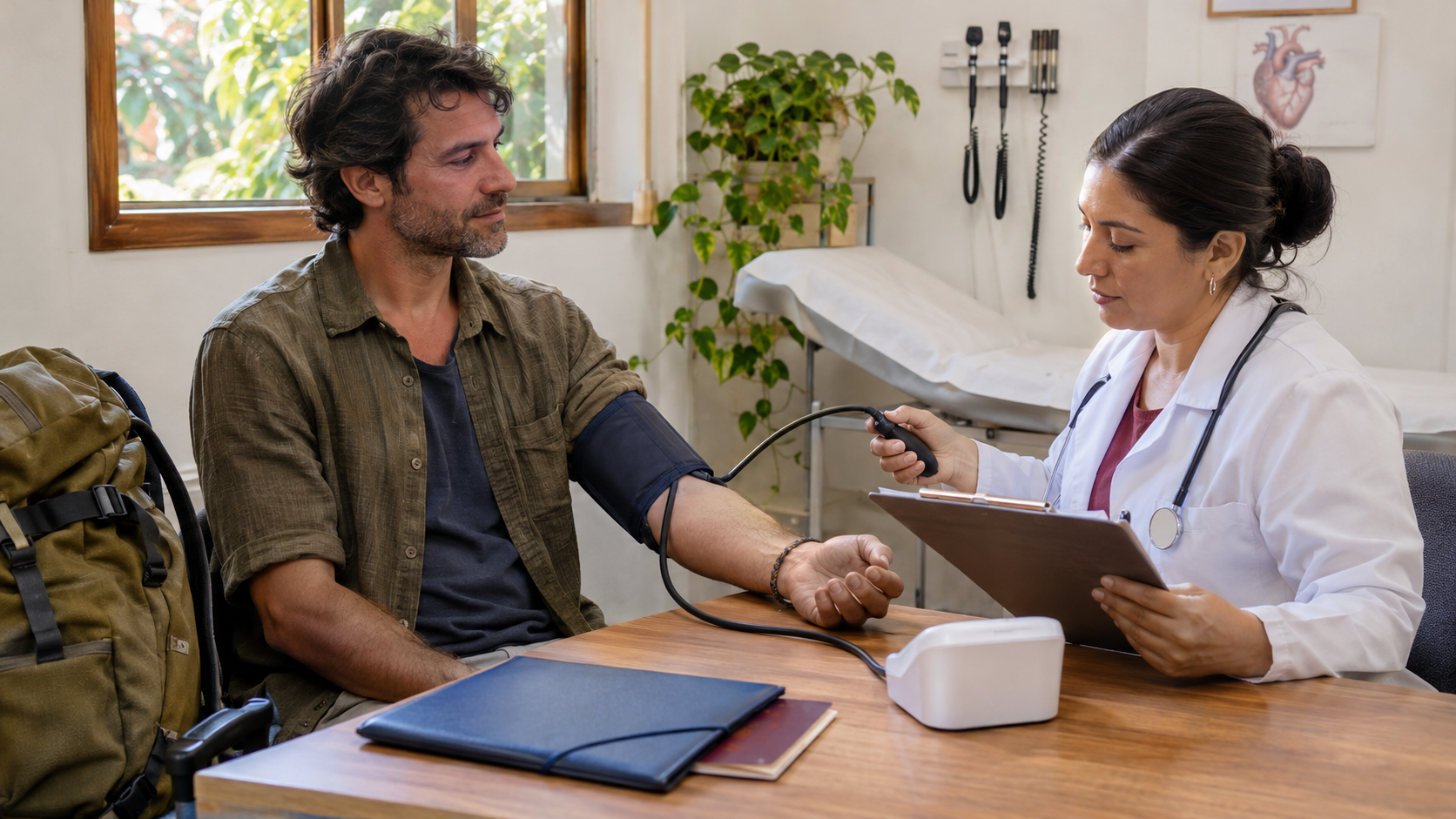
Blood pressure varies with rest, pain, caffeine, anxiety, temperature, cuff size and technique. A rushed reading after carrying luggage or walking in Amazon heat may not represent the person’s usual level. Repeated measurements taken correctly are more informative than one isolated number.
Use a validated upper-arm device and follow the clinician’s instructions. Sit quietly first, keep the back and feet supported, place the cuff on bare skin and support the arm at heart level. Record the results rather than choosing only the lowest one.
A normal reading today does not rule out arrhythmia, structural heart disease or an interaction. A high reading does not tell a retreat to diagnose or change medication. Eligibility is a clinical and program decision, not a pass/fail number copied from the internet.
Heat, vomiting and dehydration add cardiovascular stress
Iquitos is hot and humid. Travel fatigue, sweating, reduced food intake, diarrhea and vomiting can change fluid and electrolyte balance. For someone using diuretics or managing heart, kidney or blood-pressure conditions, generic hydration advice may be inappropriate.
Do not deliberately dehydrate or fast aggressively to intensify a ceremony. Do not force large volumes of plain water either. Follow individualized guidance and report persistent vomiting, diarrhea, very low urine output, severe weakness or confusion.
Our guides to food and water safety in Iquitos and ayahuasca purging and vomiting warning signs explain these practical risks in more detail.
What a heart-aware retreat safety plan should include
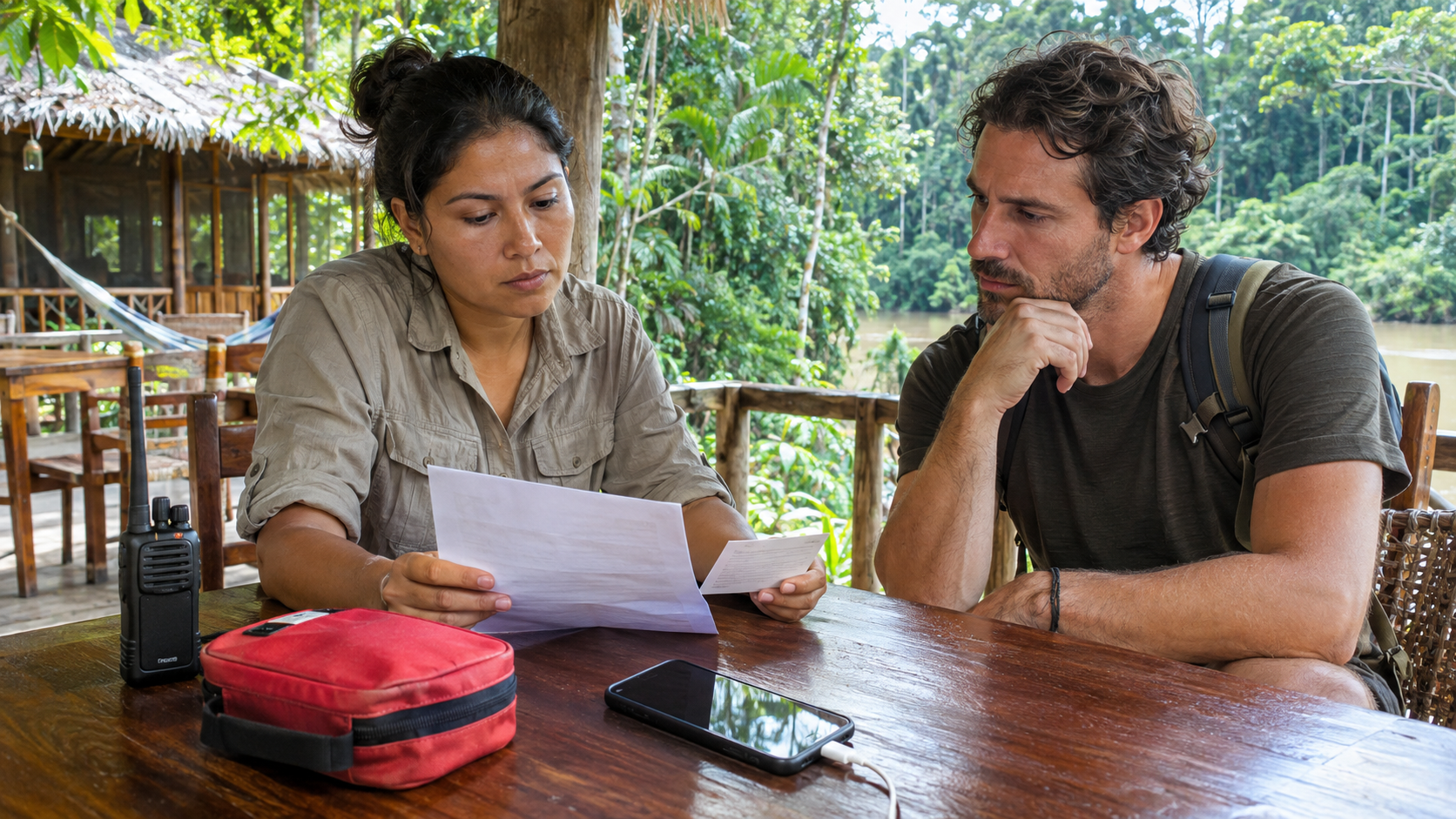
A retreat is not a cardiac unit, but it should have clear limits and a workable response plan. Ask:
- Who reviews the health questionnaire and follows up on heart history?
- Which conditions or symptoms lead to declining participation?
- Who remains sober and observant throughout the ceremony?
- Which staff have current first-aid or CPR training?
- How can staff contact emergency help if mobile data fails?
- What vehicle or boat is available, including at night?
- How long does transfer realistically take in current conditions?
- Which clinic or hospital is the intended destination?
- How are medication lists and emergency contacts made available?
- Can any guest skip or stop participation without pressure?
A blood-pressure cuff, first-aid kit or automated external defibrillator can be useful only when equipment is maintained and people know how to use it. Props in marketing photos do not replace trained staff, communication or evacuation.
Compare the complete answers with our guide to choosing a safe ayahuasca retreat in Peru.
Cardiovascular warning signs during or after ceremony
An altered state can make symptoms difficult to describe, and anxiety can also produce a racing heart or chest discomfort. Neither fact justifies assuming that a dangerous symptom is “only panic.” Sober staff must assess changes and escalate when necessary.
Activate emergency care for:
- new crushing, squeezing or persistent chest pressure;
- chest discomfort with sweating, nausea, dizziness or shortness of breath;
- severe or rapidly worsening breathing difficulty;
- fainting, seizure or inability to wake normally;
- a sustained very fast or markedly irregular heartbeat with weakness or chest symptoms;
- new facial droop, one-sided weakness, numbness, vision change or difficulty speaking;
- sudden severe back or chest pain; or
- very high blood pressure accompanied by concerning symptoms.
The American Heart Association describes blood pressure above 180/120 mm Hg with symptoms such as chest pain, shortness of breath, weakness, vision change or difficulty speaking as a hypertensive emergency. Call the local emergency number rather than trying to lower it with an extra dose or another guest’s medicine.
Do not walk an ill person through a dark forest or transport them without appropriate help when emergency services can advise. The retreat should communicate the exposure, symptom timeline, medicines and measured observations to clinicians.
Do not continue to the next ceremony automatically
After chest symptoms, fainting, severe palpitations, an extreme blood-pressure reading or medical transfer, another ceremony should not be treated as a routine choice. Follow professional advice and resolve the event first.
Even without an emergency, reassess ongoing vomiting, poor sleep, dehydration, fever or medication changes before each ceremony. A paid itinerary does not create an obligation to participate.
If care or evacuation is needed, appropriate travel insurance for an ayahuasca retreat may help with coordination and cost, but exclusions must be checked before travel.
Frequently asked questions
Can someone with controlled high blood pressure take ayahuasca?
“Controlled” does not answer every risk question. The diagnosis, readings over time, medication, organ effects, other conditions and remote setting require individual review. Do not use a single normal measurement as clearance.
Does ayahuasca always raise blood pressure?
No universal response can be predicted. Small controlled studies show average cardiovascular changes, but individuals, doses and preparations vary. Monitoring data from healthy volunteers cannot guarantee one person’s response.
Should I stop blood-pressure medication before ceremony?
Not on your own. Abruptly skipping or stopping treatment can be dangerous. Give the exact prescription to the clinician and retreat and follow an individualized plan.
Is a normal ECG enough to prove safety?
No single test proves that ayahuasca is safe. An ECG answers specific questions at a specific time; it does not evaluate every structural, blood-pressure, medication or interaction risk.
Can anxiety explain a racing heart?
Anxiety can affect heart rate, but staff should not use that possibility to dismiss severe, persistent or associated symptoms. Chest pressure, fainting, breathing difficulty or neurological changes require medical assessment.
Is an isolated jungle retreat safe for heart disease?
Distance from care is part of the risk. A clinician must consider the condition, and the guest should verify communication, nighttime transport and realistic transfer time before booking.
Put cardiovascular safety before the ceremony schedule
A responsible decision may be approval with an individualized plan, postponement, a different setting or no participation. The right answer cannot be purchased, guaranteed by a retreat or inferred from another guest’s experience.
Review Ayaterra’s ayahuasca retreats near Iquitos and contact the team for its current health-screening process. Complete clinical review before committing to non-refundable travel.
Research and cardiovascular sources
- Controlled human study of ayahuasca pharmacology and cardiovascular effects
- Dose-escalation study of DMT and harmine interactions
- Critical evaluation of reports involving severe ayahuasca reactions
- American Heart Association: severe hypertension and emergency symptoms
- MedlinePlus: chest pain and immediate-care signs
- MedlinePlus: heart disease warning signs
Medical disclaimer: This article provides general education, not medical clearance or diagnosis. Ayahuasca is not appropriate for everyone. Do not change cardiovascular medication without the prescriber, and seek emergency care for severe or worsening symptoms.