

Ayahuasca and antidepressants should not be combined or separated through guesswork. Ayahuasca commonly contains compounds that inhibit monoamine oxidase A (MAO-A), while many antidepressants affect serotonin, norepinephrine or other signaling systems. That creates a credible interaction concern, but it does not create one universal rule for every medicine or every person.
Do not stop, skip or reduce an antidepressant to qualify for a retreat without the prescriber’s guidance. Abrupt changes can cause withdrawal symptoms, return of depression or anxiety, and sometimes serious changes in mood or safety. The correct process includes both clinical medication review and honest retreat screening.
Quick answer: can you take ayahuasca with antidepressants?
- Do not assume the combination is safe. Ayahuasca has MAO-A-inhibiting and serotonergic pharmacology.
- Give the retreat and your clinician the exact medicine, dose, formulation and schedule.
- Never stop an antidepressant suddenly or follow an online “washout” chart on your own.
- There is no single safe waiting period for all SSRIs, SNRIs, tricyclics, MAOIs or atypical antidepressants.
- Retreat approval does not replace advice from the prescriber or a qualified pharmacist.
- Agitation, confusion, fever, heavy sweating, muscle rigidity, clonus, seizure or rapidly changing vital signs after a possible interaction require urgent medical care.
Why interaction risk is taken seriously
Traditional ayahuasca preparations commonly combine plants containing N,N-dimethyltryptamine (DMT) with beta-carboline alkaloids such as harmine and harmaline. Human pharmacology research describes harmine and harmaline as reversible inhibitors of MAO-A. This inhibition allows orally consumed DMT to avoid rapid breakdown and reach systemic circulation.
That mechanism is central to the experience, but it also matters for medication safety. Monoamine oxidase participates in the metabolism of several neurotransmitters and substances. Many antidepressants change serotonergic or noradrenergic activity through other mechanisms. Combining pharmacologically active agents can produce effects that are difficult to predict outside a controlled clinical setting.
Plant brews are not standardized prescription products. Alkaloid content can vary with species, recipe, preparation and serving. A clinical trial using measured compounds in screened volunteers cannot establish the safety of an unknown ceremonial preparation for someone taking a specific prescription.
Read our broader guide to ayahuasca risks, contraindications and warning signs before treating this as an isolated medication question.
What counts as an antidepressant?
“Antidepressant” describes several medication classes rather than one drug. These include selective serotonin reuptake inhibitors (SSRIs), serotonin-norepinephrine reuptake inhibitors (SNRIs), tricyclic antidepressants, prescription monoamine oxidase inhibitors (MAOIs) and medications with other or mixed mechanisms.
They may be prescribed for depression, anxiety, obsessive-compulsive disorder, post-traumatic stress, chronic pain, migraine prevention, sleep or another condition. A guest may not realize that a medicine used for pain or sleep is still pharmacologically relevant to ayahuasca screening.
The exact product matters. So do the dose, formulation, treatment duration, timing of the last dose, liver and kidney function, other medicines and the condition being treated. Two travelers who both say “I take an antidepressant” may have completely different clinical situations.
What does the evidence actually show?
Direct interaction evidence is limited. Most controlled ayahuasca or DMT-harmine studies use small samples of carefully screened participants and exclude people taking medications that could create confounding or safety concerns. Those trials help explain pharmacology, but they cannot answer whether a particular retreat guest can safely stop or combine a prescription.
Published warnings about ayahuasca and serotonergic medicines are based on the known pharmacology, established risks of combining prescription MAOIs with serotonergic agents, case reports and precaution. In 2026, a case report described severe serotonin syndrome after repeated ayahuasca use followed by dextromethorphan, an over-the-counter cough-medicine ingredient with serotonergic activity. That case did not involve an antidepressant and cannot calculate the risk of an SSRI, but it shows why non-prescription products must also be disclosed.
Absence of a large number of documented cases does not prove safety. Retreat exposures are difficult to standardize, adverse events may not be published, and exact brew contents or co-used substances are often unknown.
Serotonin syndrome: important but not self-diagnosed
Serotonin syndrome, also called serotonin toxicity, is an uncommon but potentially life-threatening reaction caused by excessive serotonergic activity. It is a clinical diagnosis. Anxiety, sweating or nausea alone does not confirm it, and a retreat should not diagnose it from a checklist.
MedlinePlus and NHS professional guidance describe combinations of mental-status changes, autonomic changes and neuromuscular findings. Warning signs can include:
- marked agitation, restlessness or confusion;
- fever, heavy sweating or shivering;
- rapid heart rate or large changes in blood pressure;
- tremor, muscle rigidity, spasms, clonus or overactive reflexes;
- loss of coordination, seizure or reduced consciousness; and
- rapid worsening after exposure to serotonergic substances.
Call local emergency services and activate the retreat’s emergency plan when a serious interaction is suspected. Do not wait for the ceremony to end, attempt to “breathe through” severe symptoms or treat them only as spiritual resistance. Tell clinicians everything taken, including ayahuasca, prescriptions, supplements and over-the-counter products.
Why stopping an antidepressant can also be dangerous
Interaction concern does not mean a traveler should abruptly remove the medication. MedlinePlus and the NHS advise against stopping antidepressants suddenly without clinical guidance. Withdrawal can include dizziness, nausea, sleep disruption, anxiety, irritability, sweating, palpitations, sensory disturbances and other symptoms.
Depression, anxiety or another treated condition may also return or worsen. For some people, medication changes can coincide with suicidal thoughts or a mental-health crisis. A retreat date is not a medical reason to rush a taper.
Withdrawal symptoms can overlap with travel fatigue, tropical illness, anxiety and ceremony effects. Arriving in Iquitos during an unstable medication change can make assessment harder and reduce the support available from the person’s usual healthcare team.
If the prescriber concludes that the medication should continue, the safe outcome may be to postpone or decline ayahuasca. A legitimate retreat should respect that decision rather than encourage concealment or self-directed discontinuation.
There is no universal ayahuasca washout period
Online charts often give a single number of days for broad medication classes. That is not individualized care. Medicines have different half-lives, active metabolites, formulations and withdrawal profiles. Fluoxetine, for example, behaves differently from many shorter-acting antidepressants, but even drug-specific timing cannot be decided from half-life alone.
A clinical plan must consider why the medicine was prescribed, how long it has been used, previous withdrawal, current stability, relapse risk, other medications and the proposed exposure. Some tapers take longer than a retreat booking window, and some people should not discontinue at all.
Do not ask a retreat to prescribe a taper or provide a guaranteed “safe date.” Ask the prescriber or a qualified pharmacist to review the exact situation. Then give the retreat the resulting information so its own eligibility policy can be applied.
Make a complete medication and substance list
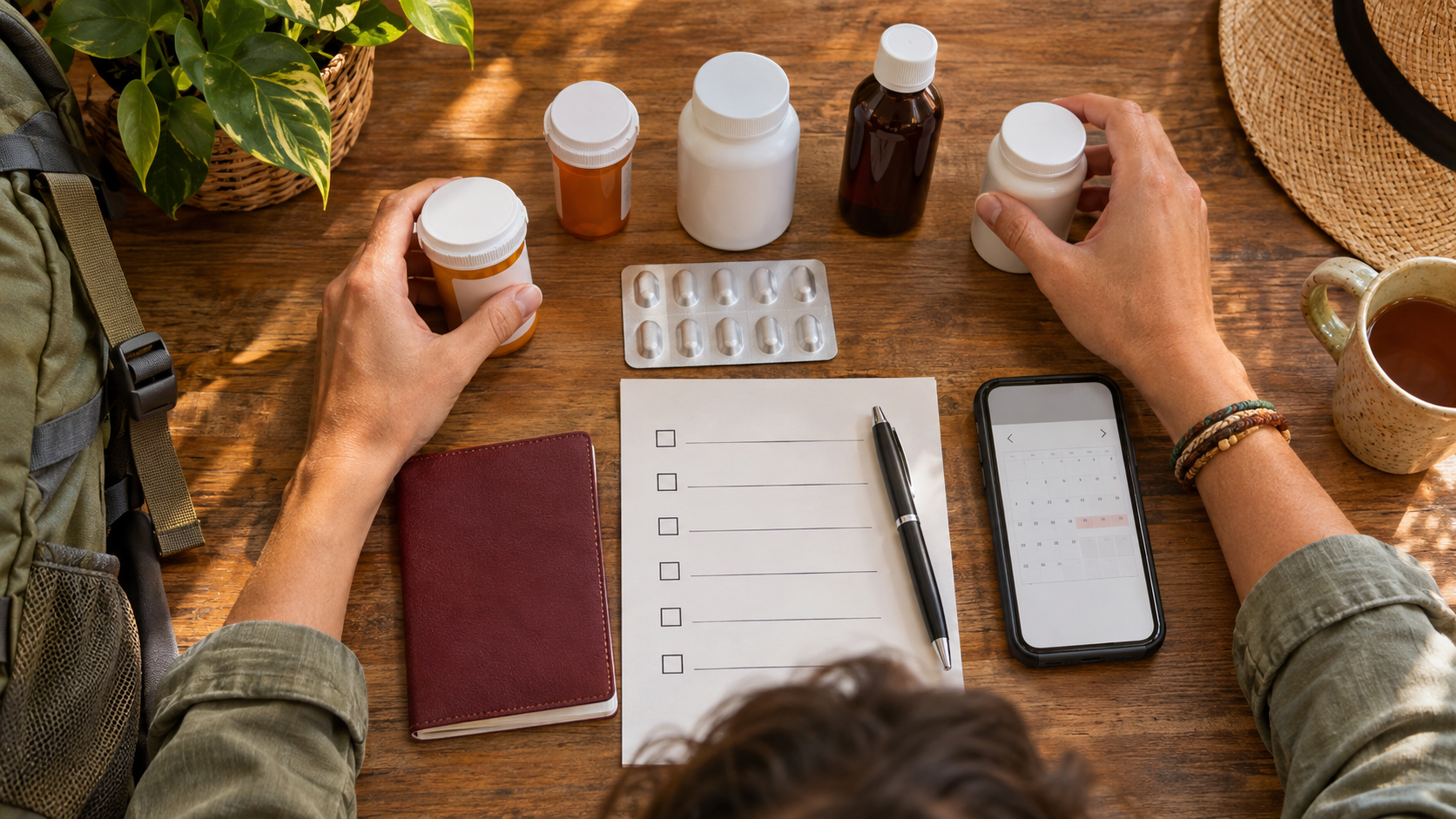
For every product, record:
- generic and brand name;
- dose and formulation, including extended-release versions;
- time of day and how often it is taken;
- why it was prescribed or used;
- how long you have taken it;
- any recent missed doses, reductions or increases; and
- previous withdrawal or relapse during medication changes.
Include sleep medicines, pain medicines, migraine treatments, ADHD medication, cough and cold products, antihistamines, anti-nausea products, herbal remedies, “serotonin support” supplements, cannabis, alcohol and other recreational substances. Do not decide that an item is irrelevant because it is natural or sold without a prescription.
Keep medicines in their original labeled packaging when traveling. Bring enough for delays unless a clinician has changed the plan, and review our Iquitos ayahuasca retreat packing list for documents and health supplies.
Use a two-part review: clinician and retreat
1. Speak with the prescriber or pharmacist
Explain that the proposed brew may contain DMT and reversible MAO-A-inhibiting beta-carbolines. Do not describe it only as a “plant retreat.” Provide the dates, expected number of ceremonies and the retreat’s written medication policy.
Ask the clinician to review interaction concerns, the risks of changing treatment, signs that require urgent help and what to do if the trip is postponed. A clinician who is unfamiliar with ayahuasca may need time to research it or consult a medicines-information service.
2. Complete the retreat’s screening honestly

The retreat needs the same exact list, plus mental-health history, physical conditions, substance use and recent medication changes. Screening should happen before non-refundable travel whenever possible.
A retreat can decide that a guest does not meet its participation criteria. It should not diagnose, prescribe, override the treating clinician or promise that a short pause removes all risk. If the clinician and retreat disagree, do not combine the most permissive pieces of each answer to manufacture approval.
Use our ayahuasca retreat preparation guide to organize the rest of the health and travel timeline.
Retreat medication-screening red flags
Pause the booking if a center:
- gives the same washout period for every antidepressant;
- tells you to stop immediately without involving the prescriber;
- says natural medicine cannot interact with pharmaceuticals;
- guarantees that dieta or fasting will eliminate medication risk;
- discourages disclosure because rejection might affect the sale;
- has no sober staff or emergency-transfer plan;
- labels fever, rigidity, seizure or severe confusion as ordinary purging; or
- pressures you to drink because you already paid.
Positive signs include early written screening, exact follow-up questions, willingness to decline unsuitable guests, respect for prescriber input and a clear plan for medical emergencies. Compare providers using our safe ayahuasca retreat checklist.
What if you already stopped medication for a retreat?
Contact the prescriber or pharmacist promptly and explain exactly what you changed and when. Do not independently restart, double a dose or improvise a taper; the appropriate next step depends on the medication, timing and symptoms.
Tell the retreat before traveling or participating. New dizziness, insomnia, anxiety, nausea, sensory disturbances, low mood or other changes may represent withdrawal, recurrence or another problem and need assessment.
Seek urgent help for suicidal thoughts, inability to stay safe, severe agitation, mania-like behavior, psychosis, seizure, collapse or rapidly worsening physical symptoms. A remote ceremony is not an appropriate setting for stabilizing a medication crisis.
What if symptoms start after ayahuasca?
Alert sober staff immediately. Provide the medication list and containers to the person arranging care. Do not take an extra antidepressant, sedative, antihistamine or over-the-counter remedy unless a qualified clinician directs it.
Vomiting and anxiety can occur during ayahuasca experiences, but severe or worsening symptoms still require ordinary medical judgment. Our guide to ayahuasca purging and warning signs explains when gastrointestinal symptoms need escalation.
After any significant reaction, do not attend another scheduled ceremony until medically assessed. The number of ceremonies purchased never overrides health.
Frequently asked questions
Can I take ayahuasca while using an SSRI?
Do not assume that it is safe. SSRIs affect serotonin, while ayahuasca commonly contains MAO-A-inhibiting compounds and DMT. The exact medicine and personal situation require clinical review, and the retreat must apply its screening policy.
How long should I stop antidepressants before ayahuasca?
There is no responsible universal answer. Timing depends on the exact medicine, formulation, treatment history, withdrawal risk and clinical condition. Never use a generic internet chart as a taper plan.
Is mirtazapine, bupropion or trazodone safe with ayahuasca?
Do not label an antidepressant safe based only on its class or a forum post. These medicines have different pharmacology and patient-specific risks. Provide the exact prescription to the prescriber, pharmacist and retreat.
What if I only take a low dose?
A low dose does not prove that an interaction is impossible, and it may still be clinically important to the person taking it. Dose is one part of a complete review.
Can a retreat doctor approve my taper?
A licensed clinician with access to your history may be able to advise within their professional scope, but a brief retreat contact should not automatically replace the prescriber managing the condition. Confirm credentials, continuity and who will monitor the change.
Are supplements safer than antidepressants?
Not automatically. Herbal and dietary products can contain active compounds, multiple ingredients or inconsistent amounts. Disclose them with the same care as prescriptions.
Medication safety matters more than the retreat date
Ayahuasca is not a reason to hide treatment or destabilize mental health. A careful decision may lead to a clinician-supervised plan, a postponed retreat or a decision not to participate. All are more responsible than improvising.
Review Ayaterra’s ayahuasca retreats near Iquitos and contact the team for the current screening process. Provide complete information early and keep medication decisions with qualified healthcare professionals.
Research and health sources
- Human pharmacology and pharmacokinetics of ayahuasca
- Pharmacokinetics of ayahuasca alkaloids in humans
- Controlled study of DMT and harmine interactions
- 2026 case report of serotonin syndrome after ayahuasca and dextromethorphan
- MedlinePlus: serotonin syndrome
- MedlinePlus: stopping antidepressant medicines
- NHS: antidepressants and withdrawal
Medical disclaimer: This article provides general education and does not determine whether ayahuasca or a medication change is safe for you. Do not start, stop or alter prescription medicine without qualified clinical guidance. Seek urgent help for severe symptoms or a mental-health crisis.