Ayahuasca and anxiety are frequently presented online as a simple treatment story. The evidence is much narrower. One tiny pilot trial studied social anxiety, while broader psychedelic reviews combine different substances, diagnoses and clinical protocols. None of this proves that a commercial ayahuasca retreat treats panic disorder, generalized anxiety or another anxiety disorder.
Anxiety also matters for safety. Ayahuasca can intensify perception, emotion and body sensations. A racing heart, nausea, dizziness, altered breathing or loss of control may feed a panic cycle. Some people feel calmer afterward; others experience acute fear or mental-health effects that continue beyond the ceremony. Screening should address both possibilities without promising either.
Quick answer: is ayahuasca safe for anxiety?
- Ayahuasca is not an established treatment for anxiety disorders.
- The only small randomized ayahuasca trial in social anxiety included 17 volunteers and did not show broad anxiety improvement.
- Panic symptoms may intensify during an altered state and can overlap with medical emergencies.
- Do not stop antidepressants, benzodiazepines, beta-blockers or other medication without the prescriber.
- Current stability, panic history, avoidance, dissociation, sleep, substance use and medical conditions all belong in screening.
- Severe, unfamiliar or persistent symptoms require ordinary medical or mental-health assessment.
Anxiety is not one single condition
Generalized anxiety disorder may involve persistent worry, tension and difficulty controlling apprehension. Social anxiety centers on fear of scrutiny or negative evaluation. Panic disorder involves recurrent, unexpected panic attacks plus continuing worry or behavioral change. Agoraphobia can involve fear of settings where escape or help may feel difficult.
PTSD, obsessive-compulsive disorder, depression, bipolar disorder, substance use, thyroid disease, heart or respiratory conditions can produce overlapping symptoms or occur at the same time. A retreat questionnaire should not treat every experience of anxiety as interchangeable.
The distinction matters because a person who worries before travel may need different planning from someone with frequent fainting, severe dissociation, recent emergency visits or benzodiazepine dependence. A qualified clinician can also check whether symptoms attributed to panic need physical evaluation.
What does the ayahuasca evidence show?
The most direct randomized study enrolled only 17 people with social anxiety disorder. Participants received ayahuasca or placebo before a public-speaking task. Ayahuasca improved self-perception of speech performance, but most other anxiety measures were not significantly changed. The trial was explicitly a pilot and proof-of-concept study.
That result cannot be generalized to panic disorder, generalized anxiety, agoraphobia or routine retreat use. Seventeen volunteers are too few to establish effectiveness, detect uncommon harms or identify who should participate. The study also used a defined research protocol, not an unknown-strength brew in a commercial program.
Reviews of psychedelic treatment for anxiety combine ayahuasca with psilocybin, LSD, MDMA and ketamine. A 2025 living meta-analysis rated evidence for serotonergic psychedelics in anxiety disorders as very low certainty and noted high risk of bias in most included trials. Results for another substance do not validate ayahuasca.
Research interest is real, but the responsible conclusion is that benefit remains unproven for an individual. Read our broader overview of ayahuasca safety, risks and contraindications.
Why ayahuasca can amplify a panic cycle
A panic attack can include a pounding heart, sweating, trembling, chills, shortness of breath, dizziness, tingling, nausea, chest discomfort and fear of losing control or dying. Ayahuasca can produce some of the same sensations through its psychoactive and physical effects.
Someone who is highly sensitive to body sensations may interpret a normal drug effect as evidence of catastrophe. Fear increases arousal, the sensations become stronger and the interpretation becomes more alarming. Darkness, unfamiliar sounds, vomiting nearby, lack of privacy or difficulty communicating can add to the cycle.
This does not mean panic is imaginary. The distress is real, and staff should respond calmly. It also does not mean every racing heart or breathing problem is panic. New chest pain, collapse, severe breathing difficulty or altered consciousness must be assessed as a possible medical problem.
What should anxiety screening include?
Give the retreat and treating clinician an accurate history, including:
- the specific diagnosis and how symptoms currently affect daily life;
- frequency, duration and triggers of panic attacks;
- fainting, chest pain, breathing problems or emergency evaluations;
- agoraphobia, severe avoidance, dissociation or inability to remain oriented;
- depression, self-harm, suicidality, mania, psychosis or PTSD;
- alcohol, cannabis, stimulants, benzodiazepines and other substance use;
- prescriptions, supplements, recent dose changes and withdrawal history;
- previous psychedelic experiences, including prolonged anxiety; and
- medical conditions involving the heart, lungs, thyroid, seizures or pregnancy.
A history of anxiety does not automatically produce one answer for everyone. Current instability, severe comorbidity, no continuity of care or a remote setting unable to meet the person’s needs may lead to postponement or non-participation.
Our related guides cover PTSD and trauma-informed screening, bipolar disorder and psychosis risk and heart conditions and blood pressure.
Medication decisions belong with the prescriber
Anxiety treatment may include SSRIs, SNRIs, benzodiazepines, buspirone, beta-blockers, sleep medicines or other drugs. Ayahuasca commonly contains DMT and beta-carbolines that inhibit monoamine oxidase A. Human drug-interaction evidence is limited, and brew composition varies.
Do not follow a universal internet washout schedule. The exact medicine, dose, formulation, treatment duration, other drugs and relapse history matter. Abruptly stopping an antidepressant can cause discontinuation symptoms or a return of anxiety. See our full guide to ayahuasca and antidepressant interactions.
Benzodiazepines deserve special caution. The FDA warns that physical dependence and withdrawal can occur even with prescribed use. Abrupt discontinuation or rapid dose reduction can produce severe withdrawal, including seizures and life-threatening reactions. A retreat should never direct a guest to suddenly stop alprazolam, clonazepam, lorazepam, diazepam or a similar medicine.
Beta-blockers and other heart medicines also require review because dizziness, blood pressure and heart rate need clinical context. Never use another person’s medicine to calm a ceremony reaction.
Prepare a familiar grounding and escalation plan
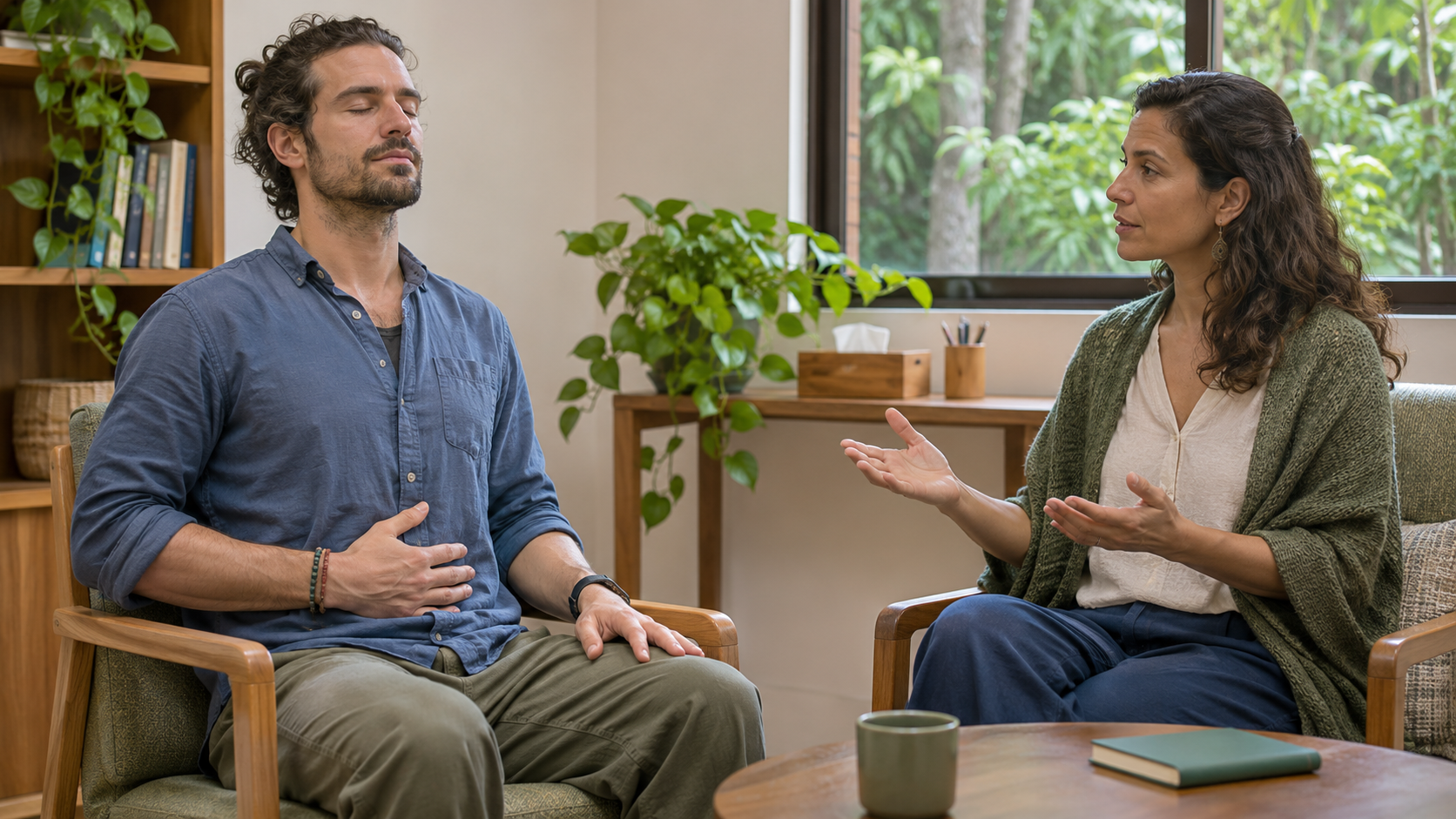
Before travel, write down what an ordinary panic attack looks like for you, what helps, what makes it worse and which signs are unusual. Share this plan with a clinician and the retreat. The goal is not to guarantee that panic will not happen; it is to reduce confusion and delay if it does.
The plan can include:
- a calm phrase or orientation cue that already feels familiar;
- a preference for eyes open, a quieter space or less verbal input;
- clear consent rules for touch and physical proximity;
- a trusted contact and treating clinician;
- the medication list and allergies;
- criteria for stopping additional ceremonies; and
- medical warning signs that trigger transfer rather than grounding alone.
A plan practiced with a therapist is more useful than an improvised technique introduced while someone is overwhelmed. Avoid extreme breathwork or prolonged breath-holding, which can create dizziness, tingling and other sensations that resemble panic.
Travel and the retreat setting can add pressure
Flights, airports, heat, unfamiliar food, sleep disruption and being far from home can worsen baseline anxiety before any ceremony begins. Agoraphobia may be especially relevant when the lodge is remote or a participant fears being unable to leave.
Ask how long transport takes, whether a participant may skip a ceremony, where a quiet space is located and how someone returns to Iquitos if they decide to leave. Check communication access and who pays for emergency transfer. Our travel insurance guide explains exclusions to review.
Do not stack sleep deprivation, fasting, stimulants, intense breathwork or multiple ceremonies to make the experience stronger. Stability is a safety measure, not a sign of weak commitment.
How staff should respond when anxiety escalates
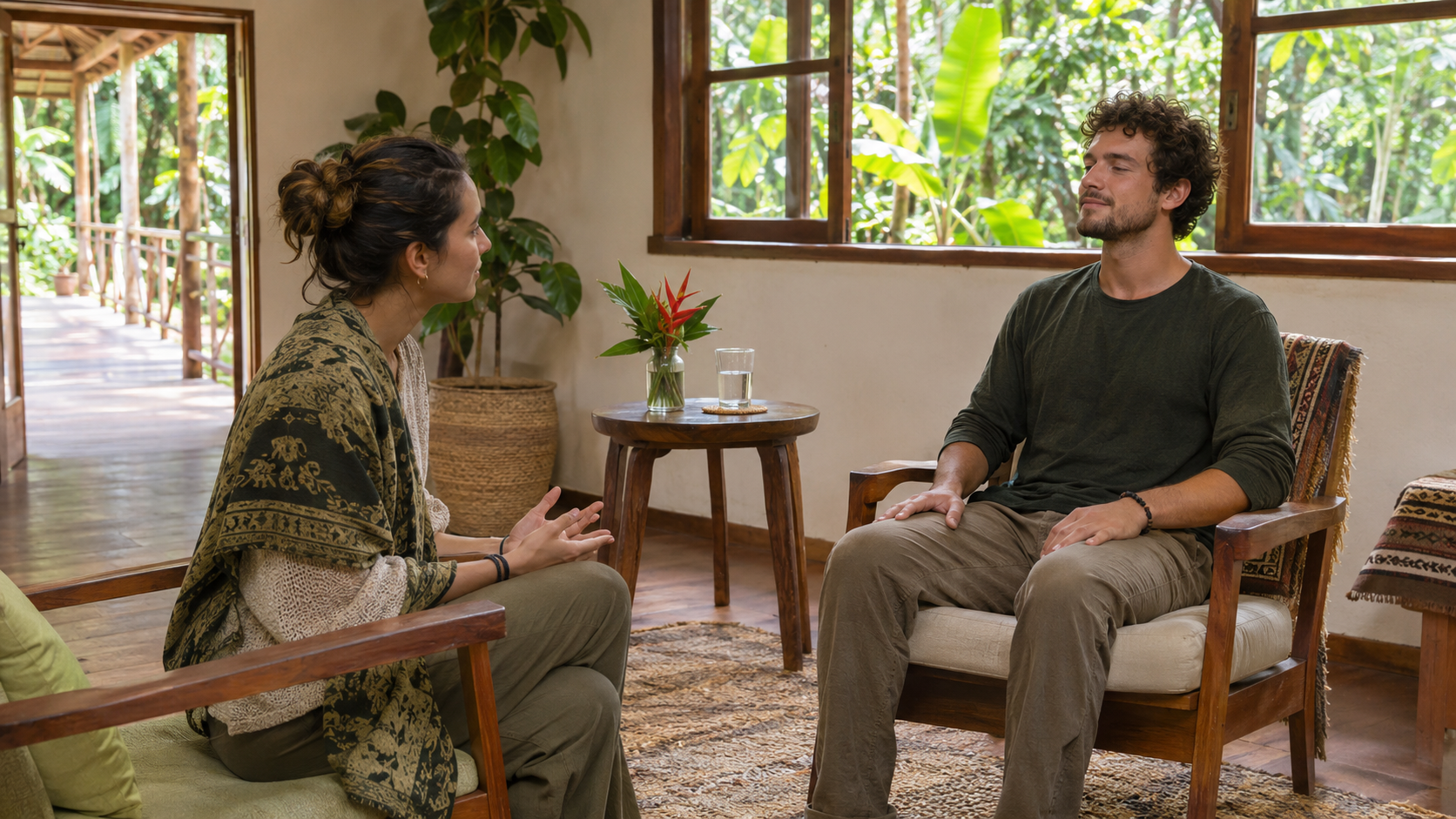
A sober support worker can reduce noise, speak slowly, identify themselves, remind the guest where they are and offer simple choices. The person should not be surrounded, restrained, argued with or forced into touch, eye contact or a spiritual interpretation.
Staff should track the time, responsiveness, breathing, physical appearance, hydration, recent vomiting and whether symptoms are improving. They should know the person’s stated baseline and remain alert to symptoms that do not fit the usual pattern.
A guest may decline another dose or another ceremony. No one should say that panic proves resistance, that fear must be pushed through at any cost or that leaving the ceremonial space means failure.
Panic symptoms versus a medical emergency
Panic attacks are intensely distressing but generally resolve. However, retreat staff cannot diagnose chest pain, breathing difficulty or neurological symptoms by assumption. Seek urgent medical care for collapse, seizure, severe or persistent chest pain, blue or gray lips, major breathing difficulty, one-sided weakness, high fever, reduced consciousness, severe dehydration or continuous vomiting.
Also escalate if the person becomes suicidal, violent, severely confused, unable to recognize familiar people, loses contact with reality or cannot maintain basic safety. Persistent symptoms after the expected acute window require assessment.
Do not explain all physical symptoms as anxiety or purging. Review our guide to vomiting, dehydration and emergency warning signs.
What the larger safety data adds
The Global Ayahuasca Survey included more than 10,000 respondents. Mental-health effects in the weeks or months after use were commonly reported, and anxiety disorders were associated with greater odds of those effects. Most respondents framed the effects positively, but around 12% sought professional support.
This self-selected survey cannot determine how many people with a diagnosed anxiety disorder will benefit or be harmed. It does show why marketing that promises anxiety relief without discussing difficult or prolonged reactions is incomplete.
A 2026 systematic review of anxiety and affective symptoms after classic psychedelics found that enduring problems were less common in clinical settings, while risk factors in reported cases included high exposure, multiple substances, unstructured settings, psychosocial stress and personal or family psychiatric history. Carefully controlled research conditions should not be assumed at every retreat.
Aftercare should measure function, not only meaning
After the retreat, monitor sleep, panic frequency, avoidance, work or school function, appetite, substance use and ability to travel. A meaningful experience can coexist with worsening anxiety. Integration should not pressure a participant to reinterpret impairment as healing.
Continue established care according to the clinician’s plan. Avoid additional psychedelics or heavy alcohol use while symptoms are unsettled. Arrange professional support if panic attacks increase, insomnia persists, avoidance expands or daily functioning declines.
Retreat red flags for people with anxiety
Pause before booking if a provider:
- advertises ayahuasca as a proven cure for anxiety or panic;
- never asks about diagnosis, medication, fainting or emergency visits;
- directs abrupt discontinuation of antidepressants or benzodiazepines;
- cannot distinguish a grounding plan from a medical transfer plan;
- uses forced touch, breathwork or restraint during panic;
- prevents participants from skipping a ceremony or leaving a room;
- has no sober overnight staff or transport procedure; or
- labels all persistent anxiety as spiritual progress.
Compare providers with our guide to choosing a safer ayahuasca retreat in Peru.
Frequently asked questions
Can ayahuasca cure anxiety?
No evidence supports a guaranteed cure. Direct ayahuasca research in diagnosed anxiety disorders is extremely limited, and individual responses vary.
Can ayahuasca cause a panic attack?
Yes. Intense changes in perception and body sensations can provoke acute fear or panic, especially in someone sensitive to those sensations. Staff should support the person while continuing to watch for medical warning signs.
Is social anxiety evidence applicable to generalized anxiety?
No. A 17-person pilot involving a public-speaking task cannot establish effectiveness for generalized anxiety, panic disorder, agoraphobia or other conditions.
Should benzodiazepines be stopped before a retreat?
Never abruptly or without the prescriber. Physical dependence and dangerous withdrawal are possible, and there is no universal taper appropriate for everyone.
Can a facilitator tell whether chest pain is only anxiety?
Not reliably. New, severe or persistent chest pain—especially with collapse, breathing difficulty or other warning signs—needs ordinary medical assessment.
Does feeling anxious mean the ceremony is working?
No. Anxiety may be transient, meaningful, harmful or unrelated to later benefit. Intensity is not proof of therapeutic effectiveness.
Screen first, promise less
People with anxiety deserve accurate information rather than guaranteed transformation. The current evidence is too small and mixed to establish ayahuasca as a treatment. Responsible planning focuses on current stability, medication safety, consent, setting, support and the ability to escalate care.
Review Ayaterra’s ayahuasca retreats near Iquitos and contact the team for current screening requirements. Disclose anxiety diagnoses, panic history, medication and previous severe reactions before booking.
Research and health sources
- Pilot randomized trial of ayahuasca in 17 people with social anxiety disorder
- Systematic review of psychedelic trials in diagnosed anxiety disorders
- Living systematic review and meta-analysis of psychedelics for mental disorders
- Systematic review of anxiety and affective symptoms related to classic psychedelics
- Global Ayahuasca Survey report on adverse effects
- Systematic review of drug interactions involving classic psychedelics
- National Institute of Mental Health: panic disorder
- FDA warning on benzodiazepine dependence and withdrawal
Medical disclaimer: This article provides general education and does not diagnose anxiety, recommend ayahuasca or determine personal retreat safety. Do not start, stop or change medication without qualified clinical guidance. Seek urgent care for severe physical symptoms, loss of safety, suicidal thoughts, severe confusion or loss of reality testing.