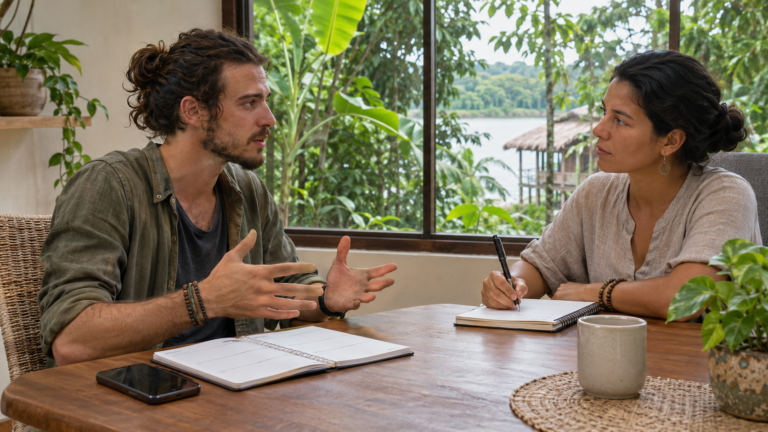

Ayahuasca and PTSD are often discussed together online, but interest is running ahead of evidence. A few observational studies and one very small case series describe symptom improvement after ceremonial use. They do not establish ayahuasca as a proven PTSD treatment, identify who is likely to benefit or show that a retreat is equivalent to trauma-focused clinical care.
PTSD can include intrusive memories, nightmares, avoidance, heightened threat responses, sleep problems, dissociation, depression and substance use. An intense psychedelic experience may bring traumatic material to the surface. That can feel meaningful for some people and overwhelming or destabilizing for others. Honest screening, consent, continuity of care and a realistic crisis plan are therefore essential.
Quick answer: can ayahuasca treat PTSD?
- Ayahuasca is not an established or approved treatment for PTSD.
- Direct evidence is limited to small, uncontrolled and naturalistic studies.
- Traumatic memories may be reexperienced during a ceremony, sometimes with substantial distress.
- Do not stop antidepressants or other psychiatric medication to qualify for a retreat without the prescriber’s guidance.
- A retreat should screen for suicidality, psychosis, bipolar disorder, dissociation, substance use, sleep and medical conditions.
- Evidence-based PTSD treatment and an established clinician should not be replaced by a ceremony.
What does the research actually show?
The most direct prospective publication followed eight military veterans who attended a three-day ayahuasca intervention in Central America. Participants reported improvement in trauma and mood symptoms after the retreat, and some changes continued at three months. However, this was a case series with no randomized control group, a tiny self-selected sample and multiple elements bundled into one retreat.
An erratum is important: the original paper used the wrong response scale when calculating PTSD Checklist scores, overstating baseline severity and some change estimates. The corrected interpretation described moderate post-traumatic stress symptoms rather than confirming that every participant had clinical-level PTSD. The study is a reason for further research, not proof of efficacy.
A 2026 systematic review of 18 prospective ayahuasca studies found preliminary long-term changes across several mental-health outcomes. Most studies recruited volunteers already planning to attend retreats, and many lacked control groups, standardized doses or large samples. The review also noted subsets of participants with persisting psychiatric complications. Population averages cannot predict an individual response.
The U.S. VA/DoD PTSD evidence base recommends trauma-focused psychotherapies such as Prolonged Exposure, Cognitive Processing Therapy and EMDR. Its medication guidance lists ayahuasca and DMT under no adequate data for PTSD pharmacotherapy. Our broader guide explains ayahuasca risks and contraindications.
Ayahuasca research is not the same as MDMA research
Headlines about psychedelic therapy for PTSD often refer to MDMA-assisted therapy, not ayahuasca. The substances, dosing, study protocols and evidence bases are different. Controlled studies generally use extensive eligibility criteria, preparation, trained clinical teams, monitored administration and structured follow-up. A commercial retreat should not borrow claims from a different drug or protocol.
Likewise, a supportive ceremony is not automatically psychotherapy. A facilitator may have valuable cultural or practical experience without being licensed to diagnose PTSD, manage psychiatric medication or deliver evidence-based trauma treatment. Ask exactly which service is being offered and what credentials support each claim.
Why trauma can become intense during a ceremony
A prospective study of 33 veterans and 306 non-veterans at ceremonial centers found that reexperiencing adverse life events was common. Combat trauma was especially relevant among veterans, sexual assault reexperiencing was reported more frequently by women, and people with a self-reported lifetime PTSD diagnosis were more likely to reexperience adverse events.
Reexperiencing was associated with both discomfort and later self-reported psychological changes. That does not mean distress is necessarily therapeutic. A terrifying experience, memory or body sensation can be interpreted in many ways, and a survey cannot establish that maximum intensity creates maximum benefit.
PTSD may also involve dissociation: feeling detached from the body, surroundings, identity or time. Psychedelic effects can overlap with or amplify those experiences. Staff must be able to recognize when grounding and reduced stimulation are appropriate and when symptoms require urgent clinical assessment.
Who needs a higher level of review?
Every applicant should be screened, but extra caution is appropriate when there is:
- current suicidal thinking, a recent attempt or escalating self-harm;
- bipolar disorder, mania, psychosis or a close family history of those conditions;
- severe dissociation, frequent flashbacks or inability to remain oriented;
- recent hospitalization or rapidly worsening PTSD, depression or panic;
- alcohol, benzodiazepine, opioid or other substance dependence or withdrawal risk;
- unstable housing, violence, legal crisis or no safe environment after travel;
- recent medication changes or a plan to stop treatment for the retreat; or
- significant heart, neurological, pregnancy or other medical concerns.
A diagnosis alone does not tell the whole story, and screening should not stigmatize trauma survivors. The purpose is to understand current stability, resources, contraindications and whether a remote group setting can meet the person’s needs. Review our dedicated guides on bipolar disorder, mania and psychosis and heart conditions and blood pressure.
Do not stop PTSD medication for a retreat
Many people with PTSD take antidepressants, sleep medicines, prazosin or medicines for anxiety, pain or substance-use treatment. Ayahuasca contains beta-carbolines that inhibit monoamine oxidase A, so interaction questions cannot be reduced to a generic online list. Abrupt discontinuation can cause withdrawal, rebound symptoms, insomnia or relapse.
Do not use a retreat’s fixed washout calendar as a prescription. The treating clinician needs the exact medicine, dose, formulation, duration, other substances, medical history and planned ceremony dates. For some people a supervised change may be considered; for others stopping treatment may be inappropriate.
Never conceal medication use because a booking is nonrefundable. Read our full guide to ayahuasca and antidepressant interactions.
Build continuity of care before travel

If a person is already in treatment, discuss the proposal with that clinician before travel. Share the destination, dates, number of ceremonies, medication policy and available medical support. A clinician may help identify personal warning signs and may recommend postponement or non-participation.
A practical written plan should identify:
- the clinician or service that knows the person’s history;
- a trusted contact who can notice changes in sleep, mood or behavior;
- how prescribed medicines will remain secure and on schedule;
- what symptoms require stopping further ceremonies;
- how the retreat transfers someone for medical or psychiatric assessment;
- where the person will stay after the final ceremony; and
- a scheduled follow-up after returning home.
Travel insurance may exclude ceremonies, substance-related events or pre-existing mental-health conditions. Verify wording rather than assuming coverage; see our travel insurance guide.
What trauma-informed screening should ask
A yes-or-no question about PTSD is not enough. Respectful screening should cover symptom stability, flashbacks, dissociation, nightmares, panic, sleep, self-harm, suicidality, mania, psychosis, substance use, medication and previous psychedelic reactions. It should also ask what helps the person become grounded and what types of interaction can feel unsafe.
The retreat should explain the limits of confidentiality and who can access health disclosures. Applicants should know whether information is reviewed by a clinician, a facilitator or administrative staff. Marketing language such as “trauma specialist” should be backed by a specific, verifiable qualification.
Good screening can lead to acceptance, extra planning, postponement or refusal. No questionnaire can guarantee safety, but a retreat that never declines anyone is not demonstrating individualized assessment.
Consent and boundaries matter before altered states
Trauma-informed practice makes consent specific, understandable and revocable. Before ceremony, ask:
- Is touch ever used, and how is consent requested while someone is altered?
- Can a participant request no touch or a facilitator of a particular gender?
- Can the person leave the ceremony space, and who accompanies them?
- Are photography, recording and testimonials prohibited without separate consent?
- How are nudity, sexualized behavior and boundary violations handled?
- Who remains sober and awake throughout the night?
- How can a participant report harm without confronting the alleged offender?
Consent given during an intake form does not authorize unrestricted touch during an altered state. A participant should never be told that refusing touch, another dose or a facilitator’s interpretation means resisting healing. Use our guide to choosing a safer ayahuasca retreat in Peru to compare providers.
A challenging experience is not automatically healing
Fear, grief and difficult memories can arise in many forms of trauma treatment. The difference is that evidence-based therapy uses a defined clinical framework, pacing, consent and monitoring. Intensity alone is not a therapeutic mechanism, and distress should not be romanticized as proof that a process is working.
A large global survey found acute physical effects were common and that mental-health effects could continue for weeks or months; some respondents sought professional support. Naturalistic psychedelic research also documents that a minority of people report lasting adverse mental-health effects, including symptoms consistent with trauma after the psychedelic experience itself.
Retreat staff should document severe or prolonged reactions, stop additional dosing and arrange appropriate care. Calling every deterioration “purging,” “ego death” or “spiritual emergence” can delay treatment.
What happens after the retreat matters

Integration may help someone organize memories, emotions and decisions after an intense experience. It is not a substitute for diagnosing or treating PTSD. A coach or facilitator should not advise medication changes, promise that symptoms will resolve or discourage contact with established care.
For several days after travel, prioritize ordinary stabilization: sleep, hydration, food, predictable routine, reduced stimulation and trusted support. Avoid additional psychedelics, heavy alcohol use and major irreversible decisions. Resume or continue prescribed treatment according to the clinician’s plan.
Follow-up should ask about sleep, nightmares, intrusive memories, dissociation, panic, mood, substance use, self-harm and daily functioning—not only whether the ceremony felt meaningful.
Urgent mental-health warning signs
Stop further ceremonies and obtain urgent assessment if someone has suicidal or homicidal thoughts, cannot stay safe, becomes severely confused, loses contact with reality, wanders, cannot perform basic self-care or remains intensely agitated. Escalating energy with little need for sleep can indicate mania and also needs prompt assessment.
Seizure, collapse, chest pain, trouble breathing, high fever, severe dehydration, persistent vomiting or reduced consciousness requires emergency medical care. Do not leave the person alone or give another psychoactive substance to counteract the experience. Provide clinicians with the brew timing, medicines, other substances and baseline history.
Our guide to purging, vomiting and emergency warning signs explains when ordinary medical escalation is necessary.
Retreat claims that should make you pause
Be cautious when a provider:
- advertises ayahuasca as a proven cure for PTSD;
- uses MDMA or psilocybin trial results to validate its own ceremony;
- accepts everyone or discourages disclosure of diagnosis and medication;
- promises that trauma must be relived intensely to heal;
- cannot explain touch, consent, confidentiality or complaint policies;
- has no sober overnight staff or emergency transfer plan;
- tells guests to ignore clinicians, family or evidence-based treatment; or
- frames worsening symptoms as spiritual progress that should not be assessed.
Frequently asked questions
Is ayahuasca approved for PTSD?
No. Ayahuasca is not an approved PTSD treatment. Direct evidence remains preliminary and cannot support a guaranteed therapeutic claim.
Can ayahuasca make PTSD worse?
It can produce intense fear, reexperiencing, dissociation, sleep disruption or lasting distress in some people. Individual risk cannot be predicted from testimonials, so current stability and support must be reviewed carefully.
Does a PTSD diagnosis automatically exclude someone?
Policies vary, but a diagnosis should always trigger detailed review. Current symptoms, suicidality, dissociation, medication, comorbid conditions and continuity of care matter more than a label alone.
Should antidepressants be stopped before ayahuasca?
Not without the prescriber. Interactions and withdrawal risks depend on the specific medicine and person. A retreat should not direct an unsupervised taper.
Is reliving trauma during ceremony a good sign?
Not necessarily. Reexperiencing may feel meaningful, distressing or both. Its intensity does not prove healing, and severe or persistent symptoms need appropriate support.
Can an integration coach replace a PTSD therapist?
No. Integration and licensed trauma treatment have different scopes. Verify credentials and keep established clinical care involved.
Evidence before expectations
People living with PTSD deserve hope without exaggerated promises. Current ayahuasca research is interesting but too limited to establish a treatment, calculate personal benefit or remove the possibility of harm. A responsible decision begins with accurate evidence, qualified clinical input and honest disclosure.
Review Ayaterra’s ayahuasca retreats near Iquitos and contact the team for current screening requirements. PTSD, medications and previous severe reactions should be disclosed before booking or travel.
Research and clinical sources
- Mixed-methods case series of ayahuasca and trauma symptoms in eight veterans, with correction notice
- Prospective study of adverse life-event reexperiencing during ceremonial ayahuasca
- Global Ayahuasca Survey report on adverse effects
- 2026 systematic review of prospective long-term ayahuasca studies
- Naturalistic survey of PTSD symptoms following psychedelic use
- Systematic review of adverse events in classic psychedelic studies
- VA National Center for PTSD: evidence-based psychotherapy overview
- VA National Center for PTSD: clinician medication guide and evidence table
Medical disclaimer: This article provides general education and does not diagnose PTSD, recommend ayahuasca or determine whether a retreat is safe for an individual. Do not start, stop or change psychiatric medication without qualified clinical guidance. Seek urgent help for suicidal thoughts, dangerous behavior, severe confusion, loss of reality testing or serious physical symptoms.