Dengue occurs in Iquitos and across Peru’s Loreto region. For an ayahuasca retreat traveler, the practical response is consistent daytime mosquito protection, an emergency plan and prompt professional assessment if fever or warning signs develop. Malaria tablets do not prevent dengue, and a mosquito net used only at night is not enough.
Peru’s Ministry of Health dengue dashboard reported 3,774 confirmed and probable cases in Loreto through October 30, 2026, including cases with warning signs and severe disease. These figures change as surveillance is updated, but they confirm that dengue is an active local travel-health consideration rather than a theoretical risk.
Quick answer: dengue and Iquitos retreats
- Dengue is transmitted by infected mosquitoes and occurs in Loreto.
- The mosquitoes that spread dengue commonly bite during daylight hours.
- Use effective repellent, covering clothing, screens and other bite-prevention measures.
- Malaria prevention medicine does not protect against dengue.
- Fever, severe headache, body pain, nausea or rash require medical attention.
- Severe abdominal pain, persistent vomiting, bleeding, unusual drowsiness or breathing difficulty are warning signs requiring urgent care.
What is dengue?
Dengue is a viral infection transmitted through the bite of infected Aedes mosquitoes. It does not spread from an ordinary mosquito bite unless the mosquito carries the virus. Many infections cause no symptoms, while others produce fever and flu-like illness. A smaller number progress to severe dengue and need hospital care.
There is no specific antiviral treatment that a retreat can provide. Medical care focuses on assessment, monitoring and supportive treatment. Prevention therefore begins with reducing mosquito bites and recognizing symptoms early.
Dengue is different from malaria. Malaria is caused by parasites and is associated with different mosquitoes, diagnostic tests and prescription prevention decisions. A traveler can be exposed to both in the Peruvian Amazon, and symptoms can overlap. Do not attempt to diagnose the cause of fever from timing or internet descriptions.
Current dengue context in Iquitos and Loreto
CDC describes dengue as Peru’s most common arboviral infection and notes transmission in many rainforest areas. In tropical parts of Peru, transmission can occur throughout the year and often increases during the rainy season.
Peru’s daily dengue surveillance dashboard showed thousands of cases in Loreto during 2026. Local health authorities also carried out public prevention campaigns in Iquitos and warned that heavy rain, flooding and accumulated water can increase the risk of dengue and other infections.
Case numbers are useful for context but cannot calculate one visitor’s probability of infection. Risk depends on where you stay, time outdoors, local mosquito activity, use of repellent, clothing and accommodation. A quiet forest retreat is not automatically mosquito-free, and a city hotel is not automatically risk-free.
Why daytime protection matters
The Aedes mosquitoes associated with dengue commonly bite during the day. This differs from the evening-focused habits travelers may associate with malaria prevention. Applying repellent only before a nighttime ceremony leaves long periods of daytime exposure.
Use protection during breakfast, rest periods, transfers, forest walks and time around the lodge. Continue protection near sunrise and sunset rather than treating them as strict boundaries. Mosquito activity changes with shade, weather and the immediate environment.
Read our separate guide to malaria in Iquitos before an ayahuasca retreat for prescription prevention questions and post-travel fever guidance.
How to reduce mosquito bites
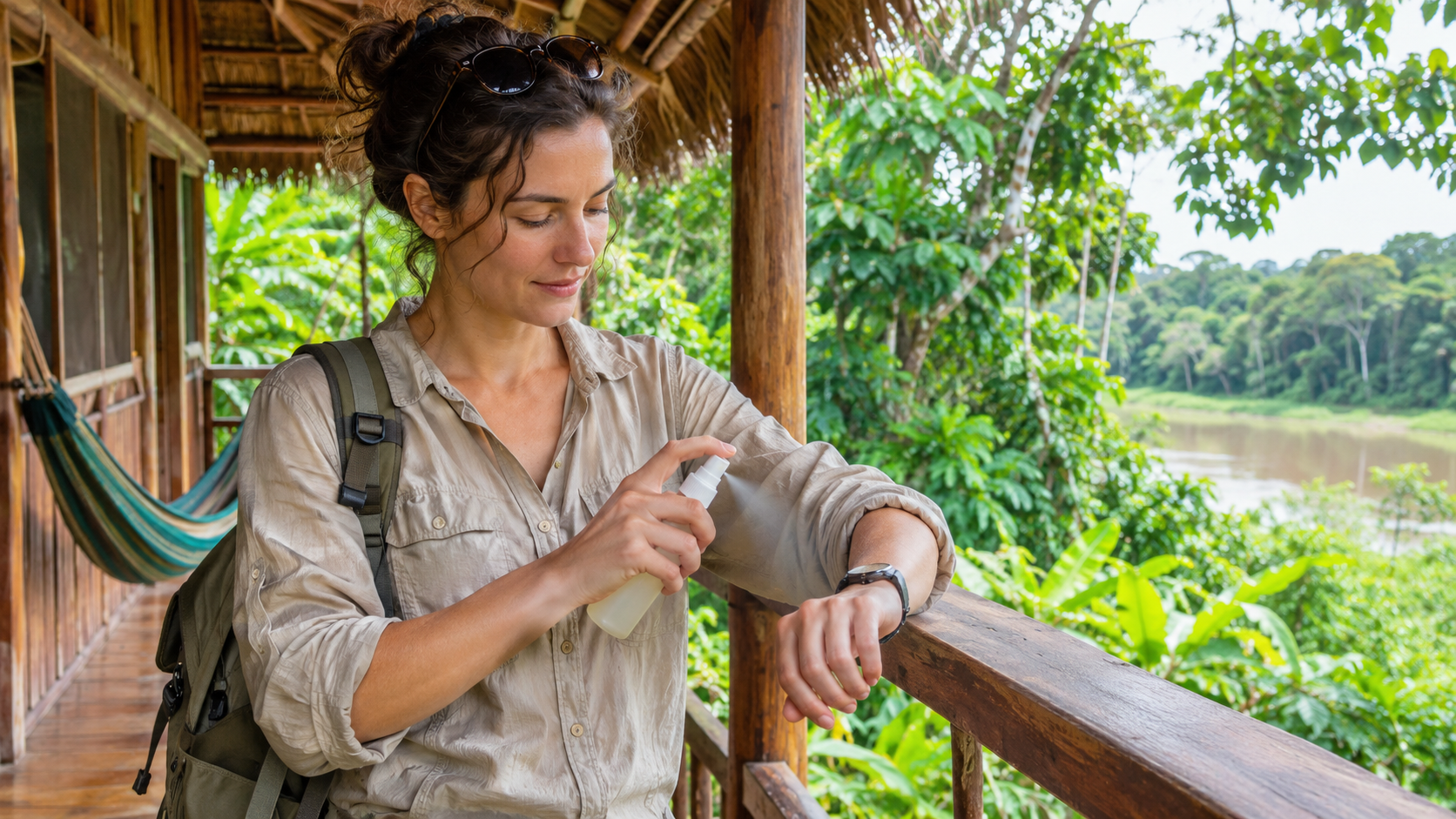
Use a registered insect repellent
Choose a repellent with an active ingredient recommended by an official health authority, such as DEET or picaridin, and follow the label. Protection time depends on the product and concentration. Reapply when directed, including after heavy sweating or washing.
Apply repellent to exposed skin while avoiding eyes, mouth, irritated skin and hands that may touch the face. Follow official directions when combining it with sunscreen. A pleasant scent or a “natural” label does not establish that a product provides reliable protection for the required duration.
Wear practical covering clothing
Lightweight long sleeves, long trousers and socks reduce exposed skin. Select breathable fabrics that dry quickly in the humid Amazon. Bring enough changes so rain or sweat does not force you to remain in wet clothing.
Permethrin-treated clothing or gear can add protection when appropriate. Follow the product instructions and never apply permethrin directly to skin. Ask a travel-health professional about pregnancy, children, allergies or other personal considerations.
Use screens and nets correctly
Screens, closed doors and intact bed nets remain useful even though dengue mosquitoes can bite during the day. A net protects someone resting or recovering in an open room. Inspect it for tears and gaps before the first night.
Air conditioning or a fan may reduce mosquito activity but should not replace physical barriers and repellent. Ask the retreat how bedrooms, bathrooms and the route to the ceremony space are protected.
Remove standing water around accommodation
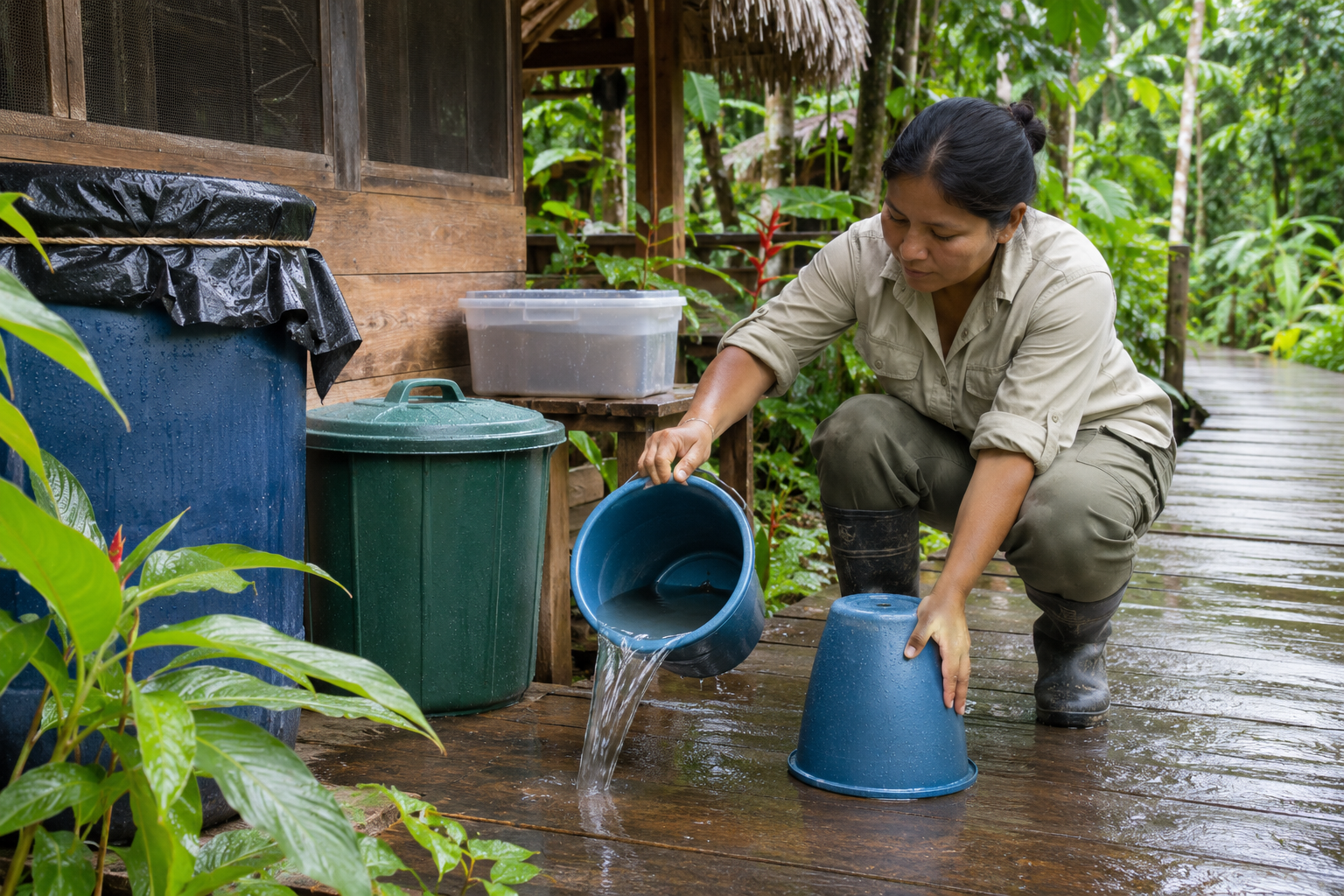
Aedes mosquitoes can breed in small amounts of water held in buckets, plant containers, discarded items and other artificial containers. Retreat operators should inspect the property after rain, empty unnecessary water, cover stored water and maintain drainage.
Guests should not disturb essential water systems or use pesticides without authorization. Report uncovered containers, blocked drainage or damaged screens to staff. Property-level control supports but does not replace personal repellent and clothing.
Dengue symptoms
According to the World Health Organization and Peru’s Ministry of Health, symptoms can include:
- High fever
- Severe headache
- Pain behind the eyes
- Muscle and joint pain
- Nausea or vomiting
- Swollen glands
- Rash
Symptoms often begin several days after infection, so illness can appear during the retreat, in an Iquitos hotel or after returning home. Similar symptoms can result from malaria, other infections, medication effects, dehydration or heat illness. Testing and clinical assessment are more reliable than self-diagnosis.
Warning signs can appear after the fever drops
A falling temperature does not always mean the danger has passed. WHO and Peru’s Ministry of Health note that severe dengue warning signs can emerge after the fever decreases. Seek urgent professional care for:
- Severe or persistent abdominal pain
- Persistent vomiting
- Bleeding from the nose or gums
- Blood in vomit or stool
- Rapid or difficult breathing
- Marked drowsiness, irritability or restlessness
- Pale or cold skin
- Severe weakness, collapse or rapidly worsening condition
These symptoms require immediate evaluation. A remote retreat should not wait for the next scheduled transfer or attempt to manage warning signs only with rest, herbs or ceremony support.
Do not confuse fever with purging or “detox”
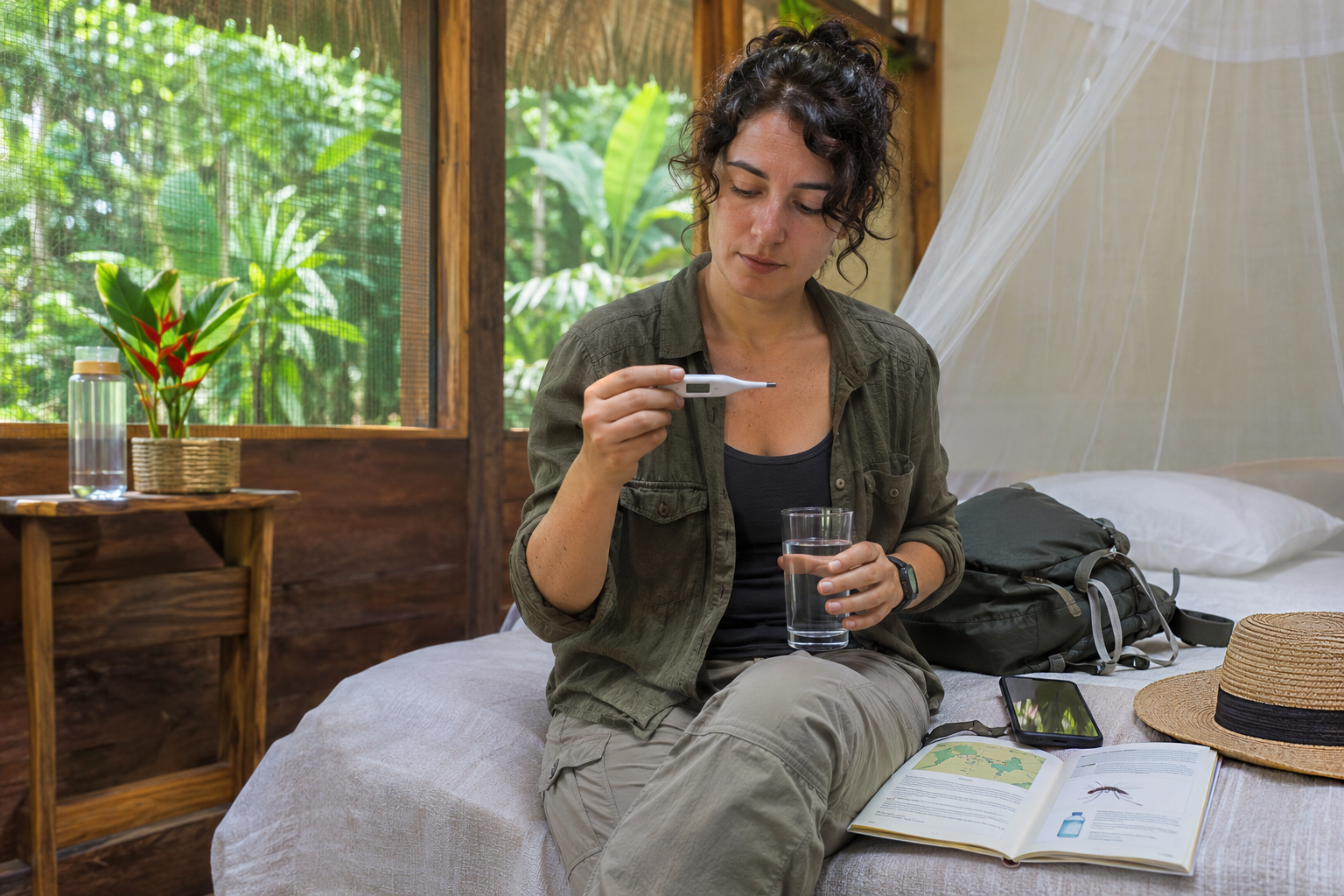
Vomiting can occur in a ceremony, but vomiting with fever, abdominal pain, bleeding, profound weakness or worsening illness needs medical attention. Do not assume every symptom during an ayahuasca retreat is part of a desired process.
Tell the clinician about mosquito exposure, dates in Iquitos, medicines, supplements and ayahuasca use. Concealing ceremony participation can make it harder to assess dehydration, medication effects and infection safely.
Avoid self-medicating. WHO advises people with suspected dengue to avoid aspirin and ibuprofen because of bleeding risk and to seek professional guidance on symptom management. Do not take another guest’s medicine or continue a ceremony while waiting to see whether warning signs resolve.
Questions to ask an Iquitos retreat
- Are bedrooms, bathrooms and common areas screened?
- Does each bed have an intact mosquito net?
- How often is standing water inspected and removed after rain?
- Is effective repellent available if a guest runs out?
- Who monitors a guest who develops fever or repeated vomiting?
- Which clinic or hospital is used for suspected dengue?
- What is the realistic transfer time during rain or at night?
- Can staff contact the guest’s insurer or emergency contact?
A responsible answer includes a practical route to professional care. Statements that dengue is impossible at the property or that traditional remedies guarantee prevention should be treated cautiously.
Dengue vaccination is not a universal traveler shortcut
Dengue vaccine eligibility depends on the vaccine, age, previous infection, national program and medical history. Loreto conducted targeted vaccination activity in 2026, but a local public-health campaign does not create a universal recommendation for international visitors.
Ask a travel-health clinician in your country whether any dengue vaccine is licensed and appropriate for you. Do not travel expecting to obtain a last-minute local dose without confirming eligibility, the complete schedule and documentation. Vaccination, when appropriate, does not eliminate the need for bite prevention.
What to pack
- Enough registered insect repellent for the complete trip
- Lightweight long-sleeved shirts, long trousers and socks
- Treated clothing or gear when recommended
- Thermometer
- Reusable water bottle and a reliable safe-water plan
- Travel insurance and 24-hour assistance details
- Offline retreat, clinic and emergency contact information
- Your medication list and relevant medical summary
See the full ayahuasca retreat packing list for Iquitos and our guide to vaccines and travel health before visiting Iquitos.
Before, during and after the retreat
- Before travel: review the itinerary with a travel-health professional and complete retreat screening.
- Before booking: verify mosquito controls, transport time and the medical referral plan.
- Every day in Iquitos: use daytime repellent and covering clothing, not only nighttime protection.
- If symptoms begin: stop strenuous or ceremony activity and obtain professional advice.
- If warning signs appear: seek urgent care immediately.
- After returning: report the dates and locations of Amazon travel if illness develops.
Confirm that your policy covers outpatient assessment, hospitalization and evacuation from the retreat. Review travel insurance for an ayahuasca retreat in Peru.
Frequently asked questions
Is there dengue in Iquitos?
Yes. Dengue occurs in Loreto, and Peru’s official surveillance recorded cases during 2026. Conditions and case counts change, so check current public-health information before travel.
Do dengue mosquitoes bite at night?
The mosquitoes that spread dengue commonly bite during the day, although bite timing is not a guarantee. Use protection throughout the day and evening.
Do malaria pills prevent dengue?
No. Dengue is a viral infection and malaria medicines do not prevent it. Bite prevention is required for both, while malaria medication decisions are separate.
Can I continue an ayahuasca ceremony if I have a fever?
Fever needs medical assessment, especially in a region where dengue and malaria occur. Do not use a ceremony as a substitute for diagnosis or urgent care.
When is dengue most dangerous?
Warning signs of severe dengue can appear after the fever decreases. Severe abdominal pain, persistent vomiting, bleeding, breathing difficulty, unusual drowsiness or rapid deterioration require immediate care.
Official sources
- Peru Ministry of Health daily dengue dashboard
- World Health Organization: dengue and severe dengue
- Peru Ministry of Health: dengue symptoms and warning signs
- CDC Yellow Book: Peru
- Geresa Loreto 2026 dengue prevention campaign in Iquitos
- EsSalud Loreto rain-season health advisory
This article provides general travel-health education reviewed on November 2, 2026. It is not individualized medical advice. Dengue symptoms and warning signs require qualified medical assessment, and local conditions can change.
Plan mosquito protection before traveling
After reviewing professional travel-health advice, explore Ayaterra’s Iquitos retreat programs and contact the team to complete screening and confirm practical arrangements.