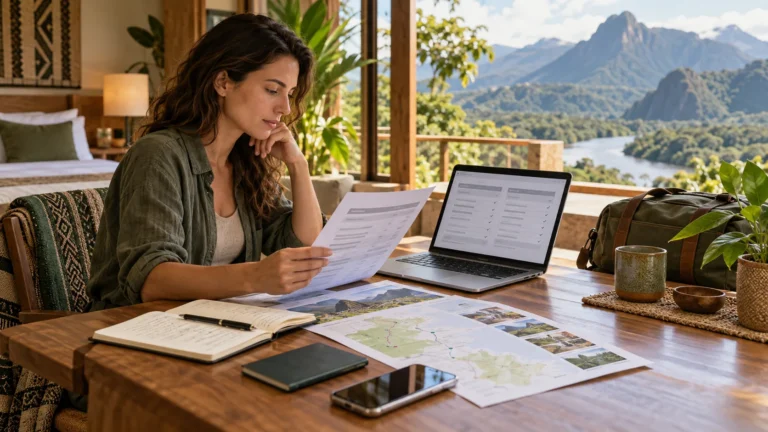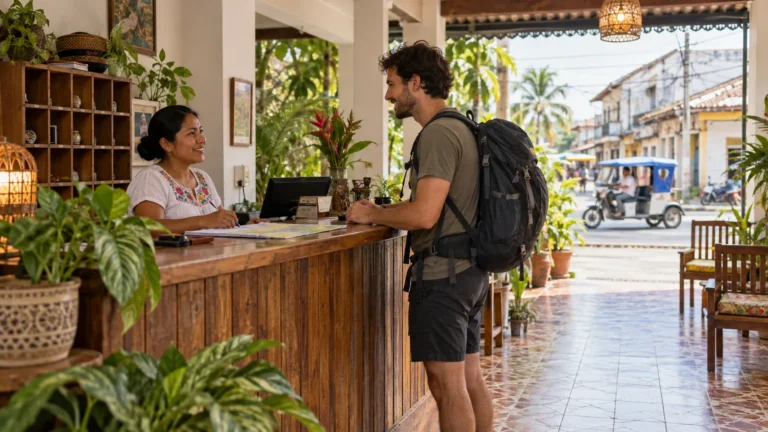
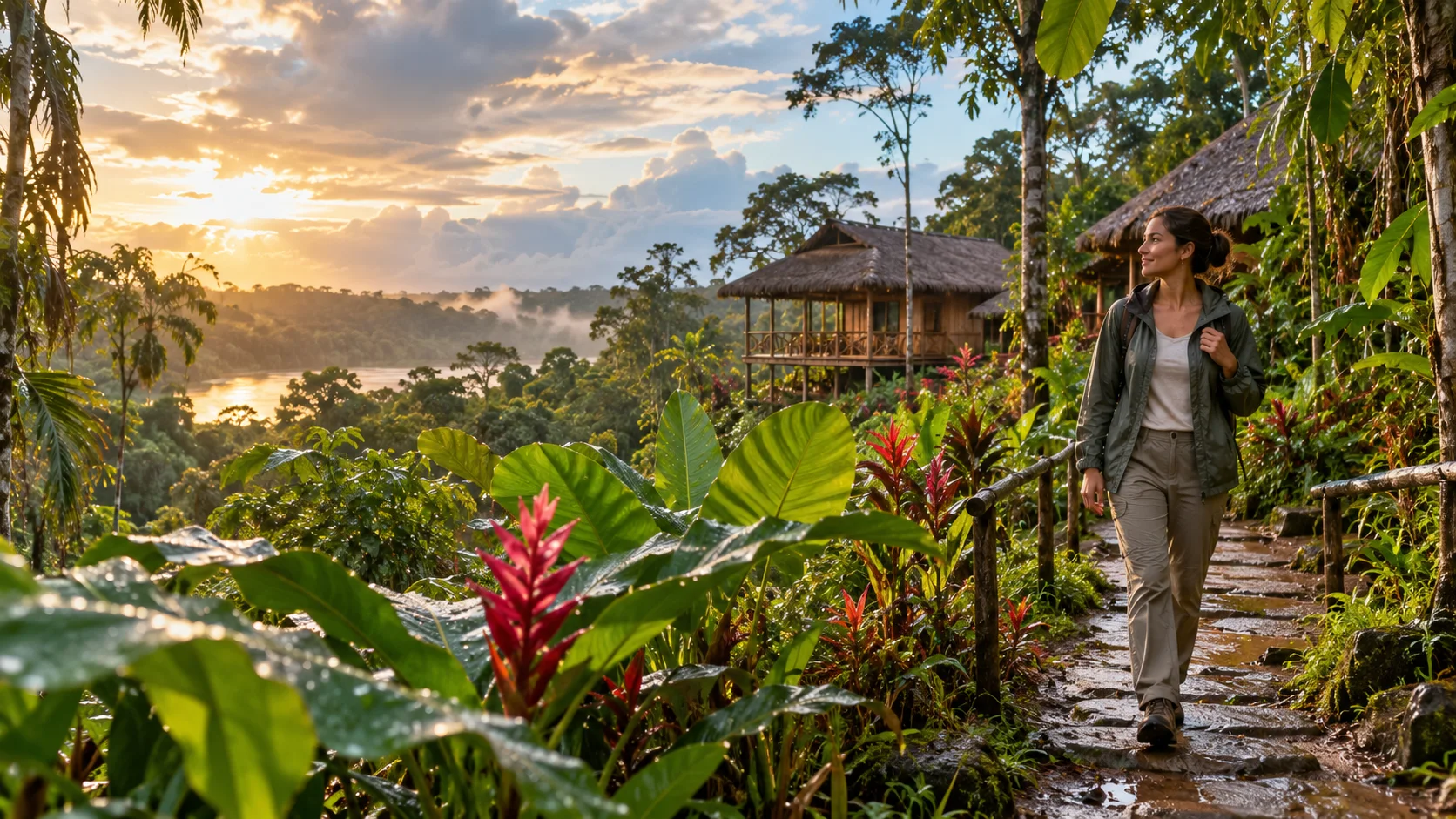
The best time to visit Iquitos for an ayahuasca retreat depends less on finding a completely dry month—which does not exist in the Amazon—and more on your priorities. Iquitos is warm, humid and rainy throughout the year. May through October generally brings lower rainfall and easier outdoor logistics, while November through April is wetter, greener and often quieter for travel.
Weather can influence flights, paths, river levels, clothing and comfort, but it does not determine whether a retreat will be meaningful. Screening, preparation, responsible facilitation and enough time to rest matter much more than choosing a supposedly perfect month.
Quick answer: when should you go?
For easier travel and somewhat less rain: choose May through October. Peru’s official tourism guidance identifies this as the Amazon’s lower-rainfall period, and SENAMHI climate averages show July, August and September among the drier months in Iquitos.
For lush scenery and higher river conditions: consider November through April, accepting heavier and more frequent rain.
For an ayahuasca retreat specifically: choose dates that allow safe screening, preparation and recovery. Rain is possible in every month, and no season guarantees a particular ceremonial outcome.
Iquitos climate: what stays consistent all year?
Iquitos has an equatorial rainforest climate. Days are generally hot, nights remain warm, humidity is high and showers can develop quickly. The official SENAMHI climate table lists average monthly maximum temperatures of roughly 31.1°C to 32.9°C (88°F to 91°F) and average minimums around 21.3°C to 22.6°C (70°F to 73°F). Seasonal temperature differences are modest compared with the changes in rainfall.
Even the relatively drier months receive substantial precipitation. July averages about 158 mm and August about 173 mm in SENAMHI’s published Iquitos normals, while April is the wettest month in that table at about 305 mm. These are long-term averages, not forecasts. A particular week can be wetter or sunnier than the historical pattern.
The practical lesson is simple: pack for heat, humidity and rain regardless of your travel date. “Dry season” in Iquitos means less rain on average, not dry ground every day.
Iquitos weather by month
| Month | Average high / low | Average rain | Planning note |
|---|---|---|---|
| January | 32.4 / 22.5°C | 281 mm | Wet, humid and lush; add travel flexibility |
| February | 32.3 / 22.3°C | 236 mm | Warm and wet; waterproof key items |
| March | 32.1 / 22.6°C | 275 mm | Frequent rain; expect damp conditions |
| April | 31.8 / 22.5°C | 305 mm | Highest rainfall average in SENAMHI’s table |
| May | 31.6 / 22.4°C | 268 mm | Transition toward lower rainfall |
| June | 31.1 / 21.8°C | 192 mm | Relatively drier; occasional cool spells possible |
| July | 31.2 / 21.3°C | 158 mm | Lowest rainfall average in the table |
| August | 32.2 / 21.4°C | 173 mm | Popular for easier outdoor conditions |
| September | 32.7 / 21.9°C | 172 mm | Relatively lower rainfall and hotter days |
| October | 32.9 / 22.3°C | 224 mm | Hottest average maximum; rain starts increasing |
| November | 32.6 / 22.5°C | 231 mm | Beginning of the wetter period |
| December | 32.3 / 22.6°C | 269 mm | Wet season and holiday travel demand |
Source: SENAMHI published climate normals for Iquitos. Monthly figures are rounded and should be used for planning, not as a forecast for specific retreat dates.
November to April: the wetter season
Peru’s official tourism information describes November through March as the Amazon’s rainy period, while Iquitos climate averages remain high into April. Rain may arrive as an intense afternoon shower, a longer period of steady precipitation or a thunderstorm. There can also be bright, hot intervals in the same day.
The wetter season has advantages. The forest looks exceptionally lush, waterways are generally higher and rain can cool the air temporarily. Some travelers enjoy the sound of rain and the inward-focused atmosphere it creates during a retreat. Travel demand may also differ from peak vacation periods, though retreat availability and airfare must be checked for exact dates.
The tradeoffs are practical:
- Paths, steps and transfer points may be wet or slippery.
- Clothing and towels take longer to dry in high humidity.
- Heavy showers can affect outdoor plans and local transport timing.
- Mosquito and insect protection remains important.
- Electronics, documents and medication need waterproof storage.
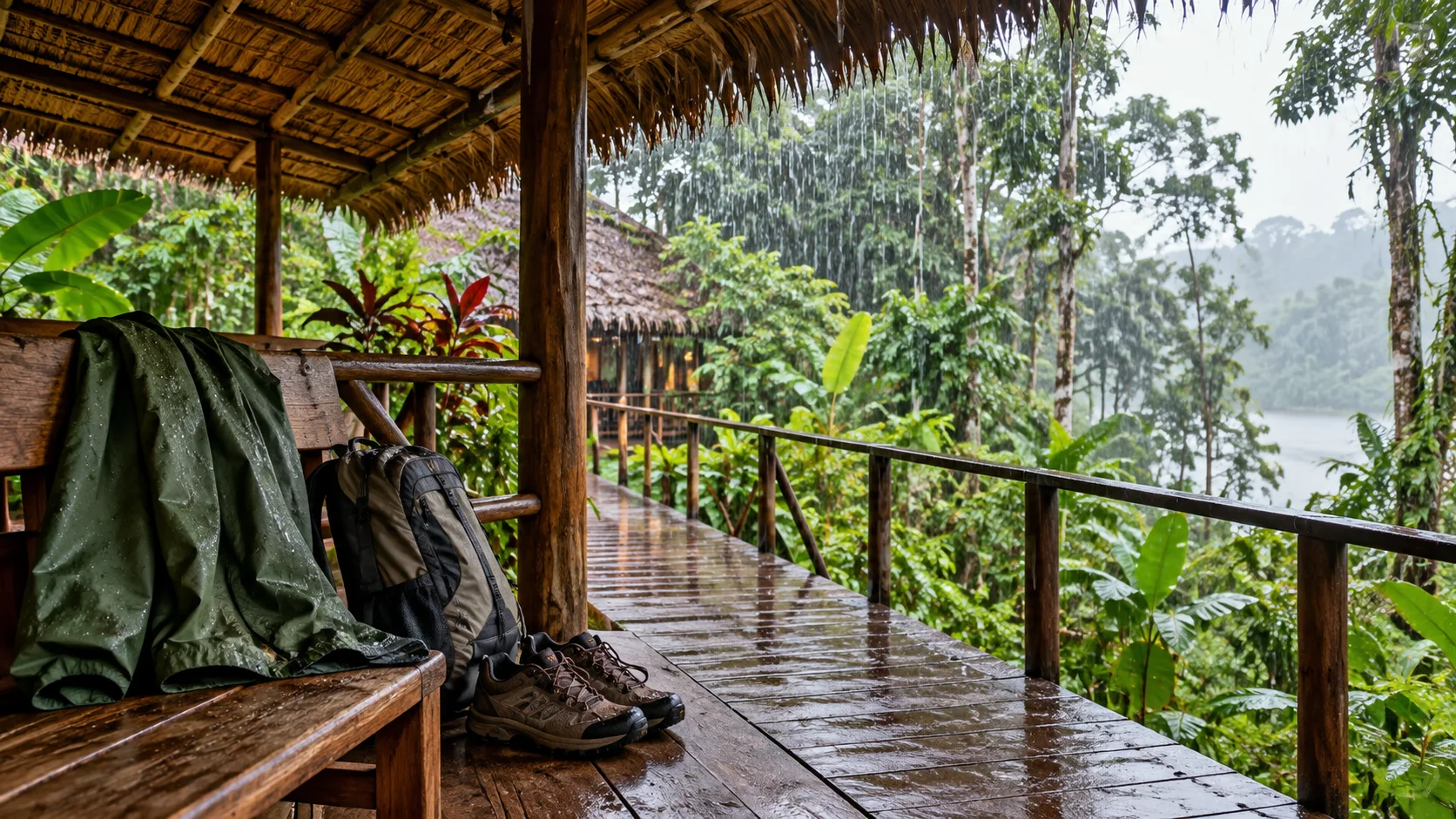
Is the rainy season bad for an ayahuasca retreat?
No. A responsible retreat should be designed for the local climate, with covered areas, safe paths, ventilation and contingency plans. Rain can change the setting and logistics, but it does not make a retreat inherently better or worse. Ask the provider how buildings, transfers and emergency procedures operate during severe weather.
If you have reduced mobility, balance difficulties or a medical condition affected by heat and humidity, discuss those needs before booking. Do not assume a remote tropical environment will be accessible without confirming details.
May to October: the lower-rainfall season
Official tourism guidance identifies April through October as the Amazon’s lower-rainfall period, and another PROMPERÚ travel resource recommends May through October for Iquitos. SENAMHI’s figures show the clearest statistical dip from June through September.
These months are often the easiest choice for a first visit because paths may be firmer, outdoor breaks are simpler to plan and rain interruptions may be less frequent. June and July can also experience occasional friajes—short periods when cooler air reaches the western Amazon. They are not predictable far in advance, so bring one light warm layer even though the overall climate is hot.
Lower rainfall does not mean low humidity, no insects or guaranteed sunshine. A sudden tropical shower can happen in August, and October has the highest average maximum temperature in SENAMHI’s table. Continue packing a breathable rain shell and waterproof protection for valuables.
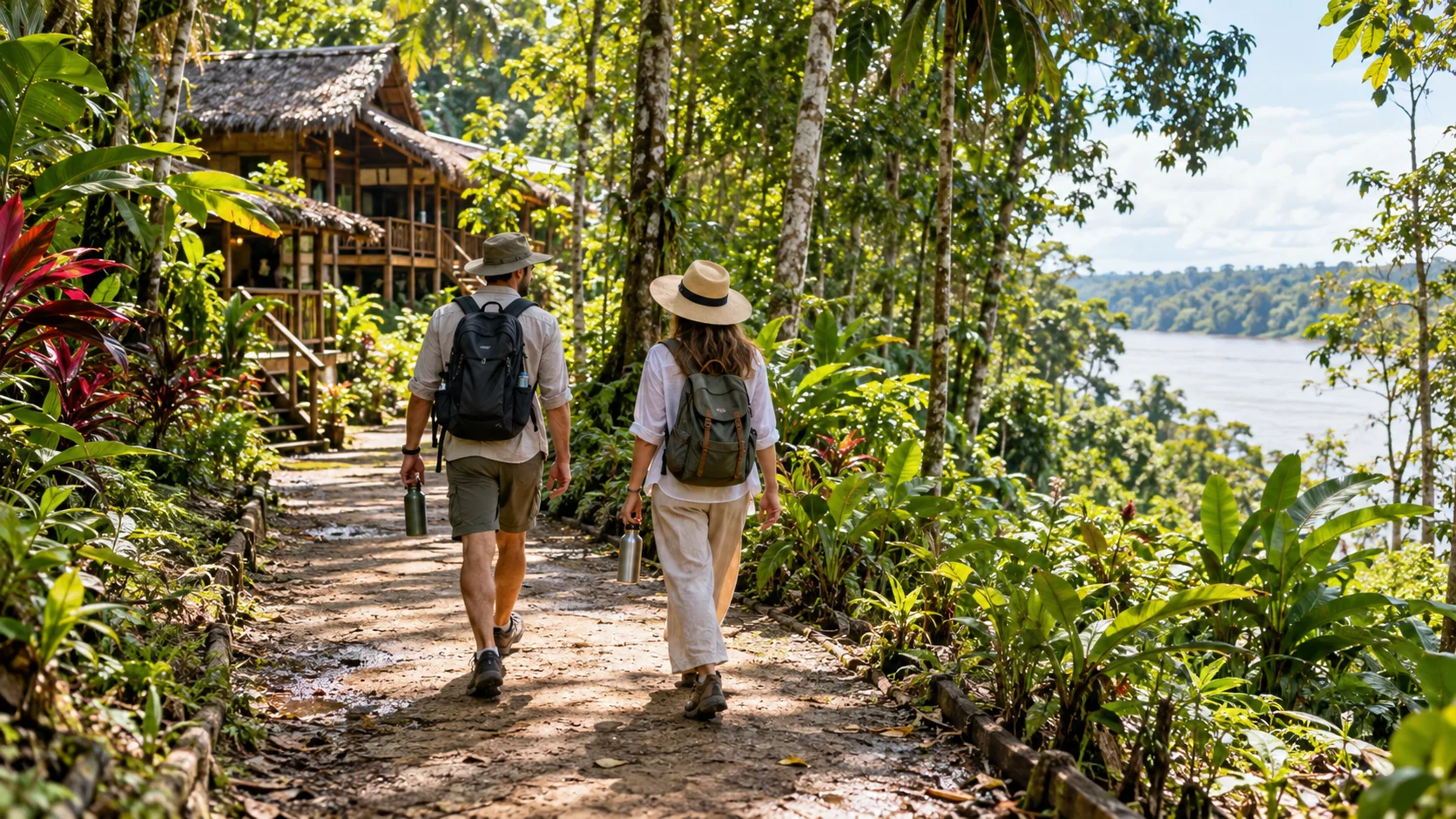
Best months for different priorities
| Your priority | Months to consider | Why |
|---|---|---|
| Lowest average rainfall | July–September | SENAMHI averages are lowest in this period |
| Easier first Amazon trip | June–September | Generally easier paths and outdoor logistics |
| Lush wet-season atmosphere | December–April | Higher rainfall and fuller waterways |
| Balance between seasons | May or October | Transition months, but conditions remain variable |
| Schedule and preparation first | Any month | Good screening and recovery time matter more than weather |
Does season affect ayahuasca ceremonies?
Weather affects the physical environment, not the expected psychological or spiritual outcome. Claims that a certain month makes ayahuasca stronger, safer or more effective are not a reliable basis for choosing dates. Brew composition, individual health, medication interactions, screening, staff conduct, setting and aftercare are far more relevant.
In rainy weather, a ceremony space needs good ventilation without allowing wind-driven rain onto participants. Paths to toilets should be covered or safely lit, and staff should address slippery surfaces. In hotter weather, hydration and ventilation require attention. Read our guide to ayahuasca risks, contraindications and warning signs before choosing a program.
No participant should change prescribed medication based on the season, a packing list or general retreat advice. Complete health screening honestly and consult an appropriately qualified healthcare professional about personal risks.
Flights, buffers and seasonal disruptions
Most international travelers fly to Lima and continue to Iquitos airport (IQT). Tropical weather can contribute to delays at any time, and separate tickets make a missed connection more complicated. Arriving in Iquitos at least one night before the retreat gives you room for delays, luggage issues and rest.
During the wetter months, extra flexibility becomes even more useful. During July, August and major holiday periods, demand may affect prices and availability even when weather is favorable. Compare total fares with baggage and change conditions rather than choosing only the cheapest headline price.
Follow our complete guide on how to get to Iquitos for an ayahuasca retreat, and include flights, buffer nights and insurance in your Peru ayahuasca retreat budget.
What to pack in every season
Your core packing list changes surprisingly little across the year:
- Light, loose and breathable clothing.
- A lightweight waterproof jacket or poncho.
- Closed shoes with reliable grip and quick-drying sandals.
- Long sleeves and long trousers for insect protection.
- Insect repellent appropriate for you and your itinerary.
- Sun protection, including a hat and sunscreen.
- Dry bags or zip pouches for documents, phone and medication.
- One light warm layer for air-conditioned travel and possible cooler spells.
- Any prescribed medication in original packaging.
Avoid heavy cotton items that remain damp for long periods. Bring enough changes of clothing without overpacking, and check the domestic airline’s baggage allowance. Our detailed ayahuasca retreat packing list for Iquitos covers toiletries, documents and items best left at home.
Health planning for an Amazon visit
Climate is only one part of travel preparation. Consult a qualified travel-health professional early enough to discuss vaccinations, mosquito-borne illness prevention and your personal medical history. Recommendations depend on the itinerary, duration, activities and individual health; an online article cannot determine what is appropriate for you.
Heat and humidity can worsen fatigue, especially after a long international flight. Rest, use sensible sun protection and follow professional advice about hydration. Persistent fever, breathing difficulty, confusion, fainting or severe dehydration requires medical assessment rather than a spiritual explanation.
Review how to prepare for an ayahuasca retreat before purchasing non-refundable travel.
How far in advance should you book?
Availability matters more than a rigid seasonal rule. First confirm that the retreat can screen and accept you, then choose travel dates with buffer time. Flights and preferred rooms may become more expensive around holidays and popular vacation months, while weather alone cannot predict demand.
Before paying, confirm:
- The retreat start and end times.
- The Iquitos pickup place and window.
- What local transportation is included.
- Whether weather can change the transfer plan.
- The cancellation and rescheduling policy.
- The health-screening deadline.
- How emergency transport works in heavy rain.
Choosing your retreat length
Once you have a preferred travel window, select a program that leaves adequate time for preparation, ceremonies, rest and integration. Ayaterra lists several retreat lengths:
- 3-day ayahuasca retreat in Iquitos.
- 5-day ayahuasca retreat in Iquitos.
- 7-day ayahuasca retreat in Iquitos.
- 8-day ayahuasca retreat in Iquitos.
Our guide to choosing an ayahuasca retreat length explains the tradeoffs. A longer retreat is not automatically better for every person, and the scheduled number of ceremonies is never an obligation to participate.
Frequently asked questions
What is the driest month in Iquitos?
July has the lowest monthly rainfall average in SENAMHI’s published Iquitos table at approximately 158 mm. That is still significant rain, and a specific July week can be wetter than average.
What is the rainiest month in Iquitos?
April has the highest average in the same SENAMHI table at approximately 305 mm. Other official climate resources may use different reference periods and show March or April as the peak, so treat the distinction as approximate.
Is August a good month for an ayahuasca retreat in Iquitos?
August is one of the lower-rainfall months and can be convenient for travel and outdoor breaks. It remains hot and humid, rain is still possible, and retreat quality depends on the provider and preparation rather than the month.
Does it rain all day during the wet season?
Not necessarily. Rain may come in intense showers or longer periods, with sunny intervals possible. Forecasts become more useful close to departure, but tropical conditions can change rapidly.
Are there cold months in Iquitos?
Iquitos is warm year-round. Short cooler-air events can occur, particularly from May through August, so a light layer is useful. These events do not create a conventional winter.
Do I need waterproof shoes?
Prioritize secure grip, comfort and the ability to dry. A heavy waterproof boot can become hot and hold moisture inside. Ask the retreat about path conditions and use footwear suited to your mobility and planned activities.
Can weather cancel an ayahuasca retreat?
Routine rain should be part of Amazon operations, but severe weather can affect flights, transfers or outdoor activities. Review the provider’s rescheduling policy and emergency plan before booking.
The bottom line
For the easiest overall travel conditions, May through October is generally the best time to visit Iquitos for an ayahuasca retreat, with July through September showing the lowest average rainfall. Choose November through April if you accept wetter logistics and prefer the atmosphere of the high-rainfall season.
Whichever month you choose, arrive with a buffer, pack for rain, complete screening honestly and judge the retreat by its safety practices—not by promises about a magical season. Explore Ayaterra’s Iquitos ayahuasca retreats or contact the team to confirm dates and pickup arrangements before booking flights.