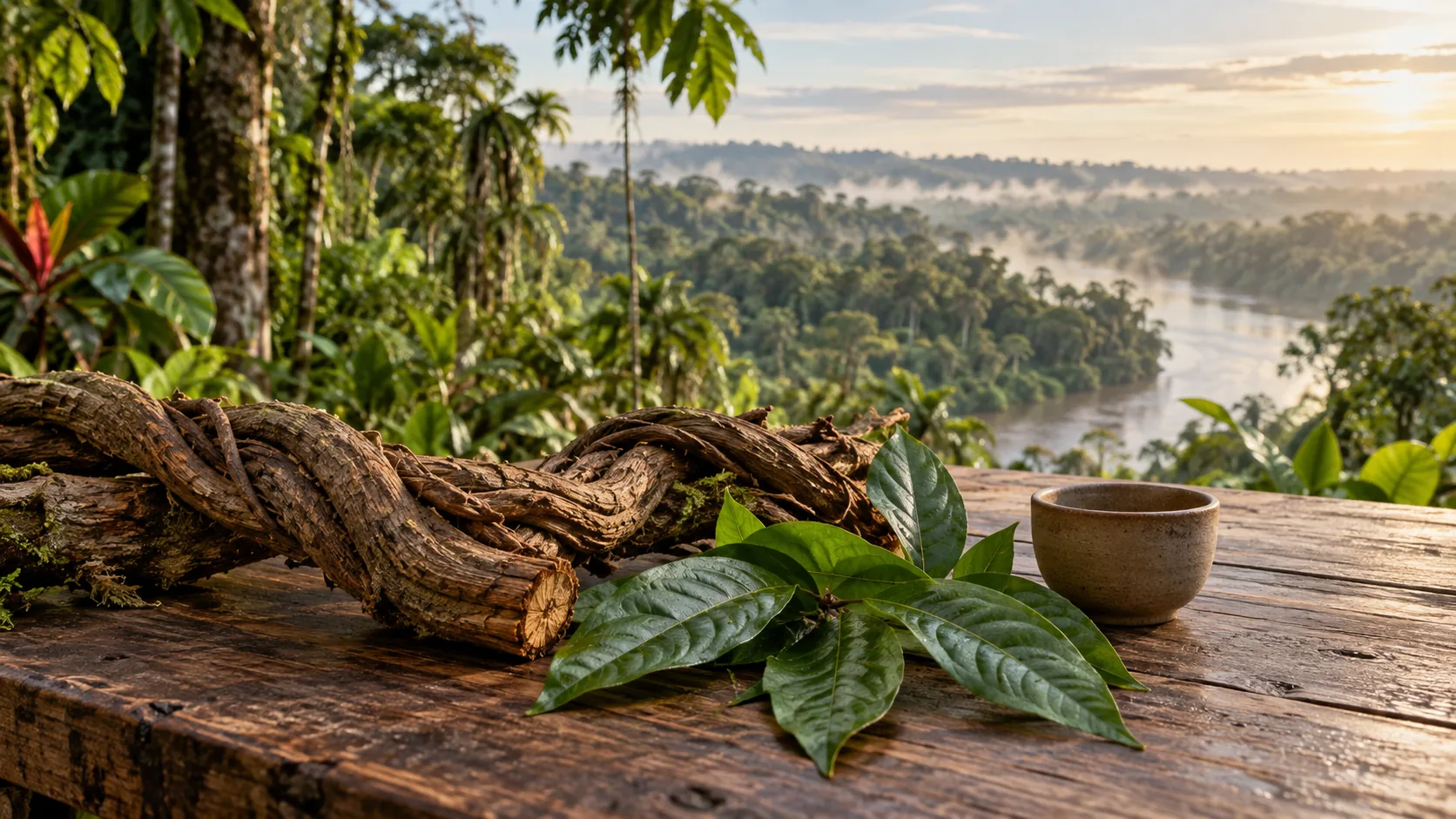
Ayahuasca is a psychoactive plant brew with diverse ceremonial and medicinal uses among Indigenous and other communities in the Amazon basin. A widely described preparation combines the vine Banisteriopsis caapi with leaves of Psychotria viridis, commonly called chacruna. The vine contains beta-carboline alkaloids, while chacruna commonly provides N,N-dimethyltryptamine, or DMT.
That botanical description is only part of the answer. Ayahuasca is not one standardized product or a single tradition. Recipes, names, songs, ceremonial roles and interpretations vary across communities and regions. Contemporary use also includes Amazonian healing practices, Brazilian religions, research studies, urban ceremonies and international retreat tourism. These contexts should not be treated as interchangeable.
Interest in ayahuasca has grown alongside claims about healing, spirituality and mental health. Some early research is promising, but ayahuasca is not an established cure and it is not safe for everyone. Understanding what it is requires holding pharmacology, culture, evidence and risk together.
What does the word ayahuasca mean?
The term is commonly traced to Quechua roots often interpreted as “vine of the soul,” “vine of the dead” or similar translations. It is one of many regional names. Yagé, daime, hoasca and other terms may refer to related preparations or traditions, but their ingredients and cultural meanings are not necessarily identical.
Even Banisteriopsis caapi itself may be called ayahuasca, while the word also refers to the completed brew. This can create confusion when someone asks what is “in ayahuasca.” The answer depends on whether they mean the vine, a particular community’s preparation or a product served at a specific retreat.
Which plants are commonly used?
Two plants appear frequently in scientific and popular descriptions:
- Banisteriopsis caapi: a woody Amazonian vine containing beta-carbolines such as harmine, harmaline and tetrahydroharmine.
- Psychotria viridis: an Amazonian shrub whose leaves commonly contain DMT.
Other plants may be used instead of or in addition to these. A preparation can vary by geography, lineage, availability and practitioner. Additional plants can change both the experience and the safety profile, so a participant should ask for a complete ingredient disclosure rather than assuming every brown liquid has the same composition.
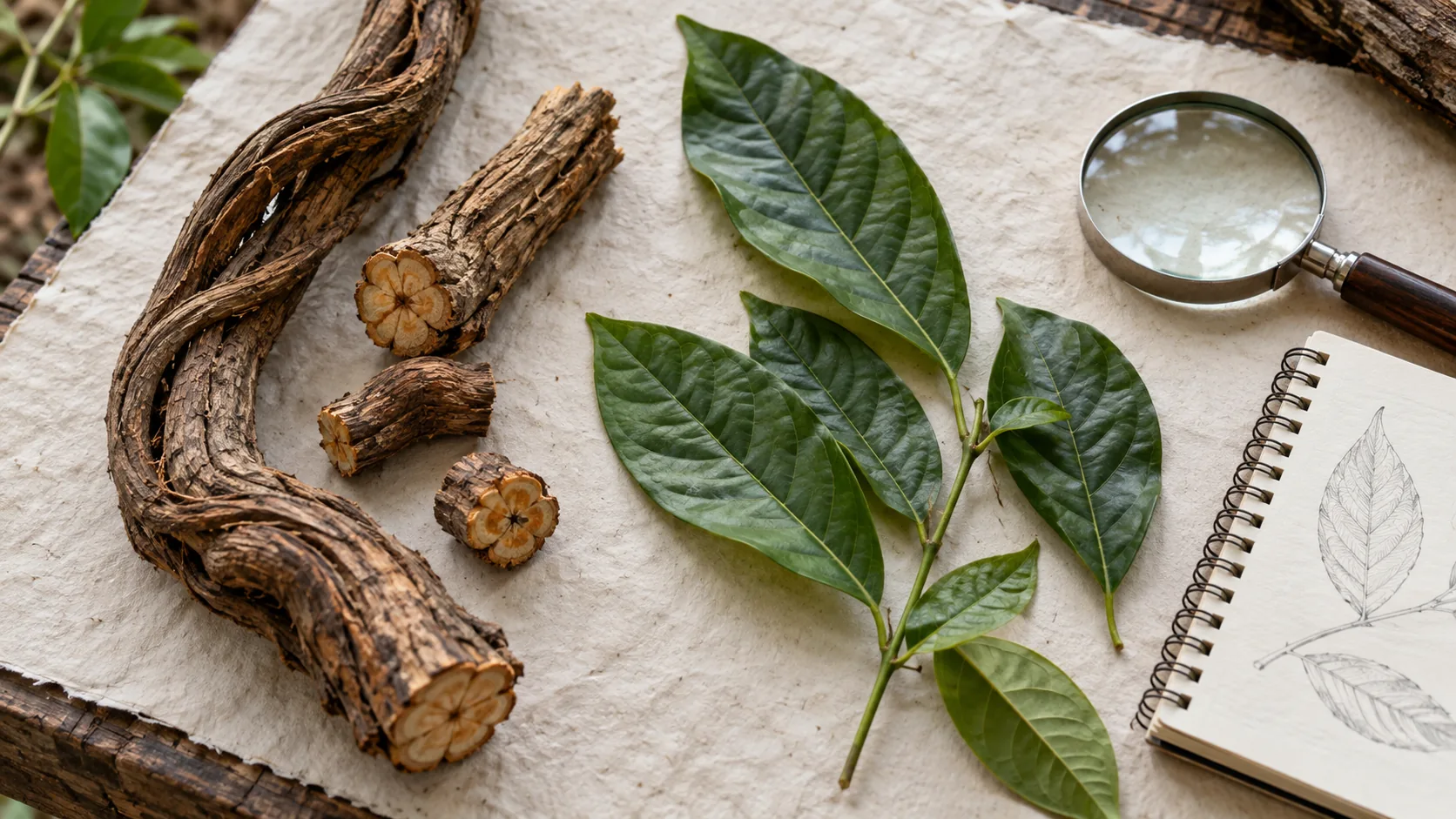
Plant identification also matters. Similar-looking species, regional names and undocumented additives can create uncertainty. Scientific studies often analyze alkaloid content or use standardized preparations; that level of chemical control is not guaranteed in a commercial ceremony.
How does ayahuasca work in the body?
DMT is rapidly broken down in the digestive system when taken orally by itself. Beta-carbolines in Banisteriopsis caapi inhibit monoamine oxidase A, or MAO-A, reversibly. This reduces the normal breakdown of DMT and allows enough of it to become orally active.
DMT acts at several receptors, with serotonin 5-HT2A receptor activity considered central to its psychedelic effects. Harmine, harmaline and tetrahydroharmine may contribute additional pharmacological effects. The interaction is more complex than simply calling the vine an “activator,” and scientific reviews note that several mechanisms and compounds remain incompletely understood.
This MAO-A inhibition is also relevant to safety. Ayahuasca may interact with antidepressants, stimulants, other MAO inhibitors, recreational substances, supplements and additional medicines. The exact risks depend on the substance, dose, timing, individual metabolism and brew composition. Nobody should stop prescribed medication without the clinician who manages it.
Is every ayahuasca brew the same?
No. Analyses reported in scientific reviews show substantial variation in DMT and beta-carboline concentrations. Preparation time, plant species, plant age, proportions and additional ingredients can all affect the final brew.
Terms such as “one cup” or “a traditional dose” therefore do not describe a consistent chemical amount. A prior experience does not reliably predict a later one, even at the same center. Responsible providers should avoid promises based on dose and should never pressure a participant to consume more.
How is ayahuasca traditionally prepared?
Preparation practices differ, but descriptions commonly involve cleaning, crushing or arranging plant material, combining it with water and cooking it for an extended period. The process may have ceremonial meaning and may be carried out by people with specialized knowledge.
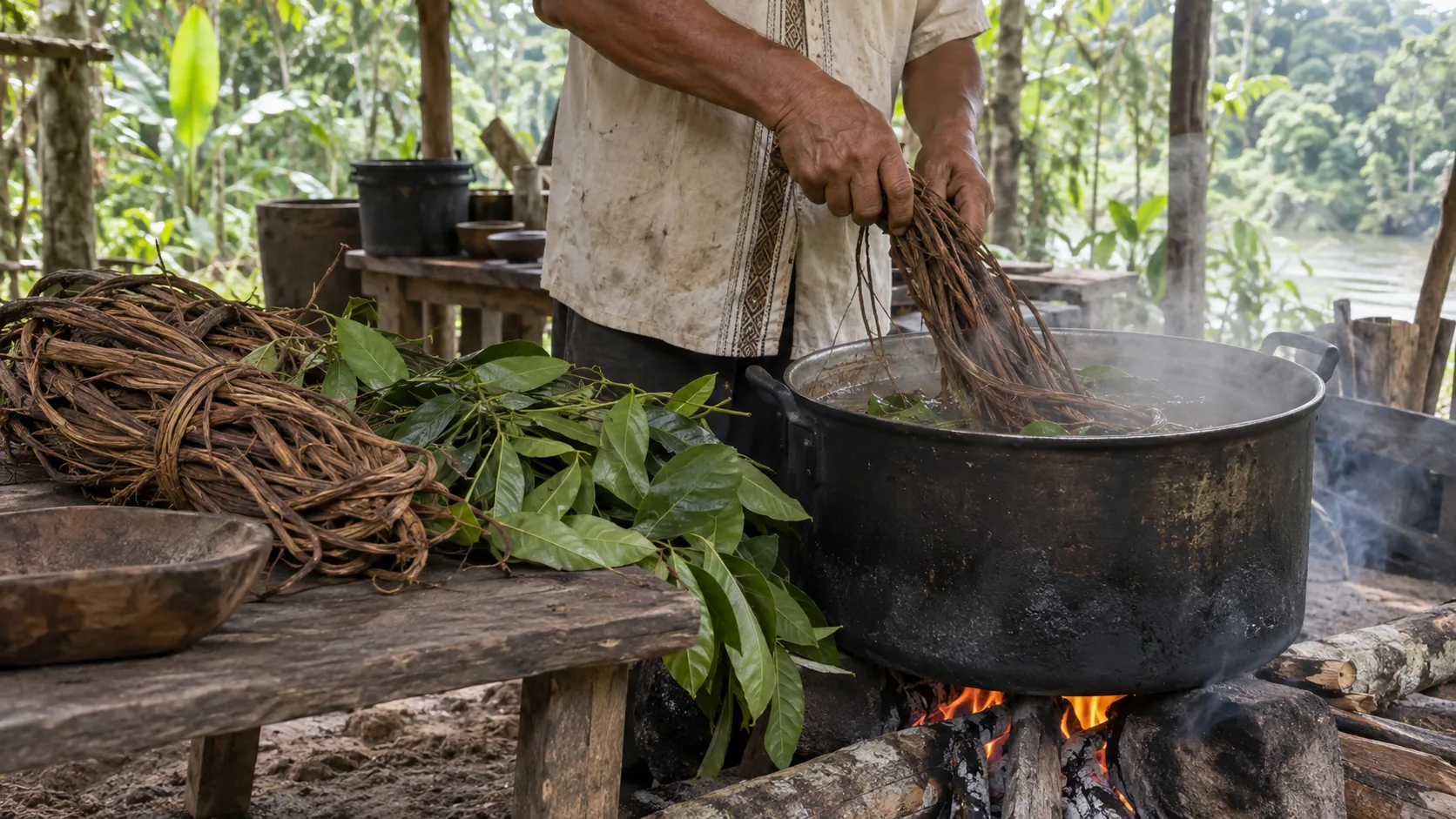
This article does not provide a recipe. Attempting to identify, prepare or combine psychoactive plants without appropriate knowledge introduces risks involving plant identification, concentration, contamination, fire, legal status and dangerous interactions. Reading the pharmacological mechanism is not equivalent to learning a community’s practice or being able to conduct it safely.
Ayahuasca has many histories, not one simple origin story
Ayahuasca use is rooted in the Amazon basin, but its precise origin and age are debated. Recent historical reviews distinguish between evidence for ancient psychoactive plant use in South America and direct proof of the exact two-plant brew now commonly called ayahuasca.
Archaeological findings show long histories of psychoactive and medicinal plant knowledge in the region. However, identifying chemical residues in an artifact does not always establish the preparation, ritual or meaning involved. Written descriptions of ayahuasca are much more recent than some popular claims of a single unchanged practice extending thousands of years.
The uncertainty should not be used to dismiss Indigenous knowledge. It is a reason to avoid flattening many communities into one romantic story. Traditions change, exchange knowledge and respond to colonialism, missionization, migration, urbanization and tourism.
Indigenous knowledge and Peru’s cultural recognition
In 2008, Peru declared the traditional knowledge and uses of ayahuasca practiced by Amazonian Indigenous communities part of the nation’s cultural heritage. The declaration emphasizes cultural continuity and recognizes the importance of this knowledge within Amazonian communities.
That recognition does not mean every retreat, commercial facilitator or foreign interpretation is endorsed by the Peruvian state. It also does not function as medical approval. Cultural heritage belongs to living peoples and practices, not merely to a product that can be separated from them.
Travelers can ask how a retreat works with local knowledge holders, how practitioners describe their own lineage, how staff are compensated and whether marketing uses specific cultural identities accurately. Respectful engagement avoids treating Indigenous clothing, songs or designs as generic spiritual decoration.
What are icaros?
Icaros are medicine songs associated with several Amazonian healing traditions, including Shipibo-Konibo practices. Their meanings, transmission and use vary. In some traditions, they help structure the ceremony, guide attention or express relationships with plants and healing knowledge.
An icaro is not simply background music. Peru has separately recognized the icaros of the Shipibo-Konibo-Xetebo people as cultural heritage. A retreat should be able to explain whose songs are being used and who has the training or authority to use them.
What does ayahuasca feel like?
Experiences vary widely. Reported acute effects can include vivid imagery, changes in time and body perception, intensified emotion, autobiographical memories, altered thinking, fear, awe, nausea, vomiting and changes in heart rate or blood pressure. Not everyone sees visions, and a dramatic visual experience is not proof of healing or truth.
Effects generally unfold over several hours, but onset and duration depend on the brew, serving, individual, food, metabolism and other factors. Ceremonies often last longer than the strongest subjective effects because participants need orientation, monitoring and time to settle safely.
For a realistic sequence, read what happens during an ayahuasca ceremony.
Why do people vomit?
Nausea and vomiting are among the most frequently reported acute physical effects. Many traditions interpret vomiting as purging or cleansing. Pharmacologically and medically, it is still vomiting and can contribute to dehydration, aspiration or injury in some circumstances.
Staff should monitor the participant’s position, awareness and ability to retain fluids. Persistent vomiting, fainting, severe weakness, blood, chest pain, breathing problems or marked confusion require assessment rather than automatic spiritual interpretation.
What are people seeking from ayahuasca?
Motivations include spiritual exploration, personal reflection, community participation, curiosity and attempts to address emotional distress or substance use. A person’s goal influences expectations but does not guarantee the outcome.
Marketing often uses words such as transformation, reset or cure. These can create pressure to interpret any event positively. A responsible orientation allows for beneficial, neutral, confusing and difficult responses. Participants should not be told they failed if they do not have visions or immediate life changes.
What does scientific research study?
Modern research examines acute brain and psychological effects, pharmacology, safety, depression, anxiety, substance use and longer-term self-reported outcomes. Studies range from laboratory experiments and small clinical trials to large observational surveys.
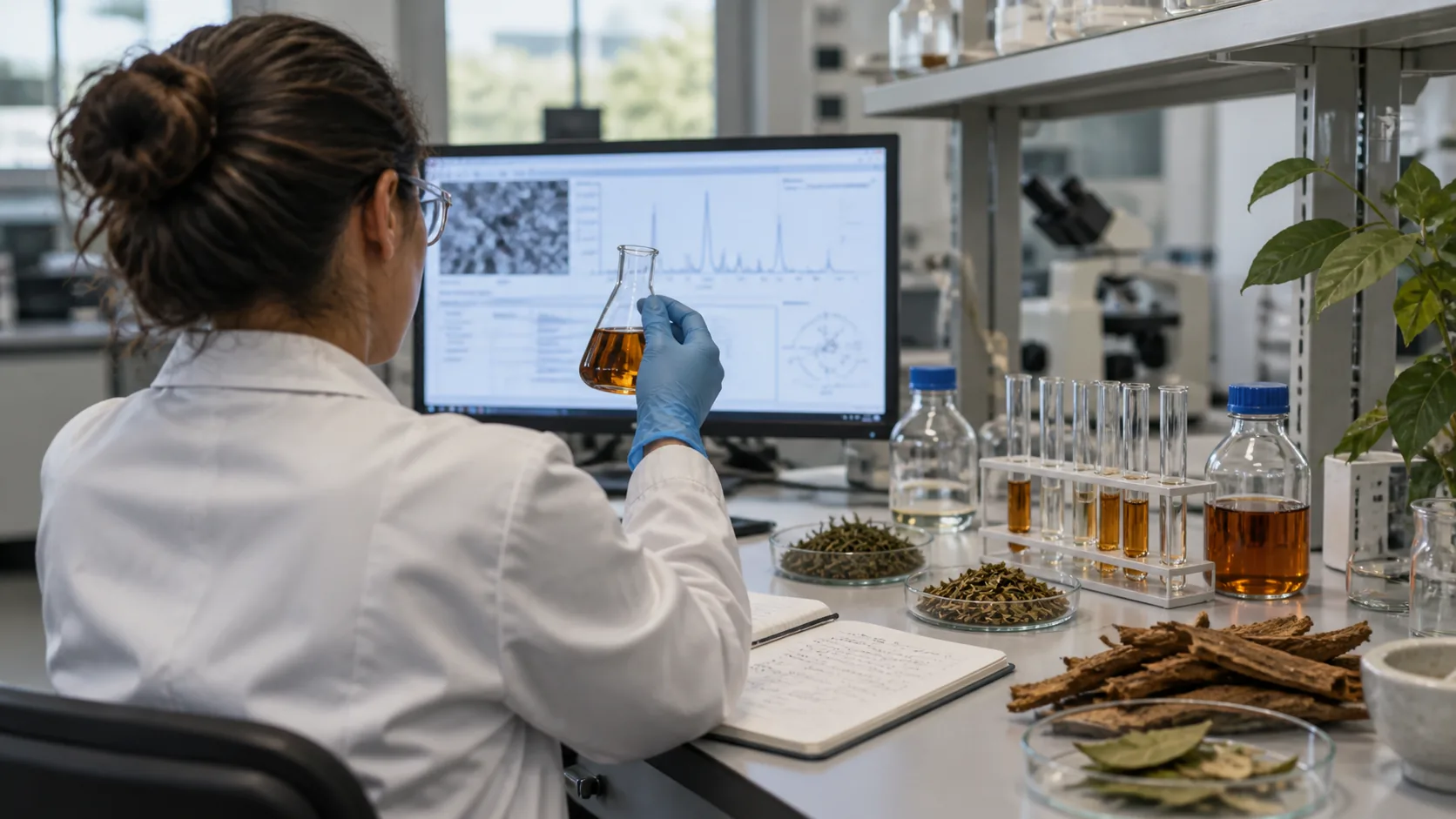
A randomized placebo-controlled trial published in 2019 reported rapid antidepressant effects after a single ayahuasca session in a carefully screened group with treatment-resistant depression. Other studies and reviews have reported signals that justify further investigation. These findings are not the same as proof that a commercial retreat treats depression safely or effectively.
Important limitations include small samples, selected participants, challenges with blinding, variable preparations, expectation effects and differences between clinical and ceremonial settings. Observational studies can reveal associations but cannot reliably establish that ayahuasca caused an improvement.
Is ayahuasca an approved medical treatment?
Ayahuasca should not be presented as a generally approved treatment for depression, trauma, addiction or another disorder. Research participation uses protocols, ethics review, eligibility criteria and defined support that may not exist at a retreat.
People with mental-health conditions should discuss risks with qualified professionals. A retreat should not replace established care, diagnose participants or advise abrupt medication withdrawal. If someone is in crisis, emergency or clinical care is more appropriate than a ceremony.
Placebo, expectation and setting
Context influences psychedelic experiences. Preparation, group dynamics, music, facilitator behavior, cultural beliefs and expectations can shape what a person reports. A placebo-controlled retreat study found changes in some outcomes across both ayahuasca and placebo groups, illustrating that the setting itself can matter.
This does not mean the pharmacology is imaginary. It means that claims about cause require caution. A powerful experience may reflect interactions among drug effects, personal history, expectation and environment.
What are the risks?
Common acute effects include nausea, vomiting, gastrointestinal discomfort, anxiety, fear, headache, confusion and temporary changes in heart rate or blood pressure. Less common but potentially serious problems include severe drug interactions, prolonged psychological disturbance, mania or psychosis in vulnerable individuals, seizures, injury, dehydration and delayed access to care.
Risk also comes from the environment and other people. Falls, unsafe transport, sexual misconduct, inadequate overnight monitoring and unqualified responses to emergencies are not pharmacological effects, but they are part of real-world retreat safety.
Read Is ayahuasca safe? for a detailed review of contraindications, warning signs and emergency planning.
Who may be advised not to participate?
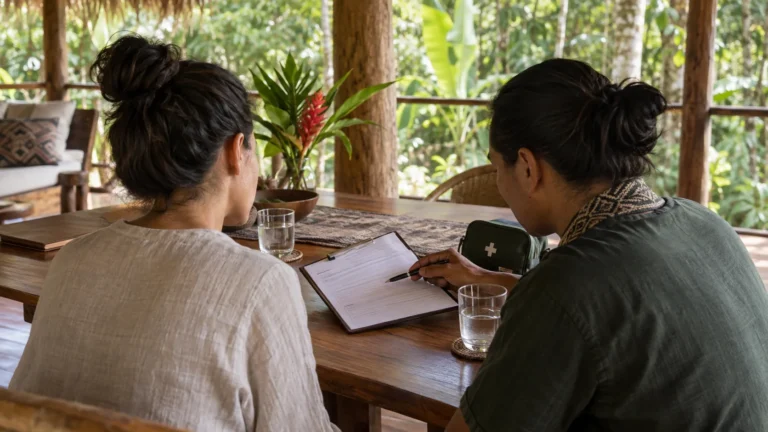
No online list can determine eligibility. Significant cardiovascular disease, uncontrolled blood pressure, pregnancy, active psychosis or mania, personal or family vulnerability to psychotic or bipolar disorders, interacting medication and other serious or unstable conditions may lead to exclusion or postponement.
Screening should include prescriptions, nonprescription medicines, supplements and recent substance use. Do not conceal information or stop medication independently. A simple food plan cannot neutralize a medical contraindication; our ayahuasca diet guide explains the difference.
Preparation, ceremony and integration are separate stages
A retreat is not only the night of consumption.
Preparation
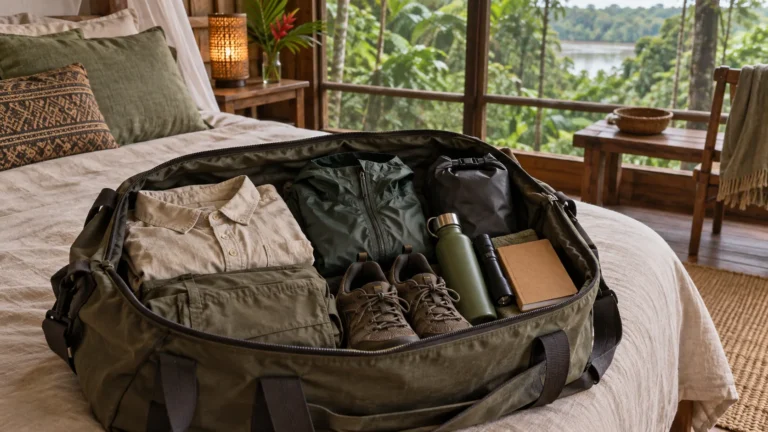
This stage includes screening, medication review, informed consent, travel planning and realistic expectations. Our preparation guide covers each step.
Ceremony
The setting should have trained, sober support, safe movement paths, clear touch boundaries and an emergency plan. Participation in any scheduled ceremony must remain optional.
Integration
Afterward, participants return to sleep, food, relationships, work and decisions. Integration may involve reflection, practical routines and professional support. See our 30-day integration framework.
How tourism changes the context
International interest has created income and opportunities, but also pressure, cultural commodification and uneven safety standards. A polished website does not prove a practitioner has community standing or that a center has adequate procedures.
Ask who owns and operates the center, who leads ceremonies, how traditions are represented, whether local workers have meaningful roles, and what system handles misconduct or medical emergencies. Our guide to choosing a safer retreat in Peru provides questions to use before booking.
Is ayahuasca legal?
Legal status varies by country and can depend on the plant, DMT regulations, religious exemptions, importation, possession and the specific activity. Do not rely on a retreat advertisement or social-media post for legal advice.
Peru’s cultural heritage recognition concerns traditional knowledge and uses practiced by Amazonian Indigenous communities. It should not be interpreted as a universal legal guarantee for every commercial act, export, import or use outside Peru. Travelers should verify current rules with relevant government authorities and obtain legal advice when necessary.
Ayahuasca, yagé, pharmahuasca and DMT are not interchangeable
Yagé can refer to regional ayahuasca traditions and preparations, particularly in parts of Colombia and neighboring areas. Hoasca and daime are terms associated with particular Brazilian contexts. Pharmahuasca usually refers to a pharmaceutical-style combination of DMT and a monoamine oxidase inhibitor rather than a traditional plant brew.
Inhaled or injected DMT has a different route, onset and duration from oral ayahuasca. Research on one preparation cannot always be transferred directly to another. Precise language matters when comparing effects, studies and risk.
Frequently asked questions
Is ayahuasca a drug or a medicine?
It is a psychoactive botanical preparation. Different communities may understand it as medicine, sacrament, teacher or another culturally specific category. In scientific literature it is studied as a psychoactive preparation containing active compounds. Calling it medicine does not establish regulatory approval or suitability for an individual.
Does ayahuasca always contain DMT?
Many widely described preparations combine Banisteriopsis caapi with a DMT-containing plant such as Psychotria viridis, but recipes and terminology vary. Ask what a specific preparation contains instead of assuming.
How long do ayahuasca effects last?
The acute experience usually unfolds over several hours, but timing varies with composition, serving, metabolism, food and the individual. Monitoring should continue until the participant is oriented and able to move safely.
Is vomiting necessary for ayahuasca to work?
No scientific evidence establishes vomiting as necessary for a meaningful or pharmacological effect. It may have cultural significance in some traditions, but severe or persistent vomiting still needs medical attention.
Is ayahuasca addictive?
Available reviews do not describe a typical pattern of compulsive dependence or withdrawal like that associated with several other substances. That does not make repeated or escalating use risk-free. Psychological overreliance, financial pressure and avoidance of ordinary care can still occur.
Can ayahuasca cure depression or addiction?
Research signals are being investigated, but “cure” is not supported. Clinical findings come from controlled, screened settings and do not validate guarantees from retreats. People should not abandon established treatment or medication without qualified care.
What is an ayahuasca retreat?
It is a residential or multi-day program that may combine ceremonies with accommodation, meals, preparation, rest and integration activities. Program quality varies. You can review Ayaterra’s published ayahuasca retreats near Iquitos and compare 3, 5, 7 and 8-day formats, subject to screening.
The clearest way to understand ayahuasca
Ayahuasca is simultaneously a plant-based psychoactive preparation, a subject of scientific research and part of diverse living Amazonian traditions. Reducing it to a chemical misses its cultural context; reducing it to a sacred symbol ignores pharmacology and risk.
Approach claims with curiosity and precision. Ask which plants, whose tradition, what evidence, which safeguards and what limits apply. That creates a more respectful and useful understanding than either romanticizing ayahuasca or treating every context as identical.
Sources and further reading
- Peru National Institute of Health: traditional use of ayahuasca
- Peru Ministry of Culture: national heritage declaration
- Ayahuasca: historical, pharmacological and therapeutic review
- Ayahuasca pharmacology, safety and therapeutic effects
- Toxicokinetics and toxicodynamics of ayahuasca alkaloids
- Pharmacological interactions of compounds in ayahuasca
- Rapid antidepressant effects in treatment-resistant depression: randomized placebo-controlled trial