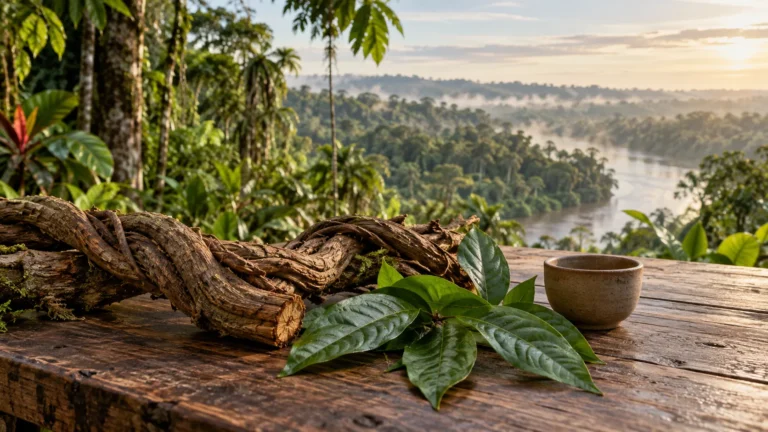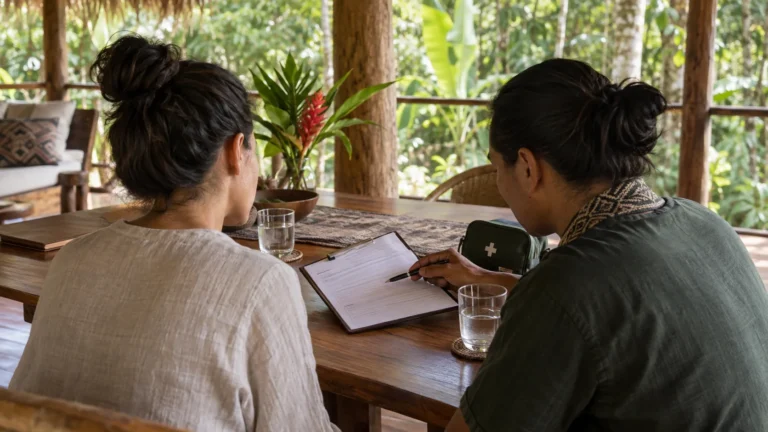
What happens during an ayahuasca ceremony can vary between Amazonian traditions, practitioners and retreat centers. Even within one retreat, no two nights—or two participants—will necessarily have the same experience. A responsible guide can explain the structure and practical safeguards, but it cannot predict what you will feel or promise a particular outcome.
This step-by-step overview describes a common retreat ceremony near Iquitos, Peru: orientation, entering the maloca, serving the brew, traditional songs, possible physical and emotional effects, asking for assistance, closing the ceremony and the morning afterward.
Ayahuasca is not appropriate for everyone and can involve serious medication interactions and psychological or physical risks. Complete medical and psychological screening before attending. This article is educational and is not medical advice.
Ayahuasca ceremony overview
A retreat ceremony is usually one part of a larger program. Screening and preparation take place before arrival, while meals, rest and post-ceremony conversations provide structure around the nights themselves.
A typical sequence may include:
- a daytime or early-evening orientation;
- a light meal schedule and quiet preparation;
- entering the ceremony space and taking an assigned place;
- an opening led by the practitioner;
- individual serving of the ayahuasca brew;
- several hours of effects, traditional songs and facilitator support;
- a formal or gradual closing; and
- rest followed by breakfast and a group conversation the next morning.
The exact timing, dose, music and traditional practices differ. Ask the retreat for its current written schedule rather than assuming every center follows the same format.
For the wider planning process, including screening and retreat selection, begin with our complete ayahuasca retreat guide.
Before the ceremony: orientation and consent
Orientation should explain more than where to sit. It should identify the people responsible for support and describe what participants can do if they feel distressed, need the bathroom or decide not to drink.
Useful topics include:
- who leads the ceremony and who remains available as a facilitator;
- where exits, bathrooms, drinking water and first-aid supplies are located;
- whether participants must remain in their assigned places;
- how to request help quietly;
- which forms of touch may be offered and how to decline them;
- whether smoking, incense or other plants are used;
- how emergencies are assessed and escalated; and
- when the ceremony is considered closed.
Consent remains active after orientation. Being present at a retreat does not remove your right to ask questions, decline nonessential touch or decide not to participate. A center should explain what support is available if you change your mind before serving.
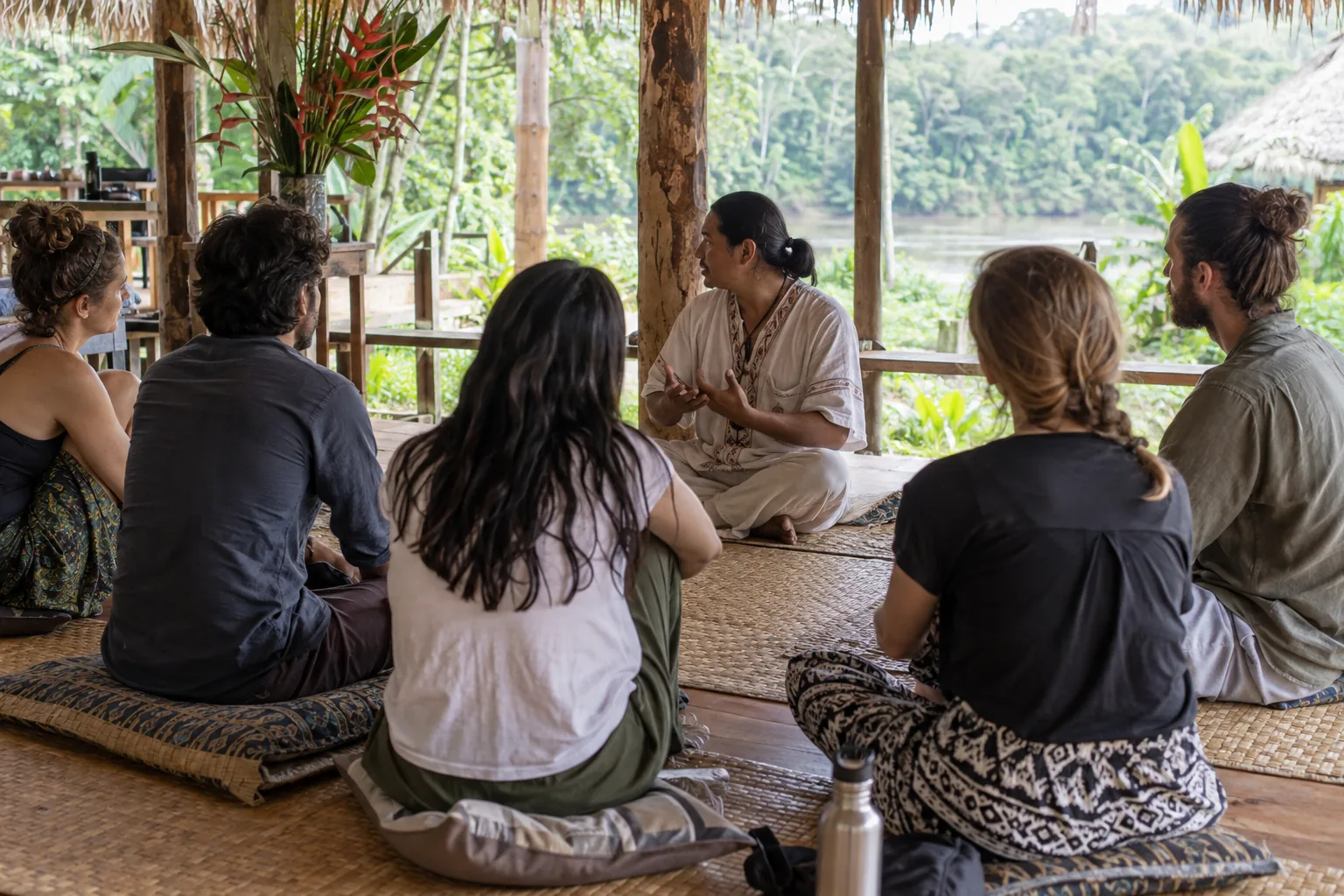
Health status is checked again
Screening should already be complete, but the team may ask whether anything has changed. Report new medication, illness, substance use, severe sleep loss or a significant change in mental health.
Do not hide a change because you traveled a long distance. The safer decision may be to postpone or sit out a ceremony. No responsible practitioner should frame honest disclosure as failure.
If you are still preparing for a future retreat, request the center’s current preparation and screening requirements directly. We will connect this section to the dedicated preparation guide as soon as that article is public.
Entering the maloca
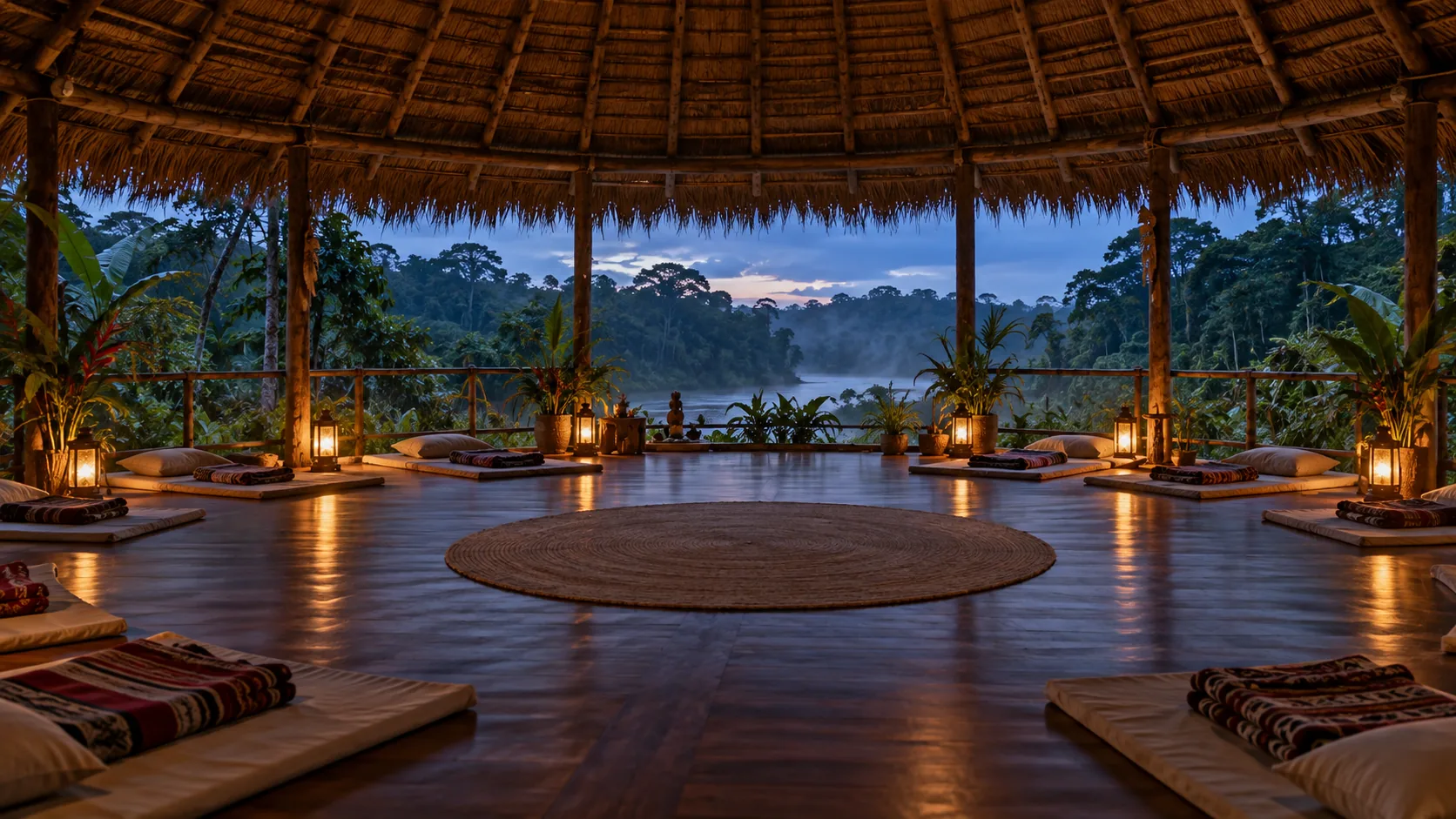
In the Peruvian Amazon, an ayahuasca ceremony may take place in a communal structure often called a maloca. Participants typically receive an individual mat or mattress around the edge of the room, with space for a bucket, water and personal items permitted by the retreat.
The room may be dim or dark to reduce distraction. Darkness can also make movement difficult, so learn the route to the bathroom before the ceremony begins. Keep shoes, a flashlight and other essential items where the center instructs you to place them.
Studies of Amazonian retreats near Iquitos describe nighttime ceremonies in malocas with individual places arranged around the perimeter, trained facilitators assisting participants and traditional medicine songs continuing through much of the session. That is one documented format, not a universal standard.
Who is present during the ceremony?
The guiding practitioner may be described as a shaman, curandero, ayahuasquero or by a tradition-specific title. Facilitators may translate, monitor the room, accompany people to the bathroom and respond to practical or emotional needs.
Before the ceremony, you should know:
- who is leading;
- which staff members remain sober;
- who speaks your language;
- who has first-aid or emergency responsibilities;
- how many participants each facilitator is supporting; and
- who makes the decision to seek outside medical care.
Traditional experience and operational safety are different competencies. A retreat should be able to explain both without relying only on titles or testimonials.
Opening the ceremony
The practitioner may open the space with silence, spoken words, prayer, song, tobacco or another practice associated with their tradition. Not every ceremony includes the same elements.
Peru recognized the traditional knowledge and uses of ayahuasca practiced by Amazonian communities as Cultural Heritage of the Nation in 2008. This recognition concerns diverse living traditions; it does not mean all commercial ceremonies are standardized or officially certified.
Approach unfamiliar practices respectfully and ask about them before the ceremony. You should not be pressured to imitate beliefs or claim experiences you do not have.
Serving the ayahuasca brew
Participants are usually invited individually to receive the brew. Serving amounts may differ, but dosage practices are not standardized across retreats and the chemical composition of preparations can vary.
Do not compare your serving with another participant’s or request more because effects have not started quickly. Only the responsible practitioner should make a serving decision, and the center should explain its policy concerning any additional serving.
You retain the right not to drink. If you are uncertain, speak to the team before accepting a serving rather than making the decision under pressure in the moment.
When do the effects begin and how long do they last?
Onset and duration vary with the preparation, amount served, individual metabolism, recent food intake and other factors. Effects may begin within the first hour, but there is no reliable minute-by-minute schedule for every participant.
Research and naturalistic retreat studies often describe ceremonies lasting several hours. The ceremonial container may remain open longer than the strongest subjective effects. Do not assume you are ready to walk alone, drive or leave the supervised area because one wave appears to have passed.
What can ayahuasca feel like?
Possible effects include:
- visual imagery or changes in perception;
- altered sense of time or body;
- vivid memories;
- strong emotions such as wonder, sadness, fear or gratitude;
- changes in attention and thought patterns;
- nausea, vomiting or diarrhea;
- sweating, shaking or temperature changes;
- temporary increases in heart rate or blood pressure; and
- little or no noticeable subjective effect.
Not everyone experiences visions. A ceremony without dramatic imagery is not necessarily a failure, and an intense experience is not automatically beneficial. Avoid interpreting every physical symptom as spiritual progress.
Nausea, vomiting and “purgingâ€
Vomiting is commonly reported and may be understood within some traditions as purging. Whatever meaning a participant gives it, staff should still distinguish expected discomfort from a possible medical problem.
Tell a facilitator about severe chest pain, trouble breathing, loss of consciousness, seizure-like activity, extreme agitation, persistent confusion or any symptom that feels dangerous. Systematic reviews describe many adverse effects as temporary, but serious events and medical assistance have also been reported.
Do not leave the room alone while dizzy or disoriented. Use the provided container and request help if you need to move.
Icaros and the role of traditional music
Traditional medicine songs in the Peruvian Amazon are commonly called icaros. Practitioners may sing for the group or for one participant at a time. Different lineages understand the songs and their purpose in different ways.
Research on ceremonial settings suggests that music, social context, expectations and the physical environment can influence how participants describe both challenging and meaningful experiences. These contextual factors are sometimes summarized as “set and setting.†They matter, but they do not make risk disappear or guarantee a therapeutic effect.
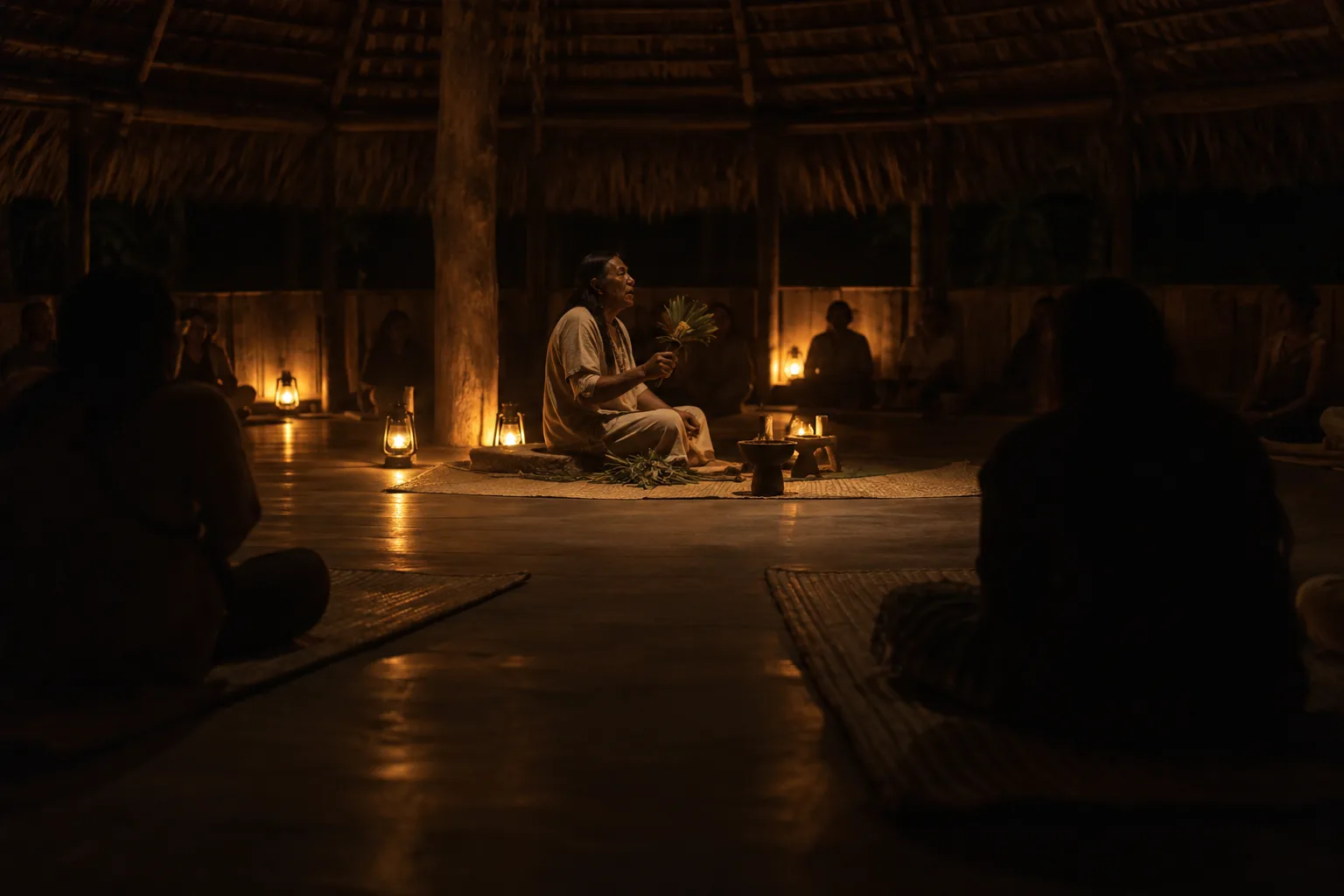
Respect the room while songs are being performed. Avoid joining in, recording or photographing unless the practitioner has explicitly invited it and every affected participant has consented.
What should you do during a difficult experience?
Fear, confusion and overwhelming emotion can occur. Before drinking, learn the center’s preferred method for requesting support.
General grounding steps may include:
- remain in your assigned place unless instructed otherwise;
- breathe slowly without forcing an elaborate technique;
- notice physical contact with the mat or floor;
- remind yourself that the effects are temporary;
- call or signal a facilitator; and
- describe concrete symptoms rather than trying to explain their meaning.
Do not attempt to manage another participant. Alert a facilitator instead. Physical restraint, seclusion or medication should never be improvised by untrained guests.
If someone appears medically unwell, staff should assess the situation rather than assuming a spiritual explanation. Ask about emergency procedures before choosing a retreat, not during a crisis.
Movement, bathrooms and leaving the room
Many centers ask participants to remain on their mats and request assistance before walking. This reduces falls, accidental contact and people becoming lost outside in darkness.
If you need the bathroom, sit up slowly and signal a facilitator. Follow their instructions and accept practical assistance while maintaining your personal boundaries. Do not leave the ceremonial area unnoticed.
There should be a clear process for a participant who wants to stop participating or move to a quieter supervised space. Leaving the maloca should not mean losing all support.
Touch, privacy and personal boundaries
Some traditional or supportive practices may involve touch. The center should explain this in advance, identify any exceptions needed for immediate safety and provide a simple way to refuse.
No practitioner or facilitator should use a participant’s altered state to initiate sexual, romantic or exploitative contact. Medical, spiritual or cultural explanations do not cancel consent. Ask how misconduct is reported and who receives complaints independently of the ceremony leader.
Other participants also deserve privacy. Do not share their names, stories, photographs or vulnerable moments without explicit permission.
How the ceremony closes
Closing may involve a final song, spoken acknowledgment, lights being raised gradually or a clear announcement from the practitioner. Effects may continue after the formal ending.
Before leaving your place:
- confirm that staff say it is safe to move;
- stand slowly;
- ask for help if you are unsteady;
- drink water according to the center’s guidance; and
- avoid making calls, posting online or having emotionally charged conversations.
Some participants want to talk immediately, while others prefer silence. Both responses can be reasonable if safety and shared-space rules are respected.
The hours after the ceremony
You may feel tired, alert, emotional, unsettled or physically drained. A center should explain who remains available overnight and what to do if symptoms return or sleep is difficult.
Do not drive or wander away from the retreat. Avoid making major decisions based on material that arose while your perception was altered. Write brief notes if helpful, then prioritize rest.
The morning after: conversation and integration
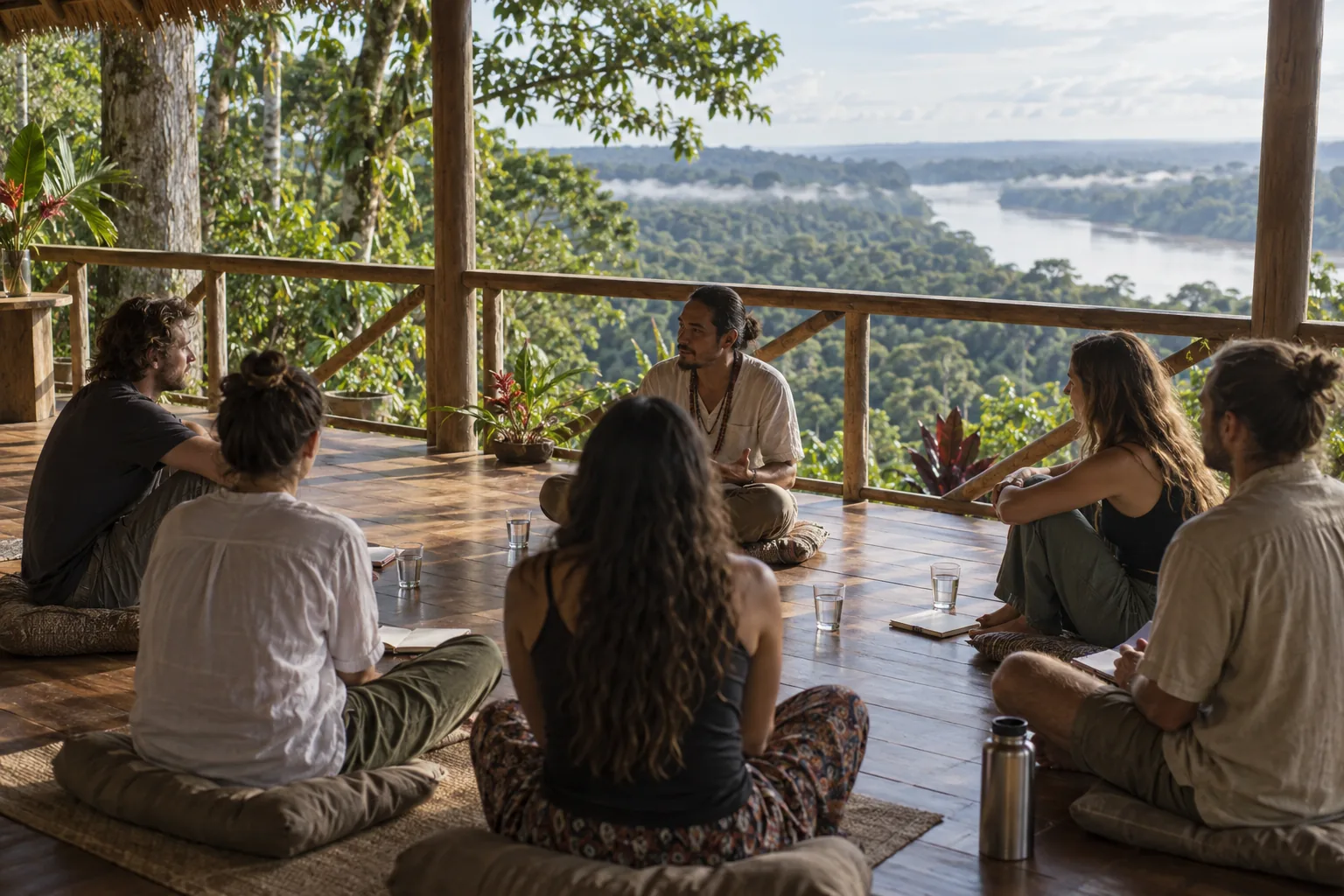
Many retreats schedule breakfast and a facilitated conversation the next morning. This can help participants describe what happened, ask practical questions and hear different perspectives. Sharing should be optional.
The facilitator should avoid declaring a single correct interpretation. Images, memories and emotions can feel unusually convincing; they still benefit from time, reflection and careful reality testing.
Persistent insomnia, severe anxiety, paranoia, mania, suicidal thoughts, confusion or inability to function requires prompt professional help. A retreat is not a substitute for medical or mental-health treatment.
One ceremony or several?
Retreats often schedule more than one ceremony, with meals, conversations and rest between them. Participation in every offered ceremony should not be treated as compulsory. Health changes, exhaustion or a difficult reaction may justify sitting out.
Ayaterra’s current programs include:
- a 3-day retreat with two scheduled ceremonies;
- a 5-day retreat with three scheduled ceremonies;
- a 7-day retreat with four scheduled ceremonies; and
- an 8-day diet and retreat with three scheduled ceremonies.
More ceremonies do not automatically produce a better outcome. Consider screening quality, pacing, rest days, staff support and your response to each session.
Frequently asked questions
Do ayahuasca ceremonies always happen at night?
Night ceremonies are common in retreat settings around Iquitos, but practices vary. Confirm the actual schedule with the center.
Will I see visions?
Possibly, but not necessarily. Experiences range from vivid imagery to emotional or bodily effects, subtle changes or little noticeable effect. No ethical retreat should guarantee visions.
Is vomiting required?
No. Vomiting is common but not universal. It is not a measure of success. Report severe or unusual symptoms to staff.
Can I leave the ceremony if I feel uncomfortable?
You should be able to withdraw consent, but moving alone while impaired can be unsafe. Tell a facilitator and follow the center’s process for relocating to a supervised space.
Can someone stay with me during a difficult moment?
Ask before booking how many facilitators are present and how one-to-one support is handled. A clear staffing and escalation plan is more useful than a vague promise that help will be available.
Can I record the songs or take photographs?
Only with explicit permission from the practitioner, center and every participant who may be recorded. A ceremony is a private and vulnerable setting.
Is an ayahuasca ceremony medical treatment?
No. Research is continuing, but a commercial retreat should not promise to diagnose, cure or treat a health condition. Continue appropriate care with licensed professionals.
Know the structure, keep expectations flexible
Understanding the practical sequence can reduce uncertainty, but no written guide can predict an individual ceremony. Complete screening, ask how consent and emergencies are handled, learn who will support you and allow enough time afterward to rest.
Compare Ayaterra’s current ayahuasca retreats or contact the team for the confirmed schedule, screening requirements and current program details.
Sources and further reading
- Ceremonial Ayahuasca in Amazonian Retreats: A Six-Month Naturalistic Study.
- A Placebo-Controlled Study of Ayahuasca, Set and Setting in Group Retreats.
- The Influence of Ceremonial Settings on Mystical and Challenging Experiences.
- Ayahuasca and DMT Adverse Events and Toxicity: A Systematic Review.
- Peru, Resolution No. 836/INC recognizing traditional ayahuasca knowledge and uses.
Last reviewed: September 2026. This educational guide does not provide medical advice.