Is ayahuasca legal? There is no reliable one-word answer. The legal position depends on the country, the ingredients, whether a brew has been prepared, what a person intends to do with it, and whether a narrowly defined religious, scientific or medical authorization applies.
Peru recognizes the traditional knowledge and uses of ayahuasca practiced by Amazonian Indigenous communities as national cultural heritage. That is very different from saying that ayahuasca may be made, sold, advertised, exported or imported without restriction everywhere. In many other countries, the central legal issue is DMT, a controlled substance commonly present in ayahuasca prepared with Psychotria viridis.
This guide gives a general snapshot updated in September 2026. It is educational information, not legal advice. Drug laws, court orders, exemptions and enforcement practices can change. Before acting, consult the competent authority or a lawyer qualified in the relevant jurisdiction.
The short answer by jurisdiction
- Peru: traditional knowledge and uses practiced by Amazonian Indigenous communities are officially recognized as cultural heritage. This recognition should not be confused with a universal commercial license or permission to export the brew.
- United States: DMT is federally controlled in Schedule I. A small number of religious organizations have obtained protection or authorization through specific litigation or exemption processes; this is not a blanket exemption for retreats or individual spiritual use.
- Canada: DMT is listed under the federal Controlled Drugs and Substances Act. Activities involving controlled substances are generally illegal unless regulations or a specific ministerial exemption authorize them.
- United Kingdom: DMT is a Class A controlled drug. UK authorities have treated ayahuasca containing DMT as prohibited; calling an event spiritual or therapeutic does not itself create an exemption.
- European Union: there is no single ayahuasca rule that automatically governs every member state. DMT is internationally controlled, while national laws and court decisions determine how plant materials and preparations are treated. Check the exact country.
The safest travel rule is simple: do not carry ayahuasca, chacruna preparations or any unknown ceremonial liquid across a border. A practice permitted or tolerated at the point of origin may be illegal at the destination or during transit.
Why the legal answer is complicated
Ayahuasca is not a single pharmaceutical product. Preparations vary, and the word may refer to Banisteriopsis caapi, a multi-plant brew, or a ceremony. A common formulation combines the vine with chacruna leaves that contain DMT. The vine contains beta-carbolines that make oral DMT active.
The 1971 United Nations Convention on Psychotropic Substances places DMT in Schedule I. The International Narcotics Control Board has explained that plants containing controlled psychoactive ingredients are not themselves automatically controlled by that convention, and has distinguished those plants from preparations such as ayahuasca. National governments can nevertheless control plants, extracts, preparations, possession, supply or importation under their own laws.
This produces several layers that are often collapsed into one question:
- Is the plant itself controlled?
- Is extracting or preparing its controlled component an offense?
- Is the finished brew treated as a controlled-substance preparation?
- Is possession different from supply, import or manufacture?
- Does a religious-freedom law apply to a specific organization?
- Has that organization actually received a court order or government exemption?
- Do regional, state or provincial laws add separate rules?
A website saying “legal” may be referring only to possession of an unprepared plant, a local enforcement practice or one organization’s exemption. None of those automatically authorizes a commercial ceremony.
Is ayahuasca legal in Peru?
Peru is widely associated with ayahuasca because the plant knowledge and ceremonial traditions have deep roots in Amazonian communities. In 2008, Peru’s National Institute of Culture issued Resolution 836/INC declaring the traditional knowledge and uses of ayahuasca practiced by Amazonian Indigenous communities part of the Cultural Heritage of the Nation. Peru’s Ministry of Culture registry continues to list that declaration, and the National Institute of Health describes the traditional practice as an important expression of Amazonian identity.
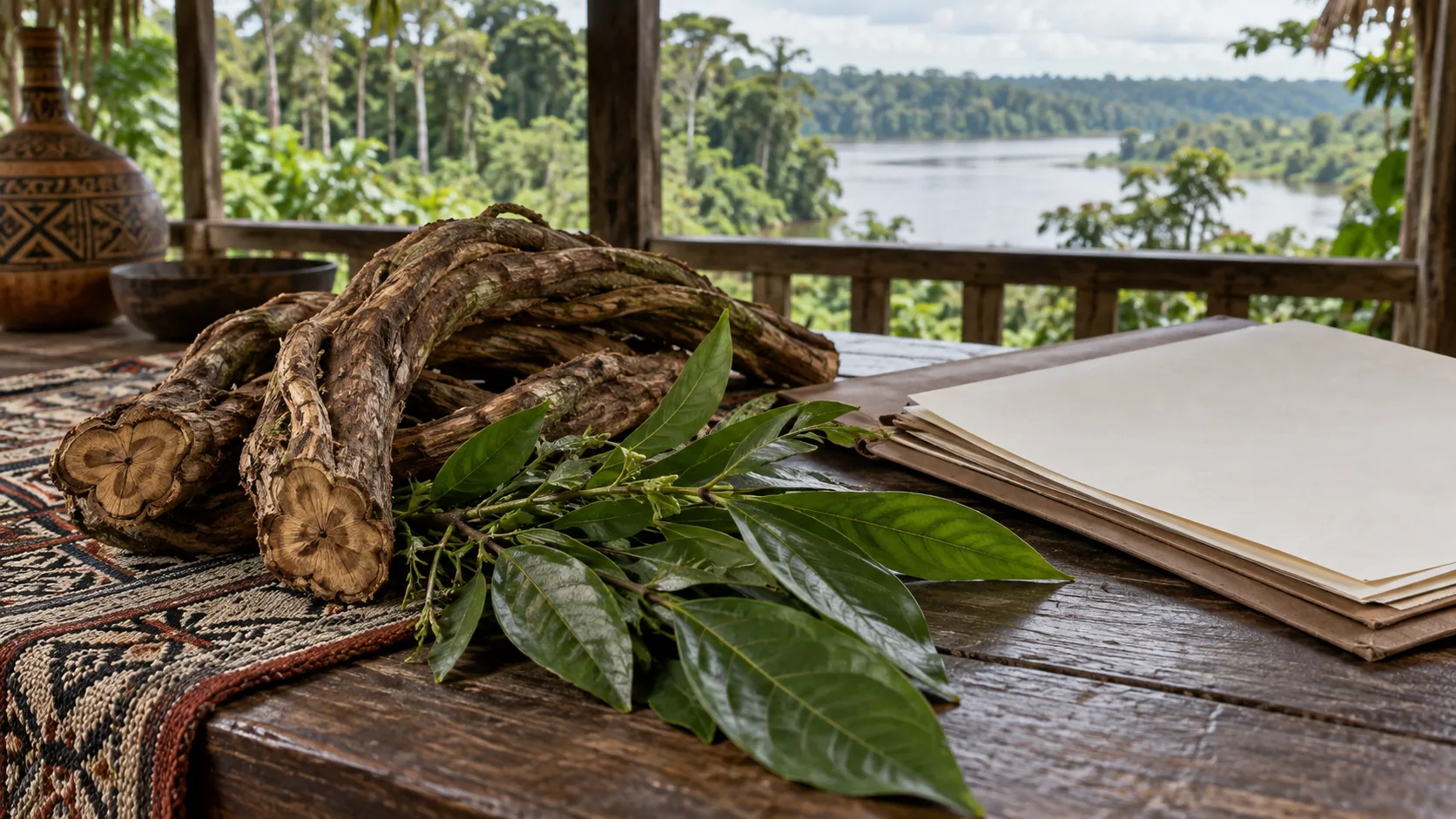
The wording matters. The declaration protects and recognizes traditional knowledge and uses practiced by native Amazonian communities. It does not certify every retreat, practitioner or product. It is not a medical approval, a tourism license, a safety inspection or permission for anyone to export a DMT-containing preparation.
Visitors should still evaluate a retreat’s legal business arrangements, informed-consent process, health screening, staffing, safeguarding and emergency plan. Cultural recognition cannot substitute for responsible operations. Read our guide to choosing a safer ayahuasca retreat in Peru before making a booking decision.
Can a traveler take ayahuasca home from Peru?
Do not assume so. Leaving Peru triggers export rules, and arriving elsewhere triggers the destination’s import and controlled-substance laws. Transit countries may create additional exposure even if the traveler never leaves the airport. Airline acceptance is not legal authorization.
A sealed bottle, plant paste, powdered leaves or a retreat’s handwritten note does not eliminate the risk. Do not mail or courier the substance as an alternative. If authorities believe a product contains DMT, consequences can include seizure, investigation, arrest or prosecution depending on the jurisdiction and facts.
Is ayahuasca legal in the United States?
At the federal level, DMT is a Schedule I controlled substance. A brew containing DMT therefore creates serious Controlled Substances Act issues involving possession, manufacture, distribution and importation.
The most frequently misunderstood exception comes from Gonzales v. O Centro Espírita Beneficente União do Vegetal. In 2006, the US Supreme Court upheld a preliminary injunction protecting a particular church’s sacramental use of hoasca while its claim under the Religious Freedom Restoration Act, or RFRA, proceeded. The decision required a case-specific application of RFRA; it did not legalize ayahuasca for the public.
The practical distinction is important:
- A judgment protecting one religious organization does not automatically protect unrelated groups.
- Sincere personal spirituality is not the same as possessing an organizational exemption.
- A state or city’s decision to deprioritize some psychedelic enforcement does not repeal federal law.
- Advertising a ceremony as a “church service” does not itself make it federally lawful.
- Import, storage, recordkeeping and distribution may remain subject to detailed conditions even for an authorized organization.
Anyone relying on a claimed exemption should ask for the exact issuing authority, scope, current status and entity name. General statements about religious freedom are not evidence that the provider is covered.
Religious exemptions are narrow, not transferable
Religious-freedom protections can be powerful, but they are fact-specific. In the United States, RFRA requires the federal government to justify a substantial burden on religious exercise using a demanding legal test. That framework can support relief in an appropriate case, but it does not create an automatic controlled-substance exception whenever a person describes use as religious.
An exemption or injunction may be limited by membership, sacramental context, source, quantity, storage, security, recordkeeping, transportation, age restrictions or reporting. It may bind particular federal parties without resolving every question under state law. A participant should not paraphrase a church’s legal status into “ayahuasca is legal in America.”
This distinction also protects consumers. A provider that cannot clearly explain its legal basis may be equally vague about screening, supervision and emergency procedures. Legal authorization does not prove clinical safety, but unsupported legal claims are a meaningful warning sign.
Is ayahuasca legal in Canada?
Canada’s Controlled Drugs and Substances Act lists N,N-dimethyltryptamine, or DMT, in Schedule III. Health Canada explains that most activities with controlled substances are illegal unless they are specifically allowed by regulations or by an exemption granted by the Minister of Health.
Canada has used section 56 exemptions for particular purposes and applicants, including some religious settings reported publicly. The existence of an exemption pathway does not mean ayahuasca is generally legal. An exemption is a formal authorization for identified people or organizations and specified activities under stated conditions.
Before relying on a Canadian provider’s claim, verify whether the authorization is current and whether it covers the actual organization, location and ceremony. Do not assume that being invited, donating or becoming a temporary member transfers legal protection beyond the exemption’s terms.
Travelers should never carry ayahuasca into Canada without clear, authoritative confirmation that the exact import and possession are authorized. A retreat booking or religious invitation is not a customs permit.
Is ayahuasca legal in the United Kingdom?
DMT is controlled as a Class A drug under the UK’s Misuse of Drugs Act 1971. UK government material has expressly described DMT as Class A, and Border Force has previously seized parcels of ayahuasca on that basis. Possession, supply, production and importation can raise serious criminal issues.
The UK does not have a general rule allowing ayahuasca ceremonies because they are presented as religious, traditional or therapeutic. Court arguments about belief and religious practice are not equivalent to advance permission for the public. Anyone organizing or attending an event needs advice based on current UK law and the specific facts.
Online advertisements may be hosted abroad or use euphemisms such as “plant medicine,” but marketing language does not change a substance’s classification. Confidential location, cash payment or membership screening are not proof of legality.
What about the Netherlands and the rest of Europe?
Europe should not be treated as one jurisdiction. European Union member states implement drug-control obligations through national laws, and non-EU European countries have their own systems. The European Union Drugs Agency advises consulting the relevant national competent authority because laws and penalties differ and change.
The EUDA notes reports of some legal psychedelic retreats in the Netherlands while retreats in other member states generally appear unlicensed or illegal. That broad observation is not confirmation that every Dutch ayahuasca event is lawful. Substance, format, authorization and later court developments all matter. A claim that “retreats are legal in the Netherlands” requires current, provider-specific verification.
Spain, Portugal, Germany, France, Italy and other European destinations cannot be summarized through one continental policy. Decriminalization of personal possession, where it exists, is not the same as legalization of supply, preparation, commercial facilitation or importation. A low enforcement priority is not a license.
For any European country, check:
- The national controlled-drug schedule and how it treats DMT preparations.
- Rules governing plants, extracts and prepared liquids.
- Whether possession, import, supply and administration are separate offenses.
- Whether a claimed religious or research authorization names the provider.
- Recent court decisions or regulatory changes.
Crossing borders is the highest-risk misunderstanding
An ayahuasca ceremony in Peru and possession at an international airport are different legal events. Once a product enters baggage, mail or cargo, customs, aviation and controlled-substance laws can apply. The destination may analyze the liquid for DMT rather than defer to its cultural name or origin.
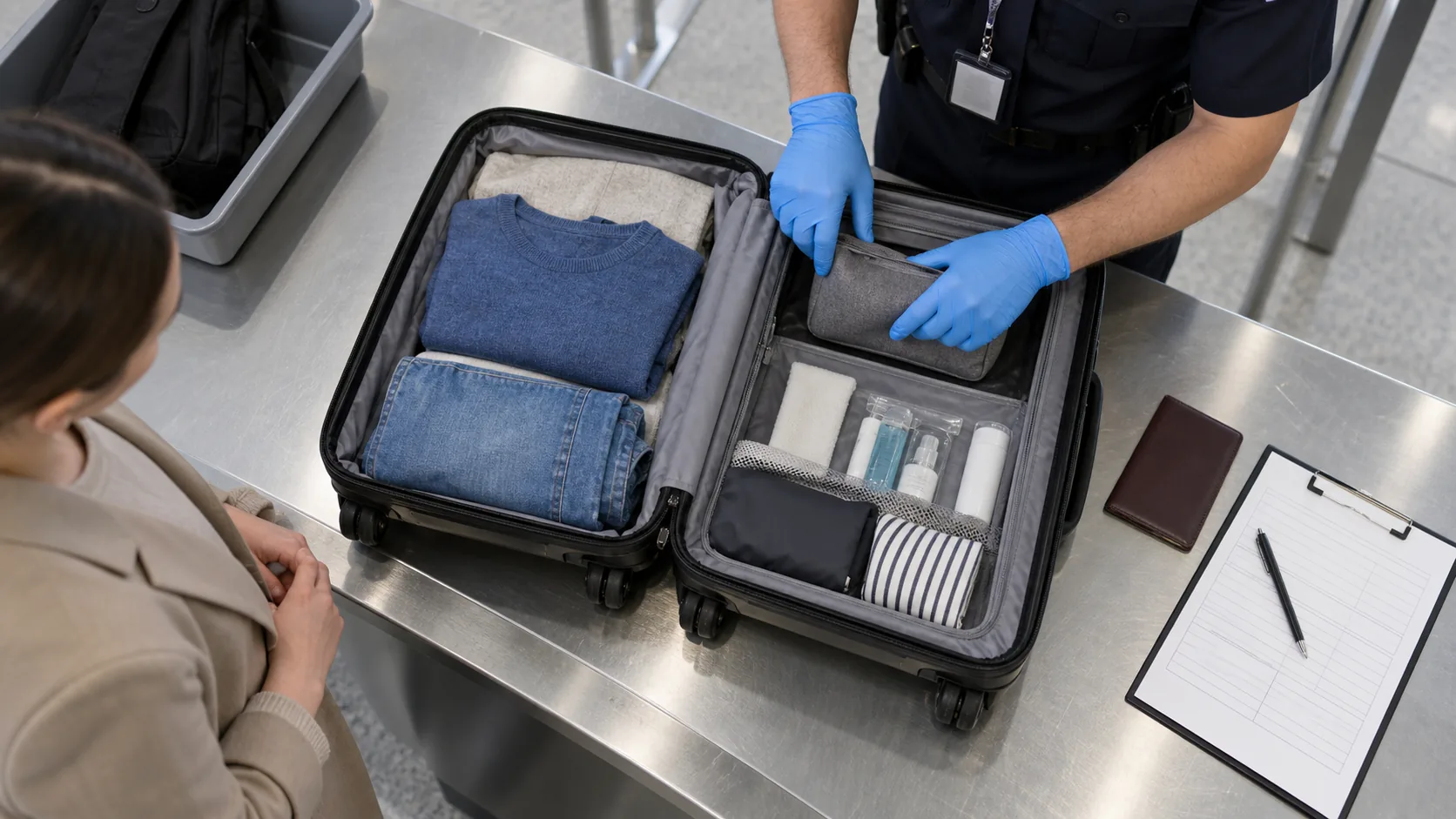
Do not transport:
- Prepared ayahuasca or hoasca
- Concentrated plant pastes or extracts
- Unlabeled ceremonial liquids
- Chacruna products intended as a DMT source
- Capsules, powders or tinctures whose contents are uncertain
- A package for another participant or facilitator
“It is for personal use” may affect how an offense is treated in some places, but it does not necessarily make possession or importation lawful. Declaring an item at customs also does not transform a prohibited substance into a permitted one; it merely avoids concealment. Seek qualified advice before carrying any legally sensitive botanical product.
Does a retreat’s legality mean it is safe?
No. Legal status and safety overlap only indirectly. A permitted religious organization can still have weak screening, poor boundaries or an inadequate emergency plan. An operation in a country with traditional use can still make misleading medical claims. Conversely, legal uncertainty does not prove that every practitioner is unethical.
Evaluate safety separately:
- Does the center collect complete medical and psychiatric information?
- Are medicines and supplements reviewed before acceptance?
- Are contraindications and interaction risks explained honestly?
- Are sober staff present throughout ceremonies?
- Is there a clear consent and touch policy?
- Is emergency communication and transport workable at night?
- Are participant reports handled through a defined safeguarding process?
- Does marketing avoid guarantees and cure claims?
Use our detailed guide to ayahuasca risks and contraindications and learn what happens during a ceremony before deciding whether any program is suitable.
Questions to ask a retreat about legal status
A credible provider should answer specific questions without pressure or evasive slogans:
- Under which country’s law does the ceremony operate?
- What legal entity runs the program?
- Is a permit, exemption or court order required?
- If one is claimed, what authority issued it and to whom?
- Does it cover possession, preparation, administration and storage?
- Are there conditions that apply to visitors or members?
- Does the provider advise guests not to transport the brew?
- Are business, accommodation and tourism requirements also met?
Be cautious when the only answer is “ancestral medicine is legal everywhere,” “religion protects us,” or “the authorities know.” Those statements are too broad to verify. Cultural respect requires accuracy, not immunity from ordinary safeguarding and legal questions.
How to verify the law without relying on marketing
Start with the official controlled-substance schedule, health ministry, justice ministry, customs authority or drug agency for the relevant country. Then check whether the rule was updated and whether a court decision applies generally or only to named parties. For high-stakes decisions, consult a local lawyer.
Keep these distinctions in view:
- Legalization: conduct is permitted within a defined legal framework.
- Decriminalization: some criminal penalties may be removed or reduced; conduct is not necessarily commercially lawful.
- Exemption: specified people or entities may perform otherwise prohibited activities under conditions.
- Court injunction: enforcement may be restricted for particular parties while a case proceeds or under a final order.
- Tolerance or deprioritization: enforcement policy may change without changing the underlying statute.
- Cultural recognition: a tradition is protected or honored; this is not automatically a drug-law exemption.
Screenshots of old news articles, testimonials and social-media posts are poor substitutes for current primary sources. Save the official material you relied on and confirm it close to the travel date.
Planning a lawful retreat trip to Peru
For a visitor attending a retreat in Iquitos, legal prudence is straightforward: research the provider, participate only at the program location, and take no brew or plant preparation away. Keep ordinary travel documents and medicines properly packed, as explained in our Iquitos retreat packing list.
Prepare your health history honestly, avoid self-directed medication changes and leave enough time for arrival and recovery. Our retreat preparation guide covers the timeline, while the Ayaterra retreat programs show the actual itineraries available near Iquitos.
The fact that Peru recognizes traditional ayahuasca knowledge is meaningful. Travelers should respond by respecting the communities and practices involved, not by treating Peru as a loophole for acquiring a controlled substance abroad.
Frequently asked questions
Is ayahuasca legal everywhere in Peru?
Peru recognizes traditional knowledge and uses practiced by Amazonian Indigenous communities as cultural heritage. That should not be rewritten as a blanket statement covering every commercial operation, medical claim, export or context. Verify the provider and activity.
Can I fly from Peru with ayahuasca in checked baggage?
Do not do so based on general internet advice. Export, transit and destination laws may all apply, and DMT-containing preparations are controlled in many countries. Checked baggage is still subject to customs and controlled-substance rules.
Is ayahuasca legal in the United States for religious use?
Certain organizations have obtained specific legal protection or authorization, but there is no blanket religious-use exemption for the public. Federal DMT controls remain in place, and the scope of any exemption must be verified.
Is ayahuasca decriminalized in some US cities?
Some local jurisdictions have adopted policies concerning certain plant or psychedelic offenses. Local deprioritization does not repeal federal law, authorize interstate transport or automatically legalize commercial ceremonies.
Is ayahuasca legal in Canada with a church?
Only a specific, current exemption can authorize the people and activities within its scope. Calling an organization a church or joining it does not by itself create an exemption.
Is ayahuasca legal in Europe?
There is no single answer for all of Europe. DMT is internationally controlled and national laws differ. Check the current law and competent authority for the exact country rather than relying on the location of a website or organizer.
Can a retreat give me a certificate to carry ayahuasca?
A retreat letter is not automatically an export license, import permit, prescription or customs authorization. Treat any promise that a private certificate guarantees border passage as a major warning sign.
The responsible conclusion
The question “is ayahuasca legal?” must always be followed by “where, in what form, for which activity and under whose authorization?” Peru’s cultural recognition, a US court victory, a Canadian exemption or a European enforcement policy cannot be copied into a universal permission.
Attend only after verifying both legal and safety claims. Never transport the brew across borders, and do not confuse spiritual language with legal authority. When uncertainty could expose you to criminal penalties, obtain current advice from the relevant government authority or a qualified local lawyer.
Official sources and further reading
- Peru Ministry of Culture: National Cultural Heritage declarations
- Peru National Institute of Health: Traditional use of ayahuasca
- UNODC: Convention on Psychotropic Substances
- International Narcotics Control Board: 2012 Annual Report
- US DEA: Drug Scheduling
- US Supreme Court docket: Gonzales v. O Centro
- Health Canada: Controlled-substance exemptions
- UK Government: Drug possession and supply penalties
- European Union Drugs Agency: Psychedelic substances FAQ