Which vaccines do you need for Iquitos, Peru, before an ayahuasca retreat? There is no single list for every traveler. Recommendations depend on age, medical history, previous vaccination, trip length, exact route and activities. For Loreto, official guidance highlights routine vaccines, hepatitis A, yellow fever and other itinerary-dependent considerations, alongside malaria and mosquito protection.
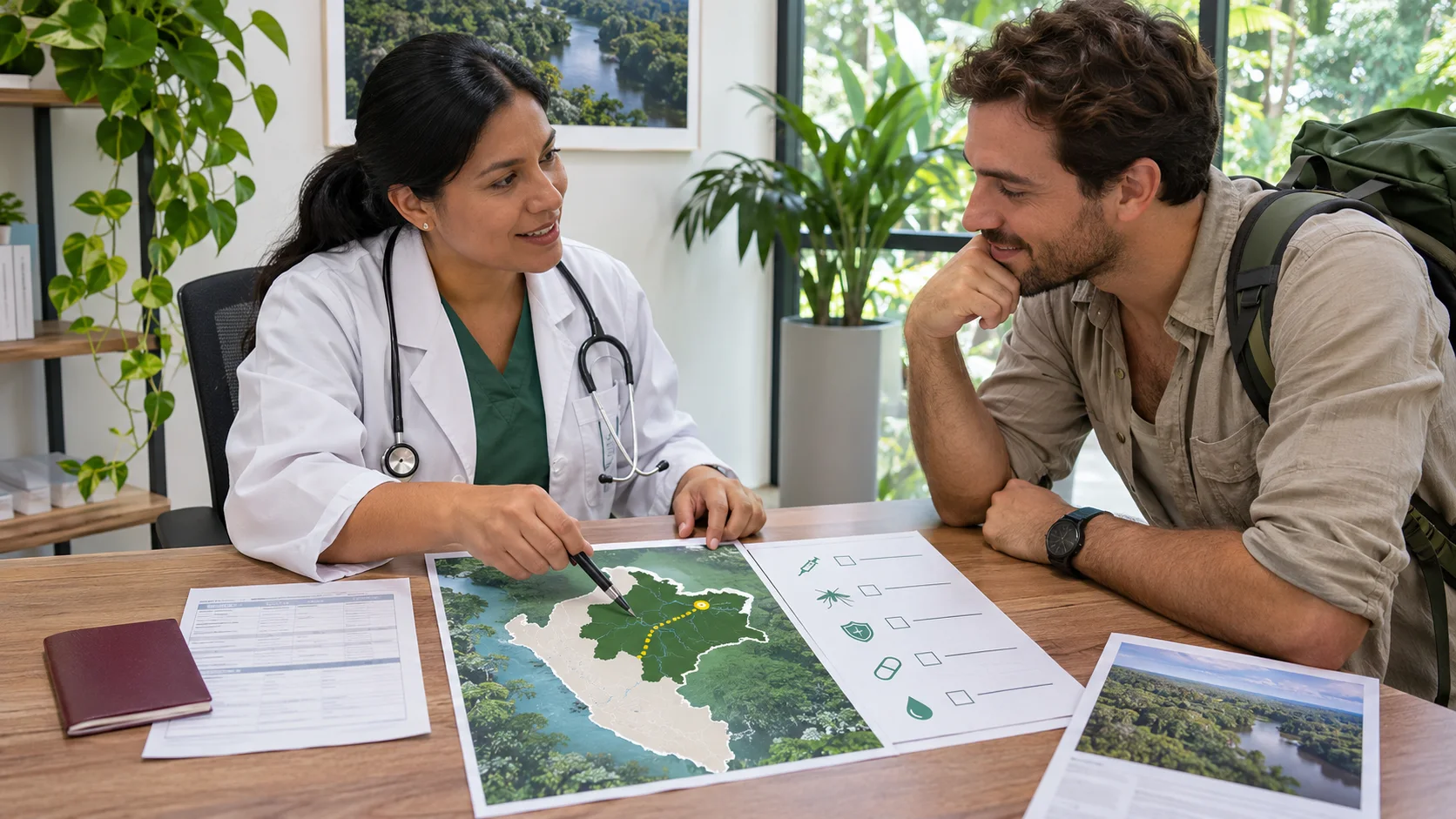
Schedule a travel-health appointment at least one month before departure when possible. Bring the complete Iquitos itinerary, medication list and retreat dates. Vaccination, malaria medicine and retreat screening should be reviewed together rather than treated as unrelated checkboxes.
Quick answer: travel health for Iquitos
- Check that routine vaccines are up to date.
- CDC recommends hepatitis A for unvaccinated travelers to Peru.
- CDC recommends yellow fever vaccination for most travelers aged 9 months or older going to Loreto, subject to individual medical assessment.
- Malaria transmission includes Iquitos; discuss prescription prevention with a qualified clinician.
- Use layered mosquito protection because vaccines and medication do not prevent every mosquito-borne illness.
- Disclose all travel medicines to both your clinician and retreat screening team.
Start with a travel-health appointment
A clinician needs more than the word “Peru.” Lima, Cusco and Iquitos have different elevations and disease patterns. Explain that you will travel to Iquitos in the Loreto region, whether you will stay in a city hotel or remote lodge, how long the trip lasts, and whether transport includes rivers or rural communities.
Bring:
- Your vaccination record
- Prescription and non-prescription medication list
- Allergies and relevant medical history
- Pregnancy or pregnancy-planning information when applicable
- Retreat and flight dates
- Countries visited before and after Peru
- Activities and accommodation type
Some vaccine schedules require more than one dose, and some malaria medicines begin before arrival. Starting early creates time to assess contraindications and side effects rather than making a rushed decision immediately before a ceremony.
Routine vaccines before travel
International travel is an opportunity to verify routine immunization. The exact schedule depends on the traveler’s country, age and health. CDC’s Peru page asks travelers to be current on routine vaccines such as measles-mumps-rubella, tetanus-diphtheria-pertussis, polio, influenza and COVID-19 according to applicable guidance.
“Routine” does not mean unimportant. Measles outbreaks can cross borders, and a minor wound in a remote setting can raise tetanus questions. Bring a trustworthy record so the clinician can identify actual gaps rather than repeating doses unnecessarily.
Yellow fever for Iquitos and Loreto
CDC recommends yellow fever vaccination for travelers aged 9 months or older going to risk areas below 2,300 meters in Loreto, along with several other eastern regions of Peru. Iquitos falls within the Amazon itinerary for which this recommendation is relevant.
Peru does not currently require proof of yellow fever vaccination simply to enter the country, according to CDC. Entry requirements and health recommendations answer different questions: a vaccine can be recommended for personal protection even when no certificate is demanded at immigration.
Yellow fever vaccine is not suitable for everyone. Age, immune status, pregnancy, allergies and other factors can affect the risk-benefit decision. A qualified clinician should assess eligibility and whether a medical waiver or itinerary change is appropriate. Do not obtain a vaccine solely because a retreat website gives generic advice.
If other countries are part of the trip, check their certificate rules too. A country may impose a yellow fever documentation requirement based on where you have recently traveled or transited. Use current official sources rather than an old forum post.
Hepatitis A, hepatitis B and typhoid
CDC recommends hepatitis A vaccination for unvaccinated travelers aged one year or older going to Peru, with specific guidance for infants and certain higher-risk travelers. It spreads through contaminated food or water, so vaccination complements—not replaces—careful eating and drinking.
CDC recommends hepatitis B vaccination for unvaccinated travelers younger than 60 and notes that unvaccinated travelers aged 60 or older may receive it. Individual risk can involve medical care, sexual contact, tattoos, piercings or exposure to blood. A clinician can interpret the recommendation for your history and trip.
Typhoid vaccination may be considered particularly for travelers who will spend longer periods in Peru, visit smaller cities or rural areas, or encounter sanitation challenges. It is not completely protective. Food, water and hand hygiene remain necessary even after vaccination.
Do you need malaria medicine for Iquitos?
Malaria is not a vaccine question. CDC identifies transmission below 2,500 meters east of the Andes, including Iquitos, and recommends prescription prevention for relevant areas. The agency also reports chloroquine resistance and lists several medication options for clinicians to consider.
The correct medicine depends on timing, health history, pregnancy status, other medications, previous reactions and the complete route. Some options begin days or weeks before exposure and continue after leaving. Do not choose one from a price list or borrow another traveler’s tablets.
For retreat guests, medication review deserves extra care. Tell the travel-health clinician that the itinerary includes an ayahuasca retreat, and give the retreat screening team the exact medicine and dose prescribed. Do not assume a malaria medicine is compatible with ayahuasca, and never stop medically recommended prevention solely to qualify for a ceremony. If compatibility is uncertain, participation or the itinerary may need to change.
Malaria medicine does not eliminate risk. Bite prevention is still essential, and a fever during travel or after returning requires prompt assessment. CDC advises people who develop fever after visiting a malaria-risk area—even up to one year later—to seek immediate medical care and report their travel history.
Mosquito protection in the Peruvian Amazon
Iquitos has more than malaria risk. Dengue, chikungunya, Zika and other vector-borne infections occur in tropical Peru. Peru’s health authorities reported dengue activity in Loreto during 2026 and warned that heavy rain and flooding can increase risks from dengue, malaria, chikungunya and leptospirosis.
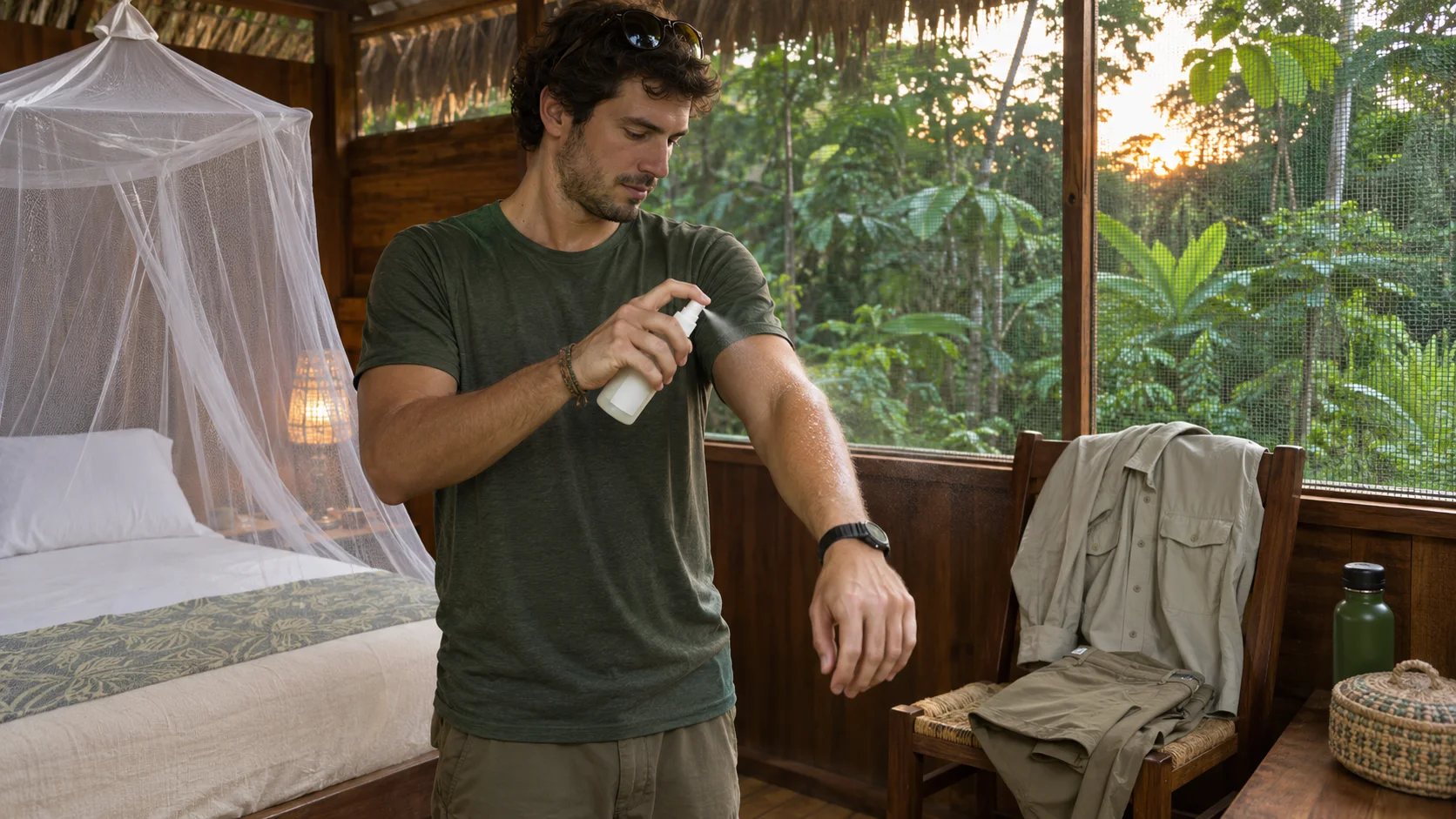
Layer several measures:
- Use a repellent with an effective active ingredient such as DEET or picaridin according to its label.
- Wear lightweight long sleeves, long trousers and socks when practical.
- Use permethrin-treated clothing and gear if appropriate; do not apply permethrin directly to skin.
- Choose air-conditioned or properly screened rooms.
- Use an intact bed net when sleeping space is exposed to the outdoors.
- Keep doors and netting closed and remove standing water near accommodation when possible.
Some mosquitoes bite during the day, so protection is not only an evening ritual. Reapply repellent as directed after sweating or washing. If using sunscreen and repellent together, follow the product and public-health instructions for application order.
Dengue vaccine is not a simple travel shortcut
Dengue vaccination policies depend on country, age, prior infection and the specific vaccine. Peru has conducted targeted local vaccination programs, but that does not create a universal recommendation for international visitors. Ask a travel-health professional in your jurisdiction; do not seek a local campaign dose without confirming eligibility and the required series.
There is no replacement for bite prevention. Seek medical advice promptly for fever, severe headache, intense muscle or joint pain, rash, persistent vomiting, bleeding, unusual drowsiness or worsening symptoms. Do not self-treat presumed dengue with medication that could increase bleeding risk without clinical advice.
Rabies and animal exposure
CDC notes that rabies can occur in dogs and wildlife in Peru and that post-exposure treatment may be easier to obtain in larger urban facilities. A clinician may discuss pre-exposure vaccination based on animal contact, remote travel duration and access to timely care.
Do not touch or feed dogs, monkeys, bats or other mammals, even when an animal appears friendly or is presented as part of a tourist experience. Any bite, scratch or saliva exposure to broken skin requires immediate washing and urgent professional advice. Pre-exposure vaccination does not remove the need for care after exposure.
Leptospirosis, flooding and freshwater
Leptospirosis can spread through water or soil contaminated by infected animal urine. Loreto health authorities warned of increased risk during heavy rain and river flooding in 2026. Avoid wading or swimming in floodwater or questionable freshwater, especially with cuts or abrasions.
Cover wounds with waterproof dressings, use appropriate footwear and tell a clinician about freshwater or flood exposure if you become ill. A picturesque river or forest pool is not automatically safe for swimming.
Food and drinking water
Use sealed bottled water or water treated by a reliable method. Ask the retreat how drinking water is filtered, stored and served. Ice, raw produce, sauces and food held at room temperature can carry risk depending on preparation and handling.
Prefer food that is thoroughly cooked and served hot. Peel fruit yourself when practical, wash hands before meals and carry alcohol-based hand sanitizer for transfers. A restricted “ayahuasca diet” does not by itself make food microbiologically safe.
Do not fast aggressively to avoid stomach illness or intensify a ceremony. Dehydration, heat and inadequate nutrition can create their own problems. Follow individualized health advice and the preparation instructions approved after screening. See our ayahuasca diet guide.
Review every medication before the retreat
Prepare one complete list of prescriptions, over-the-counter products, supplements, recreational substances and travel medicines. Give it to the clinician responsible for your care and disclose it during retreat screening. A medicine being “natural,” available without prescription or used only as needed does not make it irrelevant.
Do not stop antidepressants, blood-pressure medication, seizure medication or any other prescribed treatment on generic internet advice. Abrupt changes can cause withdrawal, recurrence or other harm. The prescriber should determine whether tapering is medically appropriate; the retreat cannot replace that decision.
If a vaccine or travel medicine causes fever, dizziness, stomach upset or another reaction close to departure, contact the appropriate clinician. Do not label a medical symptom “detox,” “purging” or “part of the process” without assessment.
Build a practical travel health kit
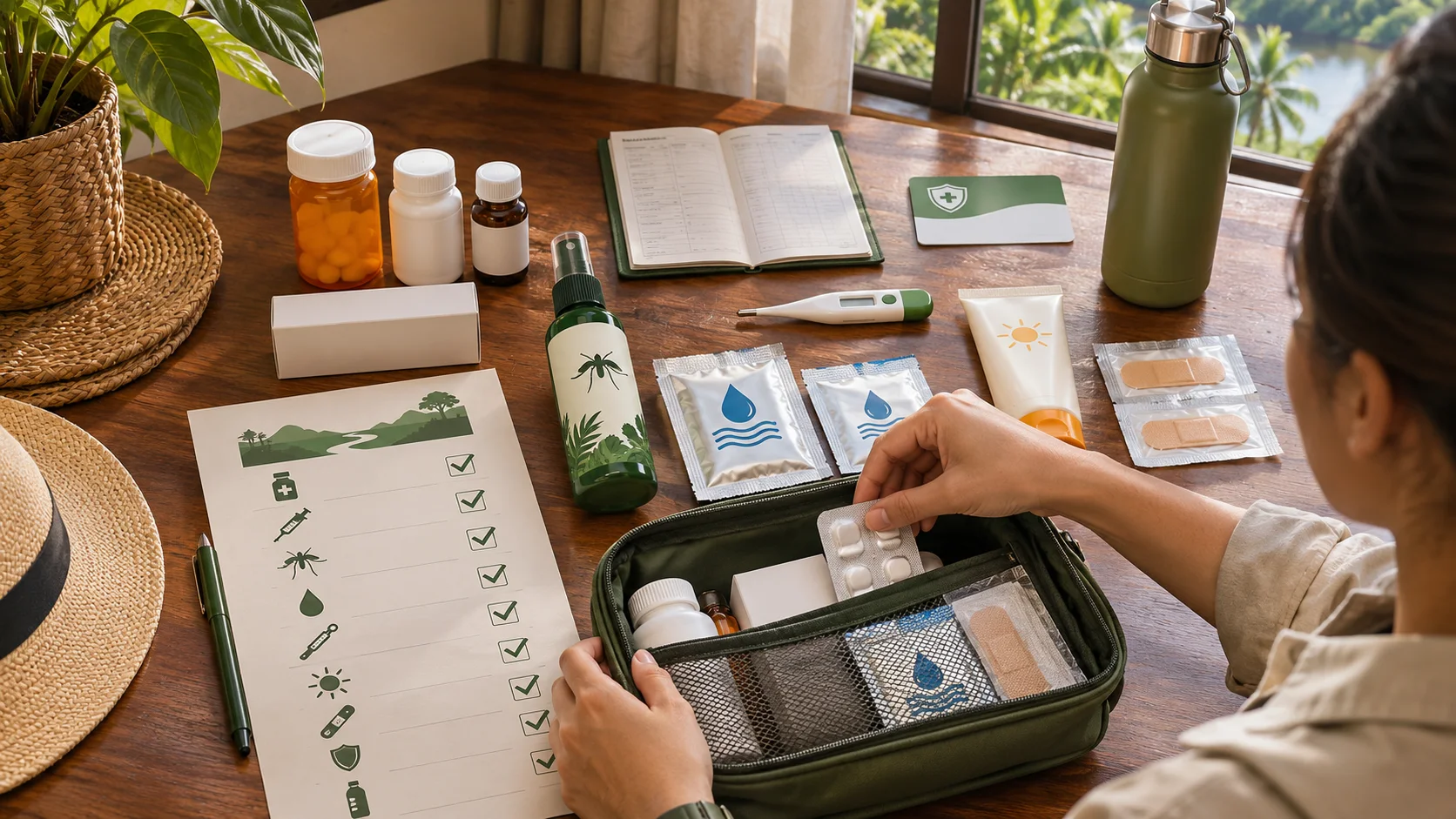
Your kit can include:
- Enough prescription medicine for the trip plus a reasonable delay, where permitted
- Original labeled packaging and a copy of prescriptions
- Effective insect repellent
- Long, lightweight clothing and treated gear when appropriate
- Sunscreen and a sun hat
- Basic wound supplies and waterproof dressings
- Oral rehydration supplies chosen with professional guidance
- Thermometer
- Insurance policy and 24-hour assistance details
- Emergency contacts and relevant health summary
Check airline and Peruvian rules for carrying medication. Keep essential medicine in hand luggage and never transfer tablets into an unmarked container. Temperature-sensitive medication needs an approved storage plan.
When to seek care during or after the trip
Seek urgent professional help for severe breathing difficulty, chest pain, fainting, seizure, confusion, persistent vomiting, major bleeding, severe dehydration, rapidly worsening symptoms or a mental-health crisis. Fever after travel to a malaria area requires prompt assessment.
Tell the clinician you were in Iquitos, the dates, mosquito or freshwater exposure, animal contact, food and water history, medicines taken and any ayahuasca exposure. Accurate information helps distinguish infections, medication effects and other causes. Do not conceal participation because it feels embarrassing.
Confirm the retreat’s route to an appropriate medical facility and review travel insurance for an ayahuasca retreat. Remote transport and medical evacuation are separate from routine retreat transfers.
Travel-health timeline
- Six to eight weeks before: gather records and schedule a travel-health appointment when possible.
- At least one month before: finalize recommended vaccines and malaria planning based on professional advice.
- Before paying non-refundable travel: complete retreat screening and disclose the treatment plan.
- One to two weeks before: check current outbreaks, pack medication and confirm insurance.
- During travel: use mosquito, food, water, heat and sun precautions consistently.
- After returning: seek care for concerning symptoms and always report the Amazon travel history.
Frequently asked questions
Is yellow fever vaccination required to enter Peru?
CDC currently states that Peru does not require it for entry. However, CDC recommends it for most eligible travelers aged 9 months or older going to risk areas in Loreto. Other countries on your itinerary may have certificate rules.
Is there malaria in Iquitos?
Yes. CDC includes Iquitos in Peru’s malaria transmission areas and recommends discussing prescription prevention. Medication choice must be individualized, and mosquito protection remains necessary.
Can I take malaria tablets during an ayahuasca retreat?
Do not assume compatibility or stop prescribed prevention yourself. Give the exact medicine to a qualified travel-health clinician and the retreat screening team. If they cannot establish a safe plan, change the ceremony or travel plan.
How early should I get travel vaccines?
CDC recommends seeing a clinician at least one month before travel when possible. Some people need more time for a multi-dose series, assessment or medication trial, so earlier is useful.
Do vaccines replace mosquito repellent?
No. Several mosquito-borne infections in Iquitos are not routinely prevented by a traveler vaccine. Repellent, protective clothing and screened or netted accommodation remain important.
Official travel-health sources
- CDC Peru traveler health page
- CDC Yellow Book: Peru
- EsSalud Loreto 2026 health advisory
- Peru Ministry of Health daily dengue dashboard
This article provides general travel-health education reviewed on November 2, 2026. It is not individualized medical advice. Vaccine, malaria prevention and medication decisions require a qualified clinician who knows your health history and complete itinerary. Official recommendations and outbreak conditions can change.
Coordinate health planning with retreat screening
After professional travel-health advice, review Ayaterra’s retreat programs and contact the team to disclose medication and complete screening before booking.