Knowing how to prepare for an ayahuasca retreat can make the difference between arriving calm and arriving exhausted, uncertain or medically unprepared. Good preparation is not about following the most restrictive diet you can find online. It is about completing honest health screening, reviewing medications with qualified professionals, following the requirements of your chosen center and planning enough time to travel and recover.
This guide provides a practical timeline for the weeks before an ayahuasca retreat in Iquitos. It covers medications, food, alcohol and other substances, mental preparation, travel health and a realistic Amazon packing list.
Ayahuasca can involve significant physical and psychological risks and is not appropriate for everyone. This article is educational and does not replace advice from a doctor, pharmacist or mental-health professional who knows your history.
Ayahuasca preparation at a glance
Before traveling, you should be able to answer five questions:
- Has the retreat reviewed my complete health and medication information?
- Have I discussed any medication changes with the clinician who prescribed them?
- Do I have the center’s current food and substance guidelines in writing?
- Have I allowed enough time to arrive rested and recover after the retreat?
- Do I know exactly who to contact if my health changes before arrival?
If one answer is no, resolve it before paying for non-refundable travel. Preparation is part of the safety process, not a test of commitment.
For a broader explanation of ceremony, safety and selecting a program, read our complete ayahuasca retreat guide.
Four to six weeks before: complete health screening
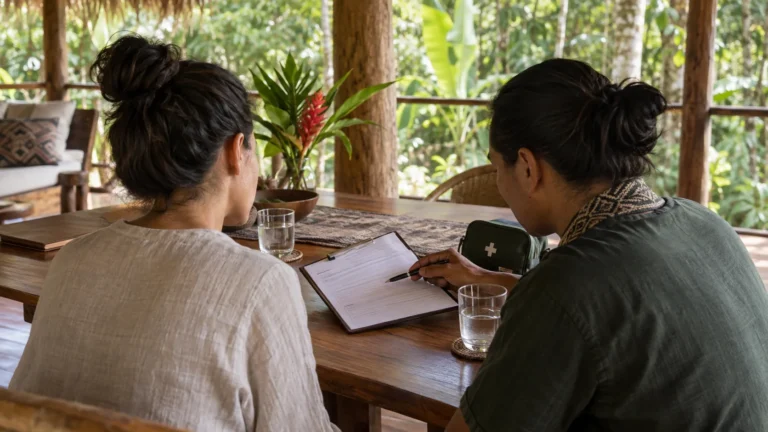
Complete the retreat’s screening form as early as possible. Do not omit a diagnosis, medication or recent substance because you fear being declined. The purpose is to identify risks while there is still time to ask questions or change plans safely.
A responsible screening process should ask about:
- prescription and non-prescription medications;
- vitamins, herbal products and dietary supplements;
- alcohol and recreational substance use;
- heart, blood-pressure, neurological and other physical conditions;
- current and previous mental-health conditions;
- personal or family history of psychosis or mania;
- pregnancy and breastfeeding;
- recent surgery, hospitalization or serious illness; and
- previous adverse reactions to psychedelics or other substances.
Tell the center if anything changes after approval. Starting a new medicine, becoming ill or experiencing a mental-health crisis may alter whether participation is appropriate.
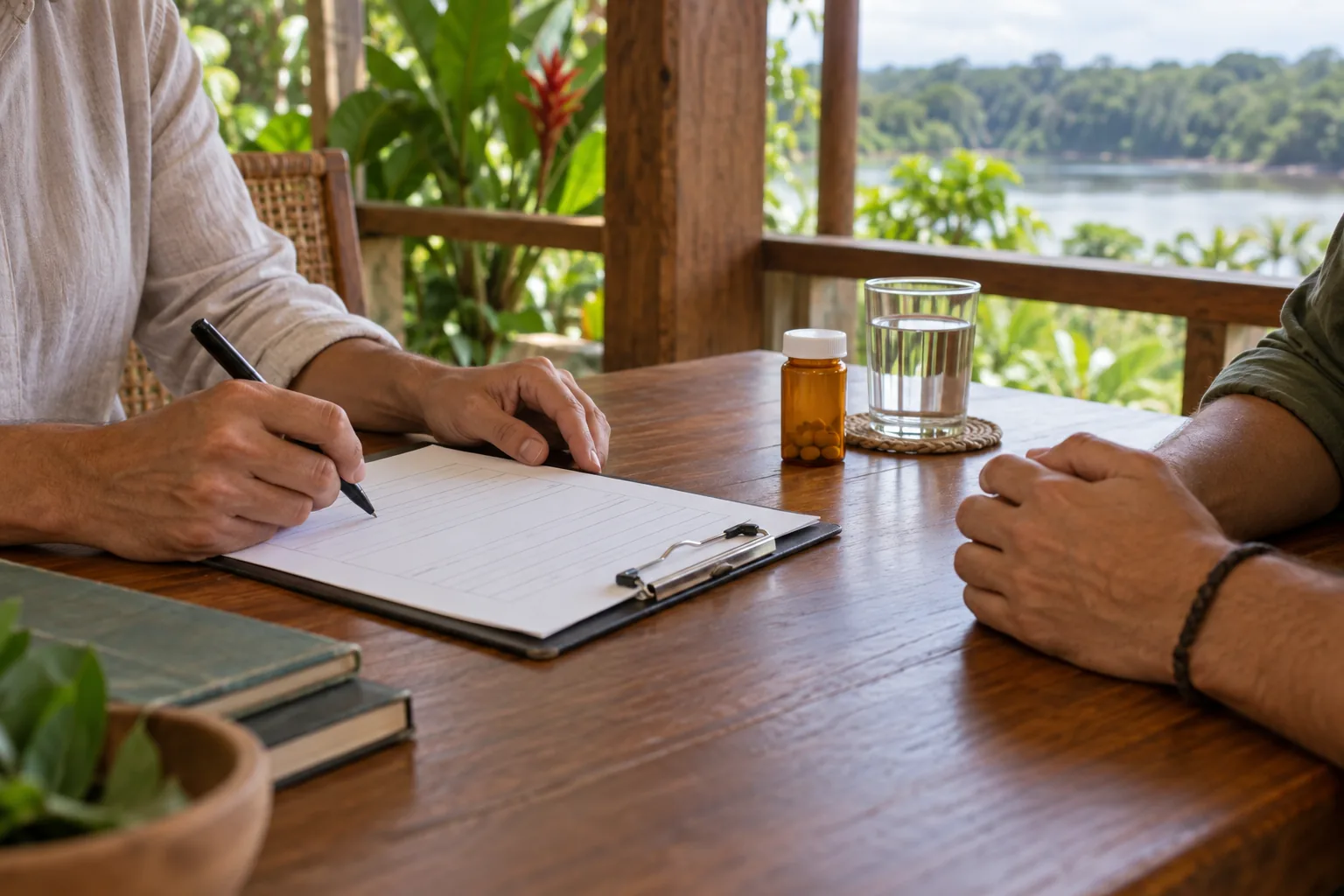
Medications and ayahuasca: never make changes alone
Ayahuasca brews commonly contain beta-carbolines that inhibit monoamine oxidase A and a plant source of DMT. Because monoamine oxidase and serotonin pathways are involved, interactions with some medications and substances are a serious concern.
Published systematic reviews describe potential risks with serotonergic medicines and other monoamine oxidase inhibitors. The evidence specific to ayahuasca is limited, which is a reason for greater caution—not a reason to assume a combination is safe.
Medication classes that require professional review may include antidepressants, stimulants, some pain or migraine medicines, certain cough and cold products, mood stabilizers and other psychiatric medications. This is not a complete interaction list, and brand names vary between countries.
Take these steps:
- Give the retreat a complete list with medicine name, dose and schedule.
- Contact the clinician or pharmacist who knows why each medicine was prescribed.
- Ask about interaction risks, withdrawal risks and the time required for any medically appropriate change.
- Follow the most cautious professional advice if recommendations conflict.
- Do not attend if the situation remains unclear.
Never stop an antidepressant, benzodiazepine, antipsychotic, blood-pressure medicine or any other prescription abruptly just to meet a retreat date. Sudden discontinuation can cause withdrawal, recurrence of symptoms or other harm. A retreat center should not replace the clinician responsible for your treatment.
What is the ayahuasca diet?
The word dieta can refer to different things. In Amazonian traditions, a plant dieta may be a structured practice involving specific plants, food restrictions, isolation and guidance from a practitioner. In commercial retreat information, “ayahuasca diet†often means a simpler set of food and lifestyle instructions before ceremonies.
Ask which meaning applies to your program. Do not combine instructions from several websites, traditions or social-media posts. A center should explain what to avoid, when restrictions begin, what meals it provides and how allergies or medical diets are handled.
What to eat before an ayahuasca retreat
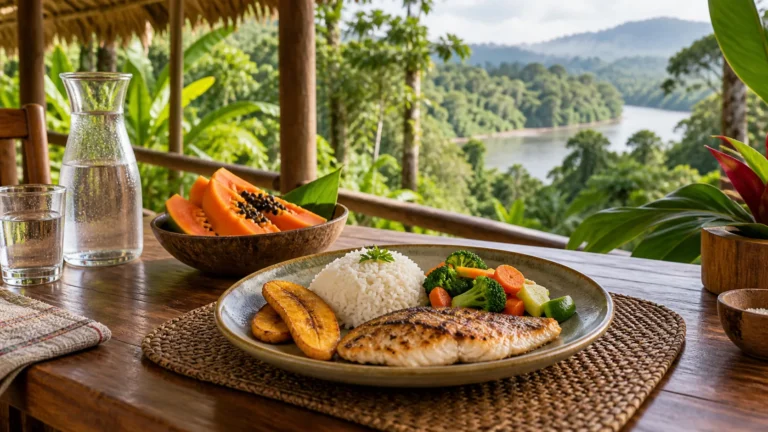
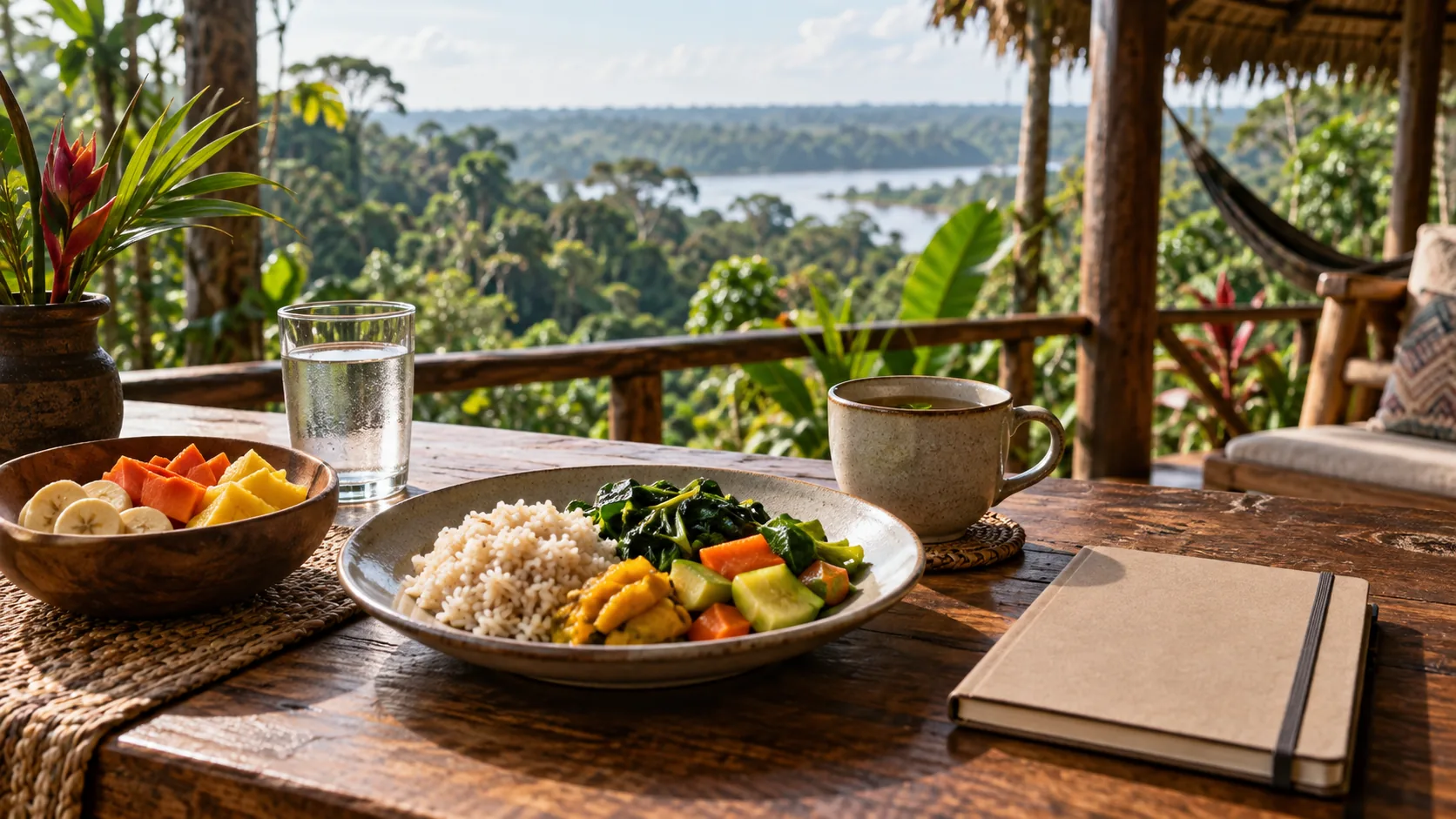
The most practical approach is usually simple, familiar and balanced food that supports normal hydration and energy. Depending on the instructions provided by the retreat, preparation meals may emphasize:
- rice, oats, potatoes or other familiar starches;
- cooked vegetables;
- fresh fruit;
- simple soups;
- modest amounts of permitted protein; and
- water throughout the day.
Avoid experimenting with extreme fasting, juice-only cleanses or supplements marketed as detox products. They can lead to dehydration, digestive problems or unstable blood sugar before travel.
If you have diabetes, kidney disease, food allergies, an eating disorder or another condition affected by diet, disclose it before booking. Ask how the kitchen prevents cross-contact and whether your nutritional needs can be met.
Tyramine restrictions: understand the uncertainty
You may see long lists of aged, fermented or preserved foods described as dangerous before ayahuasca. Those lists are often adapted from guidance for older, irreversible pharmaceutical monoamine oxidase inhibitors. Ayahuasca’s beta-carbolines act differently, and research has not established a universal food list or preparation period for every brew and participant.
This does not mean food interactions can be ignored. Reviews of ayahuasca pharmacology discuss a theoretical risk involving monoamine oxidase inhibition and tyramine, while emphasizing gaps in the evidence. Follow the current instructions from the retreat and raise any conflict with a qualified clinician. Avoid presenting an internet checklist as personalized medical advice.
Alcohol, cannabis and other substances
Tell the retreat accurately about alcohol, cannabis, stimulants, opioids, psychedelics and other substances, including how often and when you last used them. Do not assume a substance is compatible because it is legal, prescribed or plant-based.
The center should provide a clear abstinence period based on its screening policy. People who use alcohol, benzodiazepines or other substances regularly may face withdrawal risks if they stop suddenly. That requires medical advice and must not be managed by a retreat schedule alone.
Supplements and herbal products
List every supplement and herbal product you take. Products marketed for mood, sleep, energy, weight loss or “serotonin support†can contain pharmacologically active ingredients. Some formulas have multiple compounds or inconsistent labels, making interaction assessment more difficult.
Do not start a new supplement as part of ayahuasca preparation. If the center asks you to stop one, check the plan with a pharmacist or clinician when there is any uncertainty.
Mental and emotional preparation
Preparation does not guarantee a pleasant or meaningful ceremony. It can, however, help you arrive with realistic expectations and a plan for asking for support.
Set a flexible intention
An intention can be a question, value or area you want to consider. Keep it open-ended. Avoid demanding a revelation, cure or life-changing result from a single ceremony.
Discuss current stress and sleep
Tell the screening team about severe stress, panic, prolonged insomnia or major recent life events. Sleep deprivation can make travel and intense experiences harder to manage. If you are currently unstable or in crisis, postponing may be safer.
Understand consent and boundaries
Ask how touch is handled during ceremony, how to decline it, who receives complaints and whether a facilitator of a preferred gender can assist you. Consent should remain active throughout the retreat. No spiritual title overrides your boundaries.
Plan support at home
Tell a trusted person where you will be and how to contact the center. Arrange a calm return and identify a qualified professional you can contact if difficult emotions or symptoms persist.
Two weeks before: confirm the practical details
Request written confirmation of:
- your screening approval;
- retreat dates and number of ceremonies;
- pickup location and time in Iquitos;
- room setup and included meals;
- facilitator languages;
- payment balance and cancellation terms;
- emergency contact details;
- electricity, internet and device policies; and
- departure time on the final day.
Do not rely on an old itinerary or a social-media message. Programs can change, and the written confirmation should match the retreat you purchased.
Ayaterra currently offers 3-day, 5-day, 7-day and 8-day ayahuasca retreats. The 8-day ayahuasca diet and retreat provides a longer preparation period at the center, while the 5-day ayahuasca retreat follows a more compact schedule with a rest day.
Travel health preparation for Iquitos
Iquitos is in Peru’s Amazon region. Travel-health recommendations can depend on your route, season, activities, age and medical history. Consult a travel-health professional early enough for any recommended vaccines or preventive measures to take effect.
The US Centers for Disease Control and Prevention currently lists malaria considerations for Iquitos and recommends yellow fever vaccination for eligible travelers to Loreto. Recommendations change, and vaccination may not be appropriate for everyone, so check current official guidance for your nationality and health situation rather than relying on an article alone.
Consider travel insurance that covers remote-area medical care and evacuation. Save the policy information offline and share your itinerary with a trusted contact.
What to pack for an ayahuasca retreat in Iquitos
The Amazon is hot, humid, rainy and insect-rich. Prioritize practical clothing and comfort.
Clothing
- lightweight, breathable shirts and trousers;
- modest layers that cover arms and legs;
- sleepwear suitable for warm nights;
- light rain jacket or poncho;
- closed walking shoes;
- sandals for use around accommodation; and
- spare socks and undergarments in a dry bag.
Practical items
- reusable water bottle;
- headlamp or small flashlight;
- insect repellent permitted by the center;
- unscented toiletries;
- sun protection;
- small towel if not supplied;
- notebook and pen;
- portable battery if permitted; and
- waterproof bags for documents and electronics.
Health and travel documents
- passport and required entry documents;
- travel-insurance details;
- emergency contacts;
- prescribed medication in original labeled packaging; and
- a written medication list, including doses.
Ask before bringing food, supplements, strong fragrances, ceremonial objects or recording equipment. Respect other participants’ privacy and the center’s device policy.
Three days before: protect sleep and hydration
In the final days, follow the confirmed food and substance guidance without adding last-minute restrictions. Eat adequate meals, drink water normally and prioritize sleep. Avoid a packed sightseeing schedule immediately before pickup.
Monitor your health. Contact the center if you develop fever, vomiting, diarrhea, respiratory illness, severe anxiety or another significant change. Arriving sick in a remote environment can affect both you and the group.
The day of travel
Keep essential medication, documents and one change of clothing in your hand luggage. Confirm pickup using the contact method supplied by the retreat. Allow time for flight delays and avoid arriving directly from an overnight journey when possible.
Do not take an extra medicine, supplement, sedative or recreational substance to manage flight anxiety without checking whether it affects your eligibility. Disclose any change when you arrive.
Common preparation mistakes
Avoid these frequent errors:
- hiding medication or mental-health history;
- stopping a prescription without medical supervision;
- following an extreme online diet instead of the center’s instructions;
- assuming “natural†means interaction-free;
- arriving dehydrated, fasting or sleep-deprived;
- booking a flight immediately after the final ceremony;
- expecting a guaranteed cure or transformation; and
- failing to plan support after returning home.
Responsible preparation is usually quieter and more practical than social media suggests.
Frequently asked questions
How long should I prepare for an ayahuasca retreat?
Begin health screening four to six weeks before travel when possible. The retreat’s food and substance restrictions may cover a shorter period, but medication review or travel vaccinations can require more time. Follow individualized guidance rather than a universal countdown.
What foods should I avoid before ayahuasca?
Use the written list supplied by the retreat and discuss medical dietary needs with the team. Many centers restrict alcohol and certain aged or fermented foods, but instructions vary. Do not create an unnecessarily restrictive diet by combining unrelated internet lists.
Can I drink coffee before a retreat?
Caffeine policies vary. Ask the center, especially if you consume large amounts daily, because abrupt cessation can cause headaches or fatigue. Disclose energy drinks, pre-workout products and stimulant medications separately.
Can I take antidepressants before ayahuasca?
Some antidepressants may present interaction risks. Do not stop or change them on your own. Provide the exact medication and dose to the retreat, and consult the prescribing clinician or a pharmacist before making any decision.
Should I fast before a ceremony?
Follow the retreat’s meal schedule. Do not undertake prolonged fasting unless it is specifically advised and medically appropriate for you. Dehydration or low blood sugar is not a sign of better preparation.
What should I leave at home?
Leave recreational drugs, alcohol, strong fragrances, unnecessary valuables and anything prohibited by Peruvian law or the retreat. Ask before bringing supplements, recording equipment or ceremonial items.
A simple preparation checklist
Before departure, confirm that you have:
- completed screening honestly;
- reviewed medications and supplements;
- received written food and substance guidance;
- disclosed allergies and dietary needs;
- confirmed pickup and departure details;
- arranged travel-health advice and insurance;
- packed for heat, rain and insects;
- told a trusted person your itinerary; and
- reserved quiet recovery time after the retreat.
Preparation should reduce uncertainty, not create fear. If you still have unanswered health or safety questions, pause and ask before traveling. You can review all Ayaterra retreat options or contact the Ayaterra team about current screening requirements and program details.
Sources and further reading
- The Pharmacological Interaction of Compounds in Ayahuasca: A Systematic Review.
- Drug–Drug Interactions Involving Classic Psychedelics: A Systematic Review.
- Ayahuasca and Dimethyltryptamine Adverse Events and Toxicity Analysis.
- CDC Travelers’ Health: Peru.
Last reviewed: September 2026. This educational guide does not provide medical advice.