Planning an ayahuasca retreat involves more than choosing dates and booking a flight. It means understanding the setting, answering health questions honestly, reviewing medications with a qualified clinician, preparing for an intense experience and leaving enough time afterward to rest and reflect.
This ayahuasca retreat guide explains the practical decisions that matter before you travel to Iquitos, Peru. It covers what a retreat typically includes, how programs of different lengths compare, what responsible screening should look like, what may happen during a ceremony and how to plan for integration afterward.
Ayahuasca is not appropriate for everyone. It can involve significant physical and psychological risks, including potentially dangerous interactions with some medications and substances. Nothing in this guide is medical advice, and a retreat is not a substitute for medical or mental-health care.
What is an ayahuasca retreat?
An ayahuasca retreat is a structured stay in which one or more ceremonies take place within a broader program of preparation, accommodation, meals, supervision, rest and reflection. In the Peruvian Amazon, ceremonies may be guided by traditional practitioners, often called shamans or curanderos, with facilitators supporting communication and practical needs.
The brew commonly called ayahuasca traditionally combines plants containing DMT with plants containing beta-carbolines that inhibit monoamine oxidase. That interaction is central to the brew’s effects and is also why medication and substance screening matters.
A responsible retreat should be described as a supported ceremonial setting—not as a guaranteed cure. Experiences vary widely. Some participants describe meaningful personal insights; others experience fear, confusion, nausea, vomiting or no clear benefit. A trustworthy center does not promise a specific spiritual, psychological or medical outcome.
Why do people choose an ayahuasca retreat in Iquitos?
Iquitos is one of the principal gateways to the Peruvian Amazon and has longstanding connections to Amazonian plant traditions. Peru formally recognized the traditional knowledge and uses of ayahuasca practiced by Amazonian communities as part of the nation’s cultural heritage in 2008. That recognition concerns a living cultural tradition; it should not be treated as proof that every commercial retreat is safe or authentic.
The rainforest environment can also offer distance from daily routines, screens and urban noise. But the location adds practical considerations: heat, humidity, insects, boat or road transfers, limited access to familiar services and the need to plan recovery time before flying onward.
When comparing centers near Iquitos, look beyond photographs of the jungle. Ask who conducts screening, who remains present throughout ceremonies, how overnight support works, how emergencies are handled, what languages facilitators speak and exactly what the advertised price includes.
How long should an ayahuasca retreat be?
There is no universally correct duration. The best fit depends on available time, previous experience, the intensity of the schedule and how much space you want between ceremonies.
3-day retreat
A 3-day ayahuasca retreat in Iquitos is a compact option with two scheduled ceremonies. It may suit travelers with limited time, but the ceremonies occur on consecutive evenings and the period for rest and integration is short.
5-day retreat
The 5-day ayahuasca retreat includes three ceremonies, a rest day and additional time for guided conversations. This creates a more balanced rhythm between ceremony and recovery.
7-day retreat
The 7-day ayahuasca retreat in Iquitos includes four ceremonies and dedicated rest days. A full week gives participants more time to become familiar with the setting and reflect between sessions.
8-day diet and retreat
The 8-day ayahuasca diet and retreat begins with a longer period of simple meals and preparation before three scheduled ceremonies. It is intended for guests who prefer a gradual schedule and a longer stay at the center.
More ceremonies do not automatically mean a better result. Consider the pacing, your health, your tolerance for an unfamiliar environment and the amount of time you can reserve after the retreat. Compare all current options on the Ayaterra ayahuasca retreats page.
Health screening should happen before you book
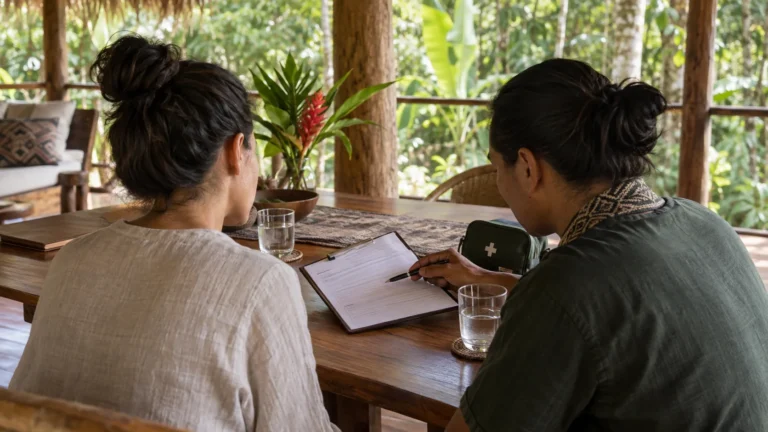
Screening is not a formality. Ayahuasca contains compounds that affect monoamine oxidase and serotonin pathways, so some combinations with medications or other substances may be dangerous. Published reviews identify particular concern around serotonergic medicines and other monoamine oxidase inhibitors, while also emphasizing that the evidence base is incomplete.
A screening form should ask about:
- prescription and non-prescription medication;
- supplements and recreational substances;
- cardiovascular, neurological and other physical conditions;
- current and past mental-health conditions;
- personal or family history of psychosis or mania;
- pregnancy or breastfeeding;
- recent surgery, hospitalization or significant health changes; and
- previous psychedelic experiences and adverse reactions.
Answer every question accurately. Do not stop, reduce or change a prescribed medication on your own in order to attend a ceremony. Medication changes can cause withdrawal, relapse or other harm. Discuss them with the clinician who knows your history, and give the retreat team enough time to review your eligibility before you purchase flights.
If a center accepts everyone, discourages medical advice, tells you to hide information or guarantees that ayahuasca will treat a condition, do not proceed.
How to prepare for an ayahuasca retreat
Preparation has practical, medical and personal parts. The center should send its requirements in writing because dietary and scheduling guidance can differ between traditions and programs.
Follow individualized medical guidance
Provide a complete medication and health history. Ask clear questions about possible interactions and who reviews the answers. If your clinician and the retreat give conflicting advice, pause the booking until the conflict is resolved. Safety should never depend on guessing.
Follow the center’s food guidance without extreme restriction
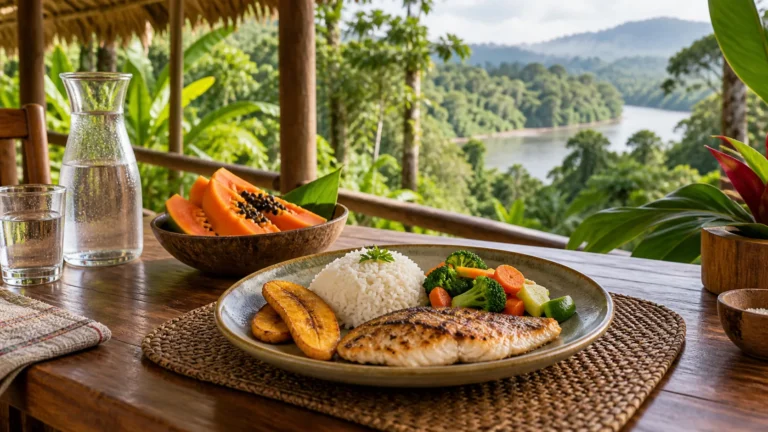
Many retreats recommend simple meals before arrival and limit alcohol, recreational drugs and certain foods. Follow the instructions you receive, but disclose allergies, diabetes, eating disorders or other nutritional needs. Preparation should not require unsafe fasting or dehydration.
Reduce avoidable stress
Arrive in Iquitos with enough time to sleep and recover from travel. Avoid placing a tight international connection immediately before pickup. Heat, jet lag and digestive changes are easier to manage when the itinerary has breathing room.
Set an intention, not a demand
An intention can be a simple question or area of reflection. It does not guarantee what will happen in ceremony. Flexible expectations make it easier to respond to an experience that may be different from what you imagined.
Clarify practical details
Before departure, confirm pickup arrangements, the complete schedule, room setup, meals, language support, electricity or charging availability, emergency contacts, the cancellation policy and what happens if screening finds that you are not eligible.
What to pack for the Amazon
Iquitos is hot, humid and rainy. Pack for comfort and modesty rather than ceremony-themed fashion.
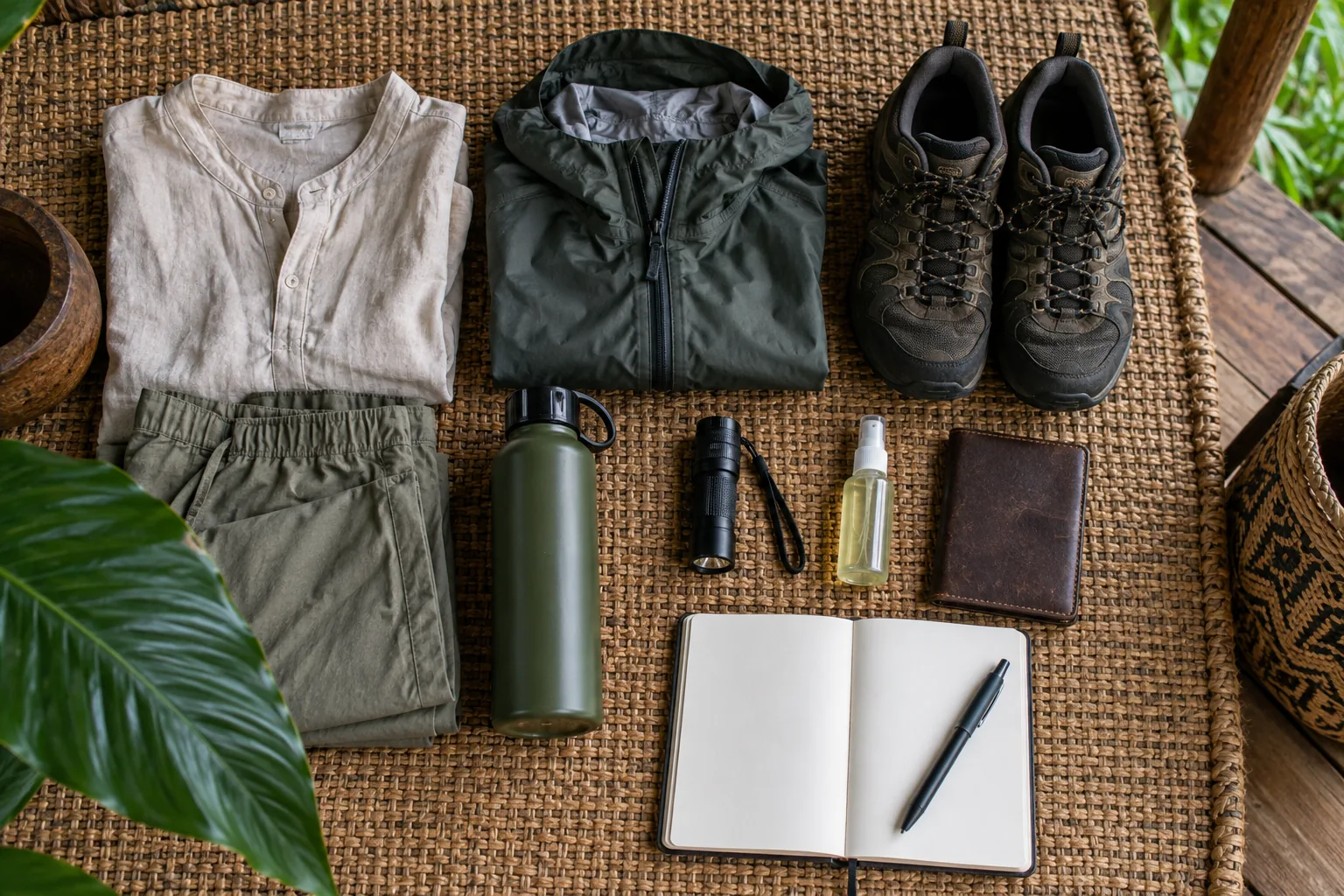
- lightweight, breathable clothing that covers arms and legs;
- a light rain jacket or poncho;
- closed walking shoes and sandals;
- insect repellent and any permitted personal toiletries;
- a reusable water bottle;
- a small flashlight or headlamp;
- required medication in original packaging;
- copies of travel and health information; and
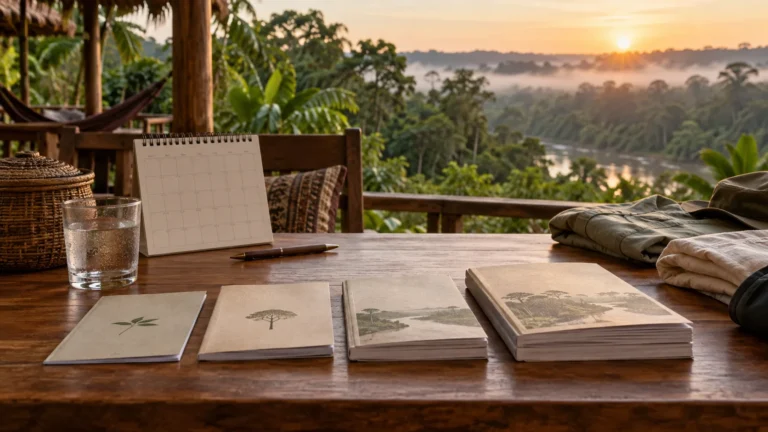
- a notebook for private reflection.
Ask the center before bringing supplements, herbal products or strong fragrances. Do not bring illegal drugs or assume that a product is safe because it is described as natural.
What happens when you arrive?
The first day usually includes transfer to the center, check-in, orientation and an introduction to the team and schedule. This is the time to identify exits, bathrooms, drinking water, staff members and how to request assistance at night.
You may be asked to reconfirm that your health or medication status has not changed. Treat this as an important safety check. Tell the team about illness, recent substance use, lack of sleep or any new medication instead of trying to remain eligible at all costs.
Orientation should explain consent and boundaries, ceremony rules, when participants may leave their places, how facilitators respond to distress and whether any traditional practices involve touch. You should be able to decline nonessential touch and know how to report a concern.
What to expect during an ayahuasca ceremony
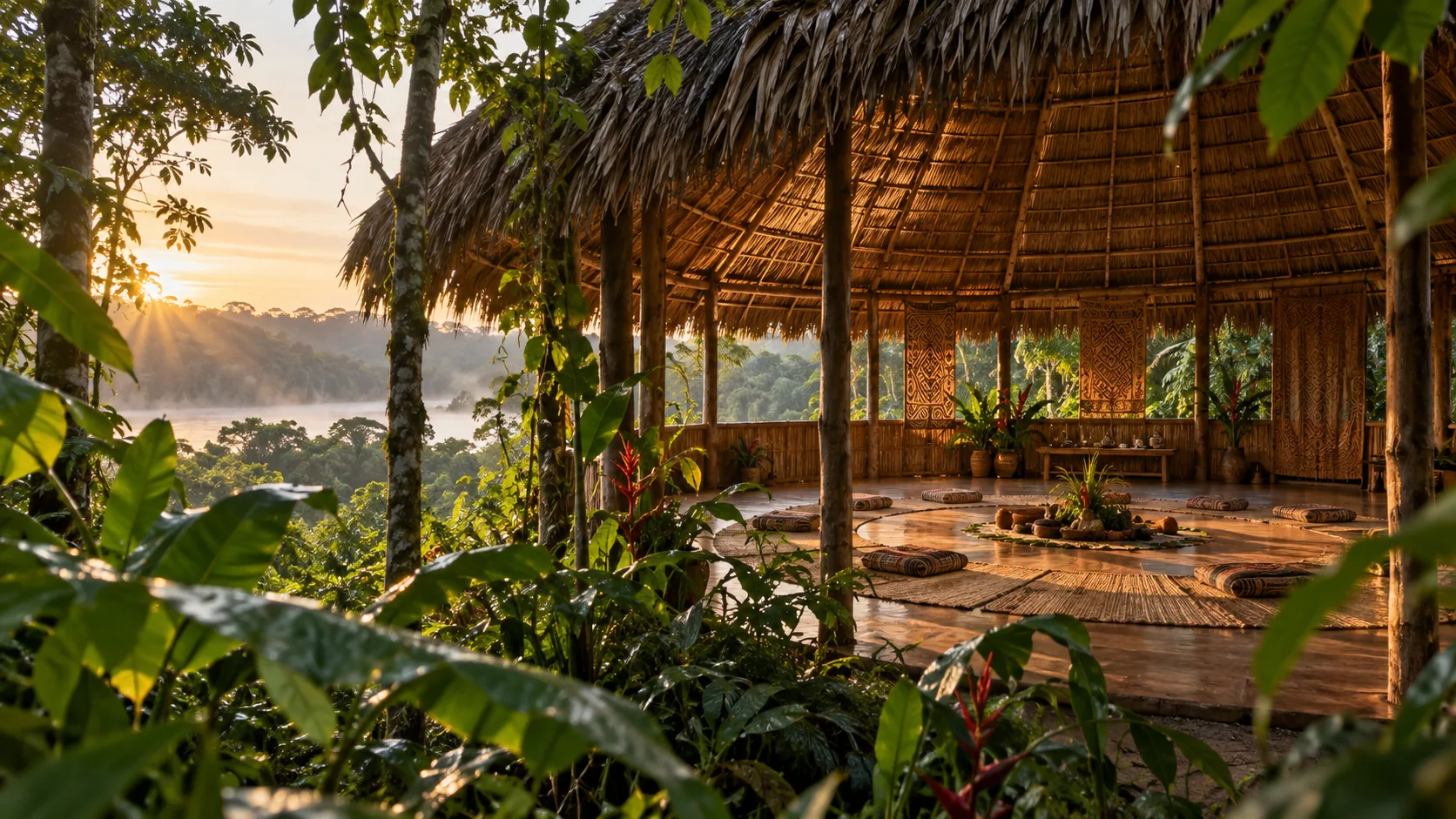
Ceremonies commonly take place at night in a communal structure often called a maloca. Participants are assigned individual places, and the guiding practitioners may use songs known as icaros. The precise format varies by lineage and center.
Effects can differ from person to person and from one ceremony to another. They may include changes in perception, vivid imagery, altered sense of time, intense memories or emotions, physical discomfort, nausea and vomiting. Vomiting is common in reports and traditions, but any symptom that feels severe or unusual should be reported immediately rather than automatically interpreted as part of a beneficial process.
Follow the center’s movement rules, do not leave the ceremony area unnoticed and ask for help when needed. A facilitator should be available without pressuring you to explain your experience while it is happening.
Ayahuasca safety: questions every retreat should answer
Scientific literature does not support describing ayahuasca as risk-free. Systematic reviews report that many adverse effects are transient, but potentially serious events and requests for medical assistance have occurred. Psychological reactions can also be difficult or destabilizing, particularly for people with relevant vulnerabilities.
Before choosing a retreat, ask:
- Who reviews the medical and psychological screening?
- What conditions, medications and substances exclude participation?
- How many sober staff members are present during each ceremony?
- How are participants monitored without compromising privacy?
- What first-aid training and emergency supplies are available?
- What is the plan for reaching medical care, including at night?
- Are staff-to-participant numbers disclosed?
- What are the rules concerning consent, touch and sexual boundaries?
- How can a participant raise a complaint safely?
- What support is available after a difficult experience?
Clear, specific answers matter more than reassuring slogans. Ask for the current policy in writing when possible.
The role of shamans and facilitators
Traditional practitioners guide the ceremonial process, while facilitators may translate, explain the schedule and respond to practical needs. Titles alone do not prove training, ethics or emergency readiness.
Look for a clear division of responsibilities. You should know who is leading the ceremony, who remains sober, who can provide first aid, who speaks your language and who makes the decision to seek outside medical help. Ethical boundaries should apply to everyone, regardless of status or tradition.
Respect for Amazonian knowledge also means avoiding stereotypes. Ayahuasca traditions are diverse, living practices—not a single standardized ritual or an exotic attraction detached from the communities that developed them.
After the ceremony: rest and integration
The hours after a ceremony are not the best time for major decisions. Sleep, hydrate, eat according to the retreat schedule and give your nervous system time to settle. Group conversations can help participants put an experience into words, but you should never feel required to disclose private details publicly.
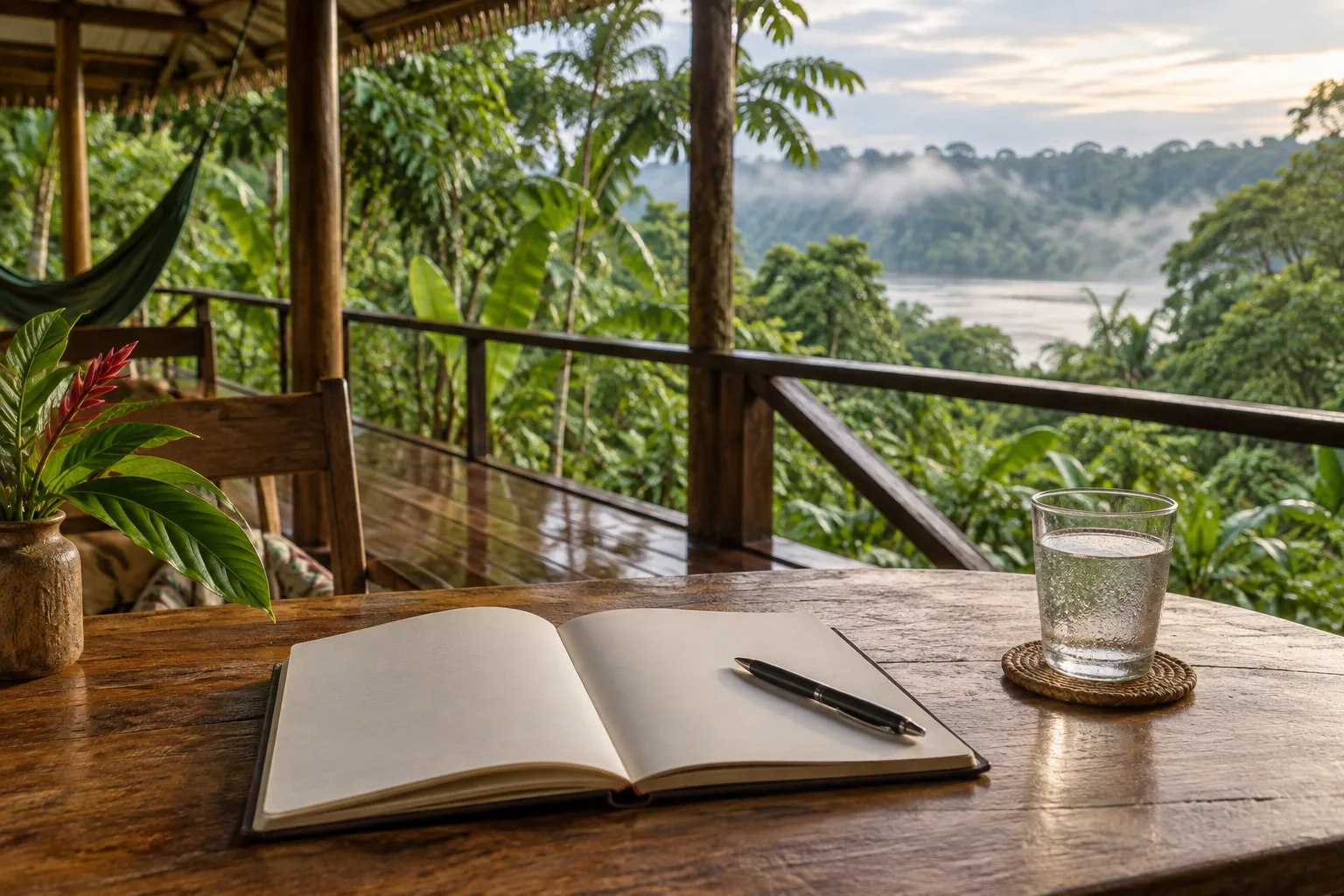
Integration means considering how, or whether, insights relate to ordinary life. Useful practices may include journaling, time in nature, gentle routines and speaking with a qualified mental-health professional who understands altered-state experiences. Integration is not about treating every image or thought as literal truth.
Seek professional help promptly if you experience persistent insomnia, severe anxiety, confusion, paranoia, mania, suicidal thoughts or difficulty functioning. Contact local emergency services immediately if there is an urgent risk to you or someone else.
Plan at least one quiet day after leaving the center when possible. Avoid driving, flying on a tight connection or returning directly to high-pressure work if you feel physically exhausted or emotionally unsettled.
How to compare ayahuasca retreat centers
Use a consistent checklist rather than choosing from testimonials alone.
Positive signs
- screening is completed before payment or travel commitments;
- contraindications and limitations are stated plainly;
- the center does not promise cures or guaranteed transformation;
- itinerary, inclusions and additional costs are transparent;
- staff roles and language support are clear;
- emergency and safeguarding procedures can be explained;
- participants may withdraw consent and ask for help; and
- post-ceremony rest and integration are built into the schedule.
Warning signs
- pressure to book immediately;
- instructions to stop prescription medication without a clinician;
- vague answers about nighttime staffing or emergencies;
- secrecy around who prepares or serves the brew;
- sexualized touch, boundary violations or leader worship;
- claims that severe symptoms always represent healing; or
- no written cancellation terms or contact details.
Independent reviews can add context, but check dates and look for patterns rather than relying on a single very positive or negative account.
Planning your trip to Iquitos
Iquitos is not connected to Peru’s national road network in the same way as most major cities, so visitors commonly arrive by air or river. Confirm the pickup point and time with the retreat before booking onward arrangements.
Travel health recommendations depend on your route, season, medical history and current public-health guidance. Consult an appropriate travel-health professional well before departure. Bring insurance details and ask whether your policy covers remote-area medical care and evacuation.
Do not assume you will have continuous mobile data or electricity at a rainforest center. Share your itinerary and the retreat’s contact information with a trusted person, while respecting other participants’ privacy and the center’s device policy.
Frequently asked questions
Is ayahuasca safe?
It is not risk-free. Physical and psychological adverse events can occur, and interactions with certain medications or substances may be dangerous. Responsible screening, honest disclosure, qualified guidance and an emergency plan reduce some risks but cannot eliminate them.
Can I attend while taking antidepressants?
Do not make this decision alone. Some antidepressants affect serotonin pathways and may interact with monoamine oxidase inhibition. Tell both the retreat and the clinician who prescribed your medication. Never stop an antidepressant abruptly merely to qualify for a ceremony.
Is an ayahuasca retreat a medical treatment?
No. Ayaterra retreats are ceremonial and educational experiences and do not replace diagnosis, treatment or care from licensed health professionals. Research into possible therapeutic applications is developing, but findings should not be converted into promises for individual participants.
Will I vomit during ceremony?
Nausea and vomiting are commonly reported, but not everyone experiences them. Inform staff about severe, persistent or unusual symptoms so they can assess the situation instead of assuming every reaction is expected.
Is a longer retreat always better?
No. Longer programs provide more time for rest and reflection, while shorter programs may be more practical. Ceremony count, pacing, screening quality, staff support and your own circumstances matter more than duration alone.
Can I travel alone?
Many guests do, but someone you trust should know your itinerary and how to contact the center. Allow recovery time before continuing your journey, especially if you are unfamiliar with Iquitos or international travel.
What if I change my mind before a ceremony?
Consent should be ongoing. Tell a facilitator immediately. Ask about the center’s policy before booking, including whether you can remain safely on-site without participating and how unused services are handled.
Decide carefully and ask questions
Choosing an ayahuasca retreat is a safety decision as much as a travel decision. Compare the full itinerary, complete screening before committing to flights, verify who will support you and leave time for recovery afterward.
Review Ayaterra’s 3-day, 5-day, 7-day and 8-day retreat options or contact the team with questions about eligibility, current dates and program details.
Sources and further reading
- Peru’s National Institute of Culture, Resolution No. 836/INC (2008), recognizing traditional knowledge and uses of ayahuasca practiced by Amazonian communities as Cultural Heritage of the Nation.
- Ayahuasca and Dimethyltryptamine Adverse Events and Toxicity Analysis: A Systematic Thematic Review.
- The Pharmacological Interaction of Compounds in Ayahuasca: A Systematic Review.
- Drug–Drug Interactions Involving Classic Psychedelics: A Systematic Review.
Last reviewed: September 2026. This educational guide does not provide medical advice.